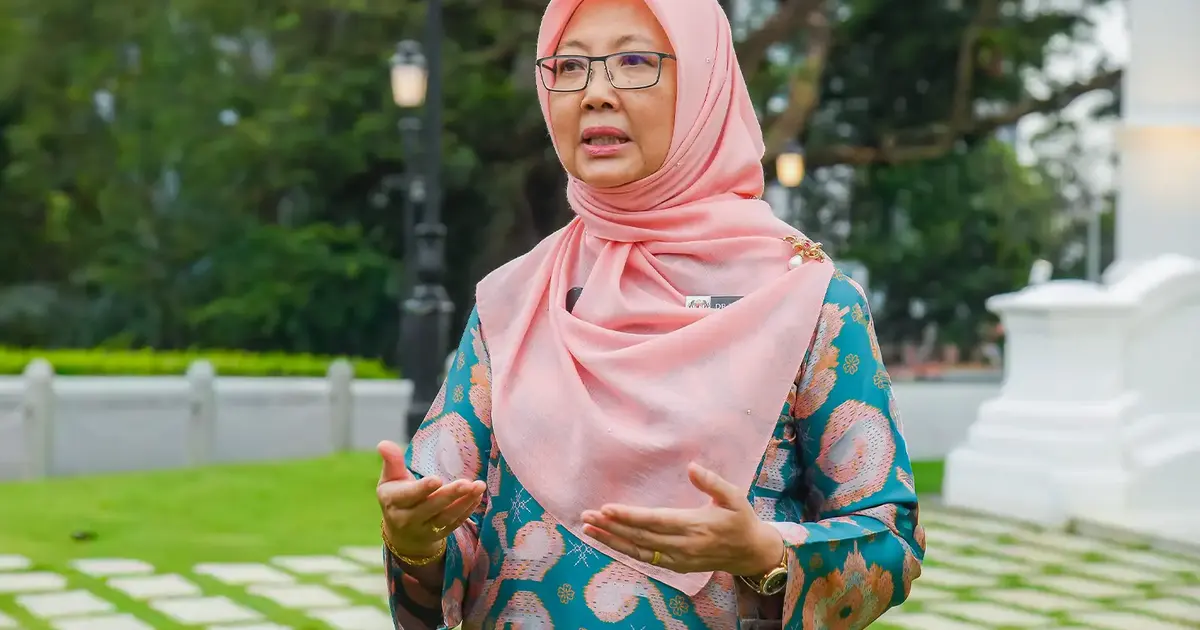
PKR vice-president Zaliha is expressing confusion over what she considers an unusual demand from Johor's ruling coalition, as Johor BN chairman Onn Hafiz Ghazi has publicly called on Pakatan Harapan to name its candidate for the state's top post without offering any concrete assurance that the individual would actually secure the position.
The timing and nature of this request have struck Zaliha as peculiar, highlighting what appears to be a fundamental disconnect in how the two coalitions are approaching the electoral contest. Onn Hafiz's insistence that PH identify its poster boy candidate—a term typically used in Malaysian politics to describe the flagship figure intended to lead campaign messaging—comes despite the absence of any firm commitment that such a nominee would be guaranteed appointment as menteri besar should their coalition prevail at the polls.
This dynamic underscores a broader tension in Johor's political landscape, where questions about power-sharing arrangements, coalition stability, and leadership legitimacy remain unresolved. The menteri besar position represents not merely a ceremonial role but the executive authority over one of Malaysia's most economically significant states, sitting alongside Selangor in terms of economic output and strategic importance. The position carries substantial influence over development priorities, contract allocations, and state policy direction.
Zaliha's pushback suggests that PH views Onn Hafiz's call as potentially tactical in nature—perhaps designed to extract information about opposition planning, establish early narrative control, or create internal pressure within the PH coalition by forcing premature announcements. Revealing a poster boy candidate before an election carries inherent risks, as it allows the ruling party extended time to define that figure's record, associations, and positioning. In Malaysian electoral contests, such early designation can become a liability if the individual faces criticism or if their candidacy becomes divisive within their own coalition.
For Johor specifically, the political stakes are extraordinarily high. The state has traditionally served as a BN stronghold, though recent electoral cycles have demonstrated growing volatility and fragmentation. The 2022 general election witnessed significant shifts in voter preferences, with PH making inroads in several constituencies. Any Johor state election would carry implications extending beyond state government formation, potentially signalling broader trends in peninsular Malaysian politics and affecting the calculus for subsequent national elections.
PH's reluctance to name a specific menteri besar candidate at Onn Hafiz's urging may also reflect internal coalition complexities. Pakatan Harapan comprises multiple parties including PKR, DAP, and Amanah, each with distinct organisational bases and leadership hierarchies. The coalition must balance representation across its constituent parties while ensuring that nominated leaders command sufficient credibility and electoral appeal. Prematurely naming a candidate before coalition negotiations are fully concluded could antagonise partner parties or alienate segments of the electorate.
Moreover, Zaliha's position implicitly raises a constitutional and procedural point: the menteri besar is ultimately appointed by the Johor Sultan following state elections, and no political coalition can unilaterally guarantee such appointment regardless of electoral performance. While convention typically dictates that the Sultan appoints the leader of the coalition commanding the largest number of state assembly seats, constitutional propriety requires that this remains a vice-regal prerogative. Onn Hafiz's demand for PH to announce a poster boy while offering no reciprocal assurance about that person's appointment therefore appears to place an unequal burden on the opposition.
The broader context of Johor politics includes the presence of Perikatan Nasional, which has been attempting to establish its own organisational footprint in the state. A three-cornered electoral contest would fundamentally alter coalition mathematics and potentially create scenarios where neither BN nor PH secures an outright majority, complicating any eventual menteri besar appointment. This fragmentation adds another layer of unpredictability that BN's demand does not appear to account for.
Zaliha's questioning of this demand thus serves a dual purpose: it allows PH to maintain tactical flexibility while simultaneously placing the onus on BN to demonstrate whether its own commitment to democratic norms extends to offering reciprocal transparency and guarantees. By refusing to be rushed into naming a candidate without clarity on the terms and conditions governing that person's potential appointment, PH positions itself as the more cautious and procedurally sound actor in this pre-electoral sparring.
As Johor heads toward a potential state election, these early exchanges will likely set the tone for campaign strategy and coalition positioning. PH's refusal to name a poster boy on BN's timeline reflects a broader calculation that political momentum in Malaysia's electoral landscape continues to shift, and that premature commitments may constrain rather than enhance opposition prospects. The question of who ultimately leads PH's campaign machinery in Johor, and under what conditions, will remain a central battleground in the state's political contest.