Cambodia is making a deliberate pivot toward advanced manufacturing and technology-driven industries, with South Korea emerging as a key partner in realizing this economic transformation. During an investment promotion mission to South Korea in June, Deputy Prime Minister Sun Chanthol led a high-level Cambodian delegation on a targeted tour of major Korean companies and hosted an investment roadshow in Incheon. The initiative underscores how seriously Phnom Penh is taking its long-term diversification strategy, recognizing that sustained economic growth cannot rest indefinitely on the back of garment manufacturing and low-cost labour exports that have historically dominated the Kingdom's industrial base.
The timing of Cambodia's overture reflects broader regional economic currents. As global automakers accelerate their transition toward electric vehicles and battery technologies, countries across Southeast Asia are competing to position themselves within new automotive supply chains. Cambodia sees an opportunity to leverage existing Korean manufacturing presence and technical expertise to climb the value-added ladder. By focusing recruitment efforts on companies producing automotive components, EV systems, and advanced electronics, Cambodia hopes to capture investment that brings not just employment but also knowledge transfer, skills development, and deeper integration into regional and global production networks.
Existing Korean investments already provide Cambodia with credible anchors for expansion. Daejoo KC Group, a major South Korean conglomerate with interests spanning metallurgy, chemicals, logistics, and energy, operates in Cambodia through two subsidiaries. Camko Motor assembles Hyundai vehicles for domestic consumption and manufactures automotive wire harnesses destined for export markets, providing nearly 500 local jobs. The group's other entity, Camko Infracore, handles vehicle imports, after-sales services, and spare parts distribution. During the mission, Deputy Prime Minister Chanthol encouraged Daejoo KC to deepen its Cambodian footprint by expanding into additional sectors where the group already operates successfully in South Korea.
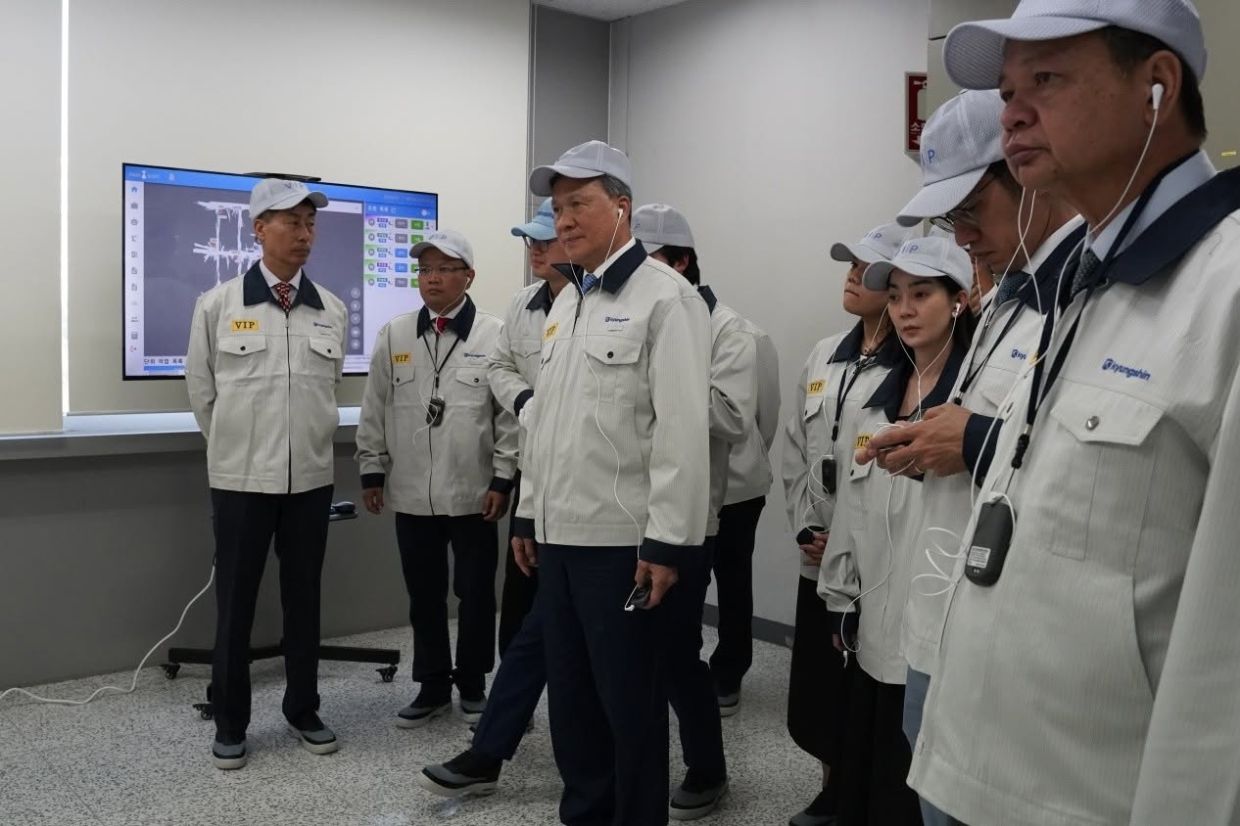
Another established player, Kyungshin Co., Ltd., demonstrates the viability of Cambodia's manufacturing ecosystem for sophisticated automotive electronics. Since establishing operations in 2012, Kyungshin has invested approximately US$20 million in a wire harness factory in Kandal province, currently employing 1,467 workers. The company specializes in producing wiring harnesses, connectors, junction blocks, and electrical systems for electric vehicles—precisely the kind of higher-technology manufacturing that Cambodia's policymakers wish to attract and expand. Kyungshin's decade-long presence in Cambodia validates the Kingdom's ability to support complex manufacturing processes and maintain skilled workforces capable of serving global supply chains.
The Cambodian government is actively marketing improved investment conditions to prospective Korean partners. Under Cambodia's revised investment law, foreign investors can access incentive packages, attractive fiscal benefits, macroeconomic stability guarantees, and reliable legal protections for their capital and operations. The CDC, working with the Incheon Chamber of Commerce and Industry, organized the June roadshow to communicate these improvements directly to Korean business leaders, emphasizing that Cambodia offers not merely cheap labour but a stable, increasingly sophisticated manufacturing platform with improving infrastructure and regulatory predictability.
Cambodia's ambitions extend well beyond conventional manufacturing. The delegation's visit to Incheon Baek Hospital, a leading South Korean medical institution, revealed that Phnom Penh is actively seeking partnerships in healthcare technology and digital medical systems. Deputy Prime Minister Chanthol characterized advanced healthcare and international-standard hospital development as key governmental priorities. The Cambodian contingent requested technical assistance, knowledge transfer, and training exchanges with South Korean medical specialists, recognizing that healthcare modernization serves both humanitarian objectives and economic development by attracting medical tourism and enabling private-sector advancement. This dimension of the mission illustrates Cambodia's understanding that economic diversification encompasses services and technology transfer, not merely factory-based production.
The composition of Cambodia's delegation itself signalled the comprehensive nature of Phnom Penh's investment recruitment strategy. Officials from the Council for the Development of Cambodia, the Ministry of Commerce, the Cambodian ambassador to South Korea, representatives of the Korean Chamber of Commerce operating in Cambodia, the Cambodian Oknha Association (representing major local business interests), and the Cambodia Chamber of Commerce all participated. This alignment of diplomatic, regulatory, and business-community actors demonstrates that Cambodia treats investment attraction as a whole-of-government enterprise rather than a purely commercial transaction.
For Southeast Asia more broadly, Cambodia's repositioning carries significant implications. The region faces intense competition for manufacturing investment as multinational corporations reassess production locations in response to trade tensions, supply-chain vulnerabilities, and the transition to electric vehicles and digital technologies. Vietnam and Thailand have historically captured the largest share of Korean manufacturing FDI in Southeast Asia, but Cambodia's efforts suggest determination to claim a meaningful portion of incoming capital flows. Success would require sustained investment in infrastructure, education, and regulatory certainty—areas where Cambodia continues to face challenges relative to more developed regional peers.
The garment and footwear sectors remain indispensable to Cambodia's economy, providing employment to hundreds of thousands of workers and generating vital export revenues. Government officials acknowledge that these traditional industries will continue functioning indefinitely. However, policymakers increasingly recognize that labour-intensive, low-margin manufacturing offers limited scope for wage growth and productivity improvement. Moreover, escalating global pressure on environmental and labour standards creates uncertainty for garment exporters facing consumer and regulatory pressure in developed markets. By nurturing automotive components, electric vehicle systems, and healthcare technology sectors, Cambodia aims to build a more resilient, higher-wage economic foundation.
The success of Cambodia's diversification strategy remains uncertain and will depend on multiple factors beyond government promotion efforts. Infrastructure quality, electricity reliability, workforce skills development, and the business environment all require continuous improvement to convince major multinational corporations to establish complex manufacturing operations. Additionally, geopolitical considerations—including regional trade dynamics and relationships with other major powers—may influence investment flows in ways Cambodia cannot fully control. Nevertheless, the recent South Korean mission demonstrates that Cambodia's leadership recognizes the urgency of economic restructuring and is pursuing it through concrete diplomatic and promotional channels.
Regional observers will watch closely whether Korean companies respond to Cambodia's overtures with meaningful new investments. Kyungshin and Daejoo KC's existing operations suggest that Cambodia can retain and expand existing investors, but attracting fresh capital from major Korean conglomerates will require demonstrating tangible advantages over competing Southeast Asian locations. The success or failure of Cambodia's diversification strategy will have ripple effects throughout the region, influencing how other lower-income Southeast Asian nations position themselves within evolving global supply chains and whether alternative development pathways beyond traditional garment manufacturing remain viable for countries at Cambodia's level of development.