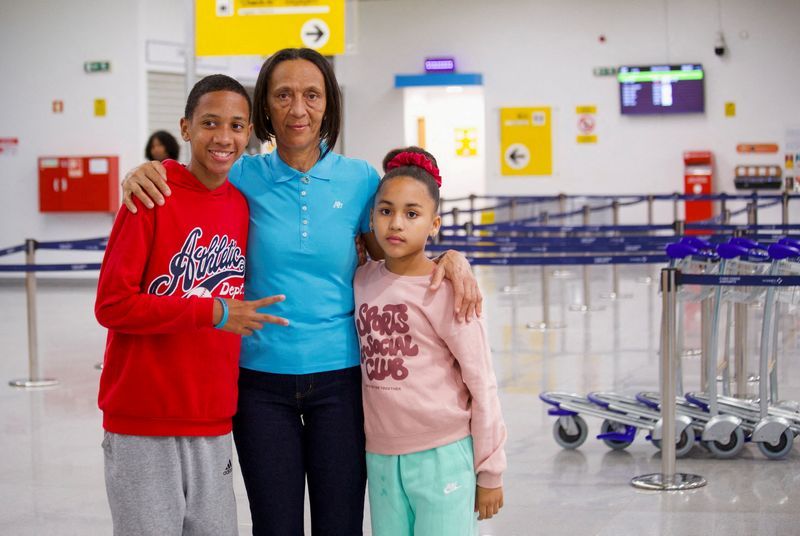
Cape Verde goalkeeper Vozinha's mother, Ana Candida Evora, has finally secured a visa to travel to the United States and watch her son compete at the World Cup, ending a chapter of disappointment that captivated global attention after the 40-year-old player's emotional disclosure about her absence from his breakthrough tournament match.
Vozinha delivered a commanding display in Cape Verde's opening group stage fixture against Spain in Atlanta, producing seven crucial saves to earn his team an unexpected 0-0 draw against the European champions. The performance immediately established him as a tournament standout and captured headlines across international sports media. Yet the goalkeeper's elation was dampened by the realization that the one person most meaningful to him had not been present to witness his moment on the world's biggest stage.
The reason for Evora's absence lay in a maze of visa complications tied to the United States' stringent immigration policies. When the 40-year-old revealed publicly that his mother could not attend due to travel document restrictions, the story resonated deeply with audiences worldwide, transcending typical sports narratives to highlight broader issues around access and opportunity. His candid emotional response brought international attention to his family's predicament.
The publicity surrounding Vozinha's situation prompted intervention from US State Department officials who recognized the humanitarian angle of the story. Diplomatic staff at the American embassy in Praia, Cape Verde's capital, engaged directly with Evora to expedite her visa application process, ensuring she received priority handling and all necessary support to complete her documentation requirements.
A State Department official confirmed the positive resolution in remarks to journalists, emphasizing that the approval proceeded in full compliance with established immigration protocols and standards. This public confirmation signaled both the seriousness with which American officials treated the case and their commitment to resolving it without compromising security procedures or legal requirements.
Evora will now have the opportunity to attend Cape Verde's second group stage encounter against Uruguay scheduled for Miami on Sunday, allowing her to finally experience her son's World Cup journey in person after missing his career-defining opener. The timing ensures she can be present for what could be another pivotal moment in her son's tournament aspirations.
The visa situation had been complicated by broader Trump-era immigration restrictions that required citizens from numerous countries to post financial bonds reaching as high as $15,000 to gain entry to American soil. These requirements created significant barriers for working-class families from developing nations, making international travel prohibitively expensive and logistically complex. Cape Verde, like many African and Caribbean nations, fell within the scope of these stringent policies.
For Evora specifically, the financial burden had initially seemed insurmountable. The combination of bond requirements, visa fees, airfare, and accommodation costs placed a World Cup visit beyond realistic reach for a family without substantial means. When Cape Verde qualified for the tournament, the prospect of attending seemed economically impossible rather than merely inconvenient, forcing her to accept missing the event despite her deep desire to support her son.
Though the bond requirement was subsequently waived for individuals holding valid World Cup event tickets, this exemption came too late for initial planning purposes and may have been implemented after Evora had already made the difficult decision to forgo the trip. The rollback of this particular immigration measure reflected recognition of how counterproductive the bonds were proving for legitimate travelers and major international events.
Vozinha's story resonates particularly across Southeast Asia and the wider developing world, where citizens frequently encounter visa and immigration barriers that wealthier travelers from developed nations rarely experience. The goalkeeper's situation illustrates how arbitrary policy requirements can fragment families during momentous occasions and how international sporting events can serve as platforms for addressing broader inequities in global mobility and access.
The resolution also demonstrates the peculiar intersection of sports diplomacy and international relations, whereby a single human interest story can prompt governmental action that might otherwise remain mired in bureaucratic channels. By elevating his mother's plight to public consciousness, Vozinha inadvertently became a voice for countless families separated by immigration restrictions, even as his own circumstances experienced a fortunate reversal.
Looking forward, Evora's attendance at the Uruguay match represents both personal vindication for the family and a narrative arc that transcends typical sports coverage. Her presence in Miami will carry symbolic weight beyond ordinary parental support, embodying the triumph of persistence against systemic obstacles and illustrating how human compassion can intersect with diplomatic protocol to produce meaningful outcomes.