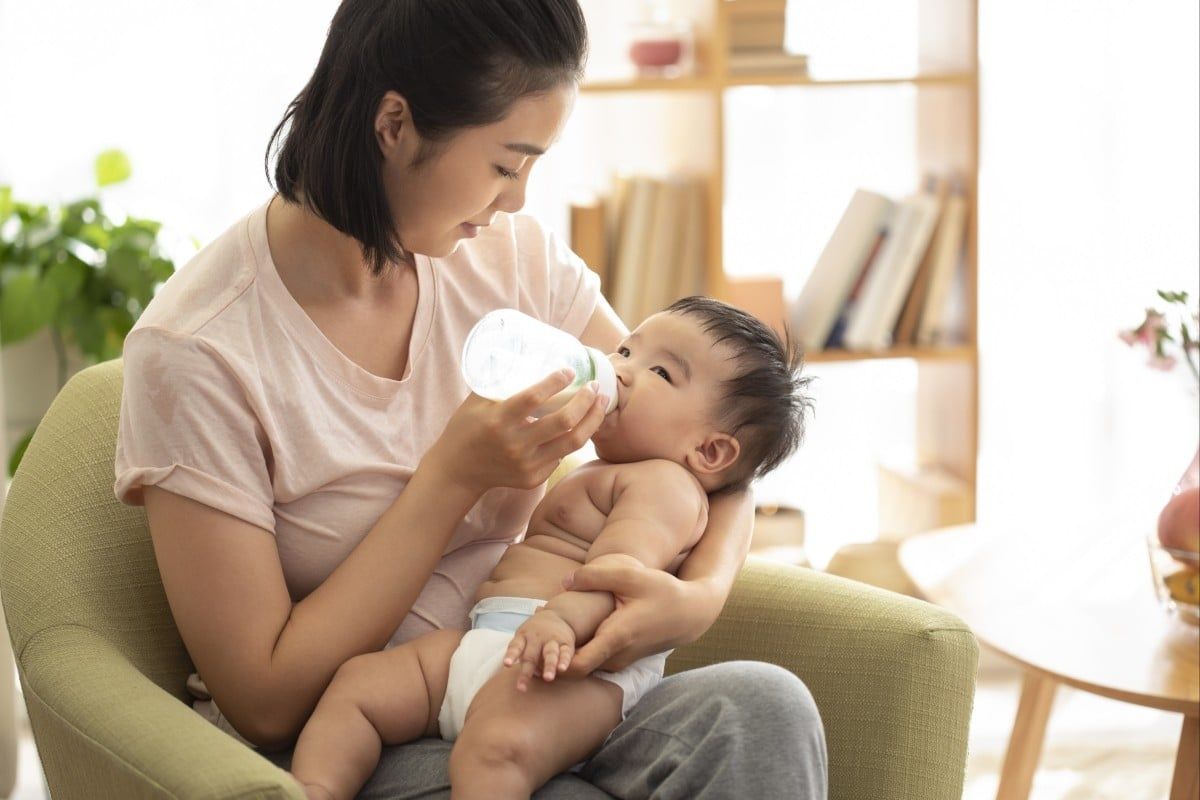
A three-month-old boy in China's Guangdong province was rushed to intensive care with life-threatening symptoms after his parents attempted to improve his nutrition by preparing infant formula with vegetable juice instead of plain water. The incident at Zhongshan Women and Children's Hospital underscores a troubling gap between parental intention and medical reality in infant care, and serves as a cautionary tale for Southeast Asian families who may hold similar beliefs about natural food preparations for newborns.
The baby arrived at the southern hospital displaying alarming physical signs of distress: his skin had taken on a purplish hue, his mouth and lips turned distinctly blue, and he struggled to breathe normally. Parents reported that these severe symptoms emerged shortly after the infant consumed the specially prepared milk formula. Their reasoning, rooted in a desire to provide optimal nutrition, had inadvertently placed their son in mortal danger—a scenario that medical professionals warn is far more common than many parents realise.
Physicians at the facility quickly identified the culprit: nitrite poisoning. The diagnosis revealed a critical gap in public understanding about food chemistry and infant physiology. When parents boiled vegetables to create the juice base for the formula, they unwittingly concentrated nitrites—naturally occurring compounds found in many vegetables that transform into dangerous toxins during prolonged cooking. The longer vegetables simmer, the higher the nitrite concentration becomes in the resulting liquid, a process most home cooks remain entirely unaware of when preparing foods for their families.
The infant's body composition made him especially vulnerable to this chemical threat. At three months of age, a baby's digestive system and kidneys remain profoundly immature, lacking the biological machinery necessary to neutralise or eliminate elevated nitrate and nitrite levels. Their physiological systems cannot process compounds that an adult body would handle without difficulty. This developmental reality is fundamental to understanding why infant nutrition guidelines are so stringent and why conventional formulas are formulated with such precision.
Once nitrites entered the baby's bloodstream, the consequences became visible on his skin and extremities. These chemicals interfere with haemoglobin's oxygen-carrying capacity, effectively preventing blood from transporting sufficient oxygen throughout the body. The resulting cyanosis—the bluish discolouration that appeared on the infant's lips, mouth and skin—was a direct manifestation of oxygen deprivation at the cellular level. Without urgent medical intervention, such symptoms can rapidly progress to organ failure and death.
After two days of intensive medical treatment, the infant was discharged in mid-June, fortunate to have survived an ordeal that could easily have ended tragically. His recovery highlights both the resilience of young children and the critical importance of immediate medical care when symptoms of poisoning appear. The hospital staff's rapid diagnosis and intervention almost certainly prevented permanent neurological damage or death.
Doctor Cao Qi, a paediatrician at Nanning No 1 People's Hospital in Guangxi Zhuang autonomous region, used the incident to issue a broader warning to parents across China's social media platforms. His message carries urgent implications: any delay in seeking hospital treatment when a baby displays symptoms of nitrite toxicity—such as unexplained cyanosis, breathing difficulties, or sudden illness following feeding—can be fatal. Minutes matter when an infant's oxygen saturation is compromised.
Cao Qi's advice strikes at a central problem in modern parenting: the tendency for caregivers to reject standardised feeding practices in favour of personalised approaches based on subjective assumptions about nutrition. The paediatrician explicitly cautioned parents against viewing trends or personal judgment as reliable guides for infant feeding. His statement reflects frustration within China's medical community that despite decades of research establishing safe infant nutrition protocols, parents continue to experiment with alternatives they assume will provide superior health benefits.
The incident in Guangdong is neither isolated nor particularly unusual within China's recent medical history. Last year, a 52-day-old infant in Henan province required hospitalisation for botulism after his grandmother added honey to his drinking water—another well-intentioned but dangerous deviation from proper infant feeding practice. Honey can harbour Clostridium botulinum spores that a baby's intestinal flora cannot yet control, leading to a potentially fatal infection. These recurring cases suggest systematic failures in educating families about the specific vulnerabilities of infants.
For Southeast Asian readers and families, the implications extend beyond China's borders. Across the region, similar beliefs persist that natural foods and traditional preparations offer superior nutrition compared to modern formula. Grandmothers advising younger mothers to add rice water, herbal infusions, or vegetable broths to infant formula operate from cultural traditions that predate modern nutritional science. While such practices may reflect cultural values and family bonds, they carry genuine medical risks that modern healthcare systems struggle to counteract through public education alone.
The medical consensus remains unambiguous: infant formula should be prepared exclusively with appropriate water—either distilled water, cooled boiled tap water where tap water is safe, or water specifically recommended by paediatricians and formula manufacturers. Rice water, vegetable juice, fruit juice, herbal broths and other creative substitutes introduce unpredictable chemical compositions that may include concentrated minerals, toxins, or microorganisms that immature digestive and kidney systems cannot manage. The formulas themselves are engineered precisely because human breast milk's composition is complex and difficult to replicate safely.
Parents seeking to enhance their baby's nutrition should consult qualified paediatricians rather than rely on generational knowledge or social media trends. Medical professionals can recommend age-appropriate supplementation once infants reach developmental stages where additional foods become safe. Until that point—typically around four to six months for most babies—formula prepared according to manufacturer instructions represents the safest, most reliable nutritional option available. The case of the Guangdong infant demonstrates that good intentions, without grounding in medical evidence, can transform an act of care into a life-threatening emergency.