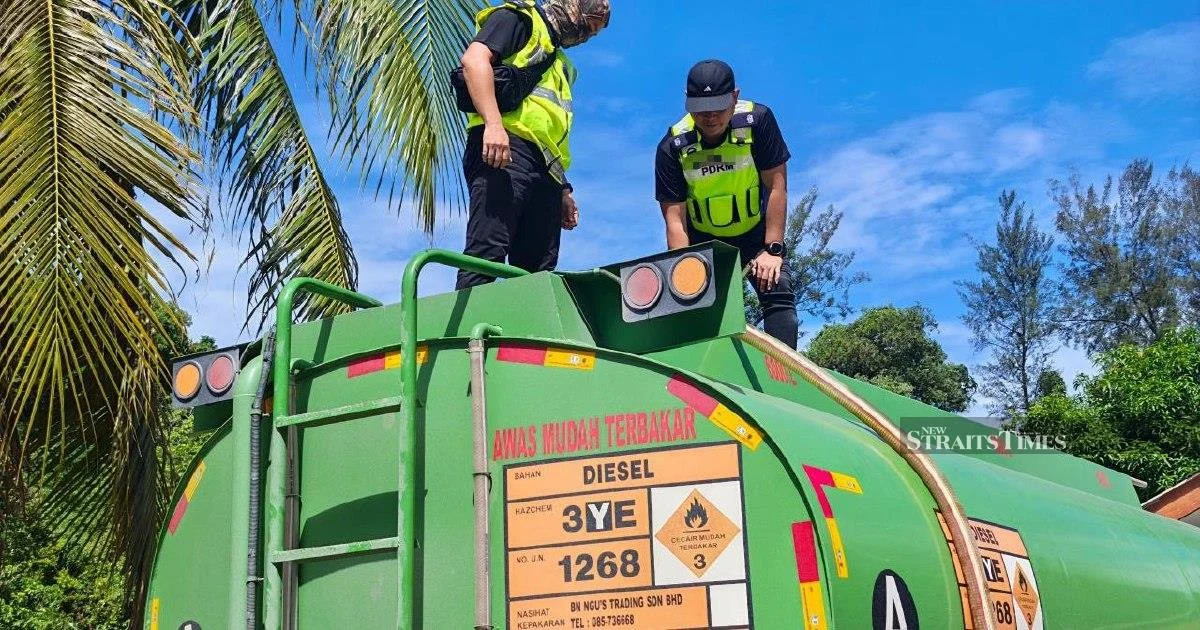
Enforcement agencies have uncovered and dismantled an elaborate fuel diversion scheme operating from a residential property in Tanjung Lobang, Miri, marking another significant victory in the ongoing battle against black-market petroleum trading in Sarawak. The operation resulted in the seizure of 15,000 litres of subsidised diesel and the arrest of four men implicated in the illegal enterprise, which authorities allege had been functioning covertly within the bungalow compound to evade regulatory oversight.
The discovery underscores a persistent challenge facing Malaysian authorities: the sophisticated networks that have emerged around subsidised fuel products. Diesel, priced below market rates for legitimate commercial and agricultural use, has become a prime target for diversion schemes whereby quantities are siphoned from authorised distribution channels and sold at inflated prices on the black market. The profit margins on diverted subsidised fuel can be substantial, particularly when the product is sold to unsuspecting buyers or transported across state borders where price differentials are most pronounced.
The Tanjung Lobang operation represented a relatively sophisticated arrangement, with operators establishing their depot within a residential dwelling rather than an industrial or commercial facility. This approach allows perpetrators to maintain a lower profile, reduce the likelihood of routine inspections, and blend illicit activity into a neighbourhood setting where fuel storage might not immediately arouse suspicion. The use of residential premises also suggests the network may have possessed some level of local knowledge or protection, enabling it to operate for a period before law enforcement intervention.
For Malaysia's fuel subsidy regime, such cases highlight an ongoing tension between the government's commitment to maintaining affordable energy prices for citizens and the vulnerability of subsidised products to organised diversion. The subsidy system, while intended to ease the cost-of-living burden, creates artificial price incentives that encourage criminal enterprise. The wider the gap between subsidised and market prices, the greater the financial motivation for syndicates to locate and exploit distribution vulnerabilities.
The four individuals detained in connection with the Miri operation now face investigation under provisions governing fuel smuggling and subsidy fraud. Depending on the evidence gathered and the roles each person played within the network, charges could range from unlicensed fuel distribution to conspiracy and organised crime statutes. Such prosecutions typically proceed through state courts and can carry significant penalties if convictions are secured, including substantial fines and custodial sentences.
Miri and the broader Sarawak region have seen recurring incidents of fuel diversion operations in recent years, reflecting both the strategic location of the state within maritime Southeast Asia and the presence of established smuggling networks that move goods across state and international borders. The Tanjung Lobang bust occurs against a background of intensified enforcement activity by authorities seeking to dismantle such operations and deter further criminal activity in the fuel sector.
The seizure of 15,000 litres represents a material volume that would have commanded significant market value if successfully distributed through illicit channels. Based on price differentials between subsidised and market rates, the recovered fuel could have generated profits in the region of tens of thousands of ringgit for the syndicate had it been successfully sold, illustrating the financial stakes involved in such operations and the return-on-investment calculations that motivate organisers.
Authorities typically employ a multi-agency approach to combating fuel diversion, with the Ministry of Domestic Trade and Cost of Living, the Royal Malaysia Police, and various port and customs authorities coordinating intelligence and enforcement efforts. The Miri operation demonstrates this collaborative model in action, though the identification of how the syndicate was initially detected—whether through intelligence work, routine inspection, informant tip-off, or accident—remains unreported. Such methodologies inform broader enforcement strategy and help authorities refine their approaches to targeting future operations.
The dismantling of the Tanjung Lobang depot also carries implications for supply chain integrity along Sarawak's fuel distribution network. As enforcement agencies remove points of diversion from the system, the resilience and efficiency of legitimate fuel distribution improves, and the likelihood that subsidies reach intended consumers rather than black-market operators increases. However, the persistence of such operations suggests that criminal networks remain adaptive and continue to identify new vulnerabilities as old ones are closed.
As investigations proceed into the arrested individuals and their associates, authorities will likely seek to uncover the broader network structure within which this depot operated. Understanding how the operation sourced its subsidised fuel, who the customers and distribution partners were, and whether the network connected to other known syndicates could yield intelligence valuable for preventing similar operations elsewhere in Malaysia and the region.