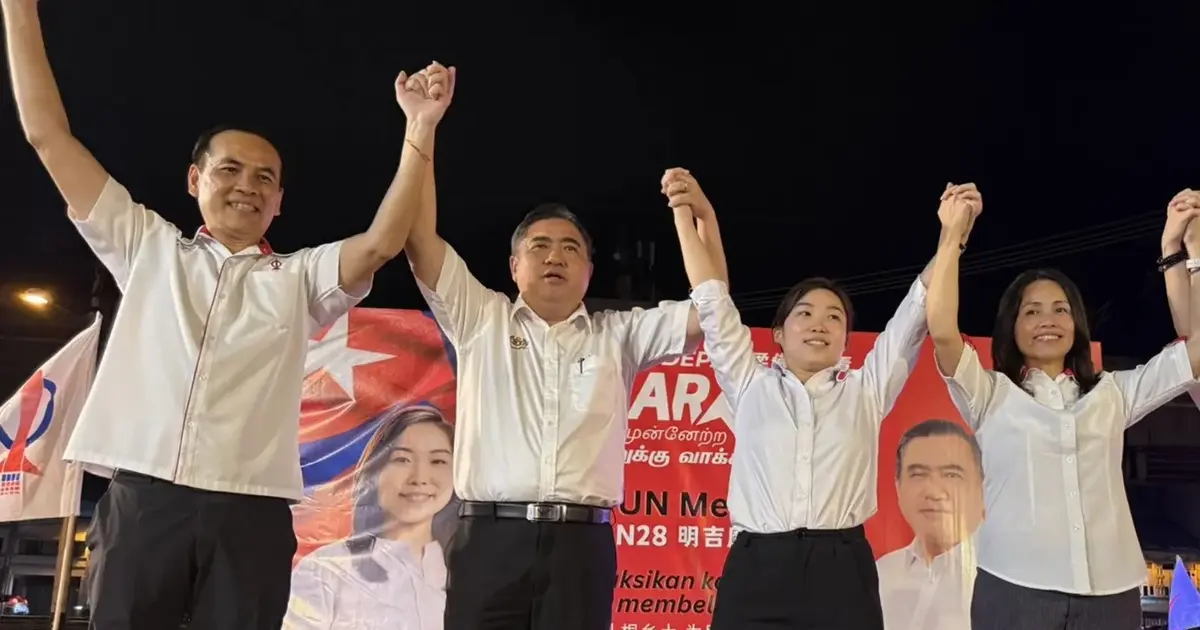
The DAP has signalled a generational shift in its representation for the Mengkibol constituency, announcing that lawyer Chu Poh Yee will carry the party's banner in the forthcoming general election instead of fielding the sitting two-term incumbent. Party secretary-general Loke Siew Fook made the formal announcement, confirming the strategic decision after what is understood to be internal deliberation within the party machinery.
The move reflects broader patterns within the DAP as it approaches GE16, where the party is reassessing candidate lineups across multiple constituencies. Rather than automatically renominating long-serving representatives, the party is evaluating combinations of experience, fresh perspectives, and local appeal. The decision to replace a two-term incumbent signals confidence in Chu Poh Yee's ability to consolidate the DAP's support base while potentially expanding it among younger and more diverse voter segments.
Chu Poh Yee brings a professional legal background to the candidacy, positioning her as someone with substantive credentials in advocacy and legislative matters. Her entrance into electoral politics comes at a time when Malaysia's political landscape is increasingly demanding candidates with demonstrable professional expertise and ability to engage with complex policy issues ranging from economic management to constitutional affairs. The legal profession has historically provided several notable political figures across Malaysia's parliamentary system, and Chu's background situates her within this tradition.
The Mengkibol seat itself occupies a strategically important position within the DAP's parliamentary footprint. The constituency's electoral dynamics, demographic composition, and voting patterns have evolved since the incumbent's initial election, creating both challenges and opportunities for the party's representation strategy. By fielding Chu Poh Yee, the DAP appears to be recalibrating its approach to ensure the seat remains within its grasp while addressing any underlying concerns about representation that may have emerged over the incumbent's two terms.
Loke Siew Fook's role in announcing the decision underscores the formal nature of the candidacy announcement and reflects the DAP's hierarchical decision-making processes. As party secretary-general, Loke's involvement signals that the selection process carried organisational weight and was executed through established party channels rather than resulting from grassroots pressure or external circumstances. This procedural clarity typically aims to project internal cohesion and disciplined governance within the party structure.
The decision also arrives within the context of Malaysian electoral reform discussions and evolving expectations regarding political representation. Constituencies are increasingly scrutinising their elected representatives' accomplishments, engagement with constituents, and ability to deliver tangible benefits. The DAP's choice to refresh its Mengkibol candidacy suggests the party is responding to these heightened accountability expectations and believes Chu Poh Yee possesses the profile and capability to meet them.
For Chu Poh Yee personally, the candidacy represents a significant career transition from legal practice to electoral politics. Such transitions require candidates to develop political acumen, build extensive grassroots networks, understand constituent needs across diverse demographics, and navigate the intense demands of campaigning and parliamentary work. Her legal expertise will likely form the foundation of her campaign messaging and parliamentary focus, potentially emphasising constitutional protection, rule of law, and justice sector reform.
The broader implications of this candidacy selection extend to understanding how opposition parties in Malaysia are modernising their political recruitment. Rather than viewing parliamentary seats as tenure positions for long-serving representatives, parties are increasingly treating them as strategic assets requiring periodic reassessment and renewal. This approach reflects maturation in Malaysia's political competition and recognition that electoral success depends on dynamic, responsive candidacy strategies rather than automatic reselection based on seniority alone.
Within the DAP specifically, this decision joins other recent candidate announcements and adjustments being made ahead of GE16. The party is simultaneously managing succession planning in constituencies where long-serving members have retired or been reassigned, while also making strategic calls about retaining particular representatives. These decisions collectively shape the DAP's electoral positioning and reflect leadership judgements about which constituencies warrant candidate refreshment and which require continuity.
The announcement will likely prompt broader conversation within DAP membership and Mengkibol constituents about the reasoning behind the change, Chu Poh Yee's vision for the seat, and her differentiation from previous representation. Her campaign messaging will need to acknowledge the outgoing incumbent's record while articulating a compelling case for why voters should support a new face representing their interests in Parliament. This narrative construction will be crucial to maintaining the DAP's hold on the seat during a nationally competitive electoral environment.