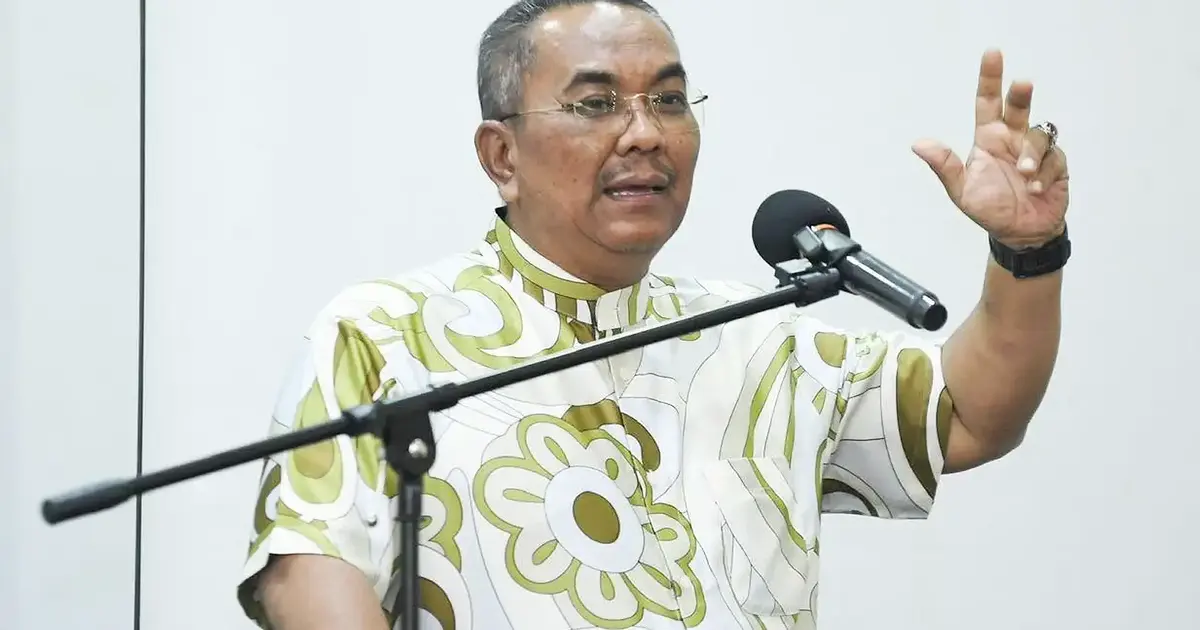
The governing alliance in Kedah faces significant strain as tensions between its two principal components, PAS and Bersatu, threaten to erode the political unity that has defined Perikatan Nasional's hold on the northern state. Political analyst Awang Azman Pawi has cautioned that the deepening divide could prove costly for the coalition's electoral prospects, potentially preventing Chief Minister Muhammad Sanusi Md Nor from achieving the decisive mandate that appeared within reach merely months ago.
The friction between the two parties reflects broader ideological and strategic differences that have periodically surfaced within Perikatan Nasional since its formation. While PAS maintains its traditional focus on religious governance and Islamic principles, Bersatu has positioned itself as a multiethnic alternative within the coalition. This philosophical divergence, long submerged beneath a unified front, has become increasingly difficult to conceal from ordinary voters in Kedah's hustings and town halls.
Awang Azman's assessment highlights a critical vulnerability in Perikatan Nasional's operational structure: the absence of synchronized messaging and unified candidate selection processes across constituencies. When coalition partners cannot present a coherent vision to voters, the resulting confusion typically benefits opposition parties by fragmenting the ruling alliance's support base. In Kedah's context, this splintering effect could translate into losses in marginal seats where victory margins have historically remained narrow.
The analyst's concern extends beyond mere electoral mathematics. A loss of Bersatu's backing in certain constituencies would represent a practical collapse of the coalition mechanism in those areas, essentially forcing Perikatan Nasional to contest as separate entities rather than as an integrated political force. Such disintegration would fundamentally alter the competitive landscape, potentially allowing Pakatan Harapan or independent-minded candidates to capitalize on the governing alliance's internal chaos.
Kedah's electoral dynamics have shifted considerably since the 2022 elections, when Perikatan Nasional first secured control of the state. The political landscape has evolved as both national and state-level developments have reshaped voter preferences and coalition relationships. Muhammad Sanusi Md Nor, despite his considerable personal popularity, cannot entirely insulate himself from the damaging effects of coalition infighting, particularly when it signals organizational weakness to the broader electorate.
The practical implications of this rift extend to resource allocation and campaign coordination. When coalition partners fail to coordinate effectively, campaign funds may be duplicated or wasted, candidate selection processes become contentious, and voter outreach loses coherence. In a state where elections remain competitive, such inefficiencies can be decisive. Voters accustomed to clear political messaging become skeptical of parties that cannot present unified positions on state development, religious policy, and economic management.
Bersatu's potential withdrawal of support in specific constituencies would raise uncomfortable questions about the sustainability of Perikatan Nasional as currently configured. If party officials resort to contesting independently in certain areas rather than implementing a coordinated slate, it signals to voters that factional interests have superseded coalition loyalty. This perception, once embedded in public consciousness, becomes self-reinforcing as voters lose confidence in the coalition's capacity to govern coherently.
The timing of this divergence carries additional significance given Malaysia's fluid political environment. National developments, particularly within UMNO and Pakatan Harapan, inevitably ripple through to state politics. If Perikatan Nasional's core components cannot maintain functional unity in Kedah, it raises troubling questions about the coalition's viability at the federal level. Conversely, federal-level tensions frequently manifest at the state level, suggesting that Kedah's troubles may reflect unresolved conflicts within the broader alliance structure.
Muhammad Sanusi Md Nor's political capital, substantial though it may be, has finite limits. His personal popularity cannot indefinitely compensate for organizational dysfunction within his governing coalition. Voters distinguish between personal leadership qualities and party/coalition competence; the former may sustain electoral viability for an individual, but the latter determines whether that individual can actually govern effectively with coalition support. A fractious Perikatan Nasional in Kedah threatens both dimensions simultaneously.
The path forward for the coalition involves either resolving the underlying PAS-Bersatu disagreements or managing them sufficiently to present unified candidacies in all constituencies. Anything less risks validating Awang Azman's assessment that Kedah voters, confronted with visible coalition division, will respond by fragmenting their own support. Such fragmentation, even if it falls short of unseating Muhammad Sanusi Md Nor personally, would represent a diminishment of the decisive mandate he might otherwise achieve and a weakening of his negotiating position within both the state legislature and the broader Perikatan Nasional structure.