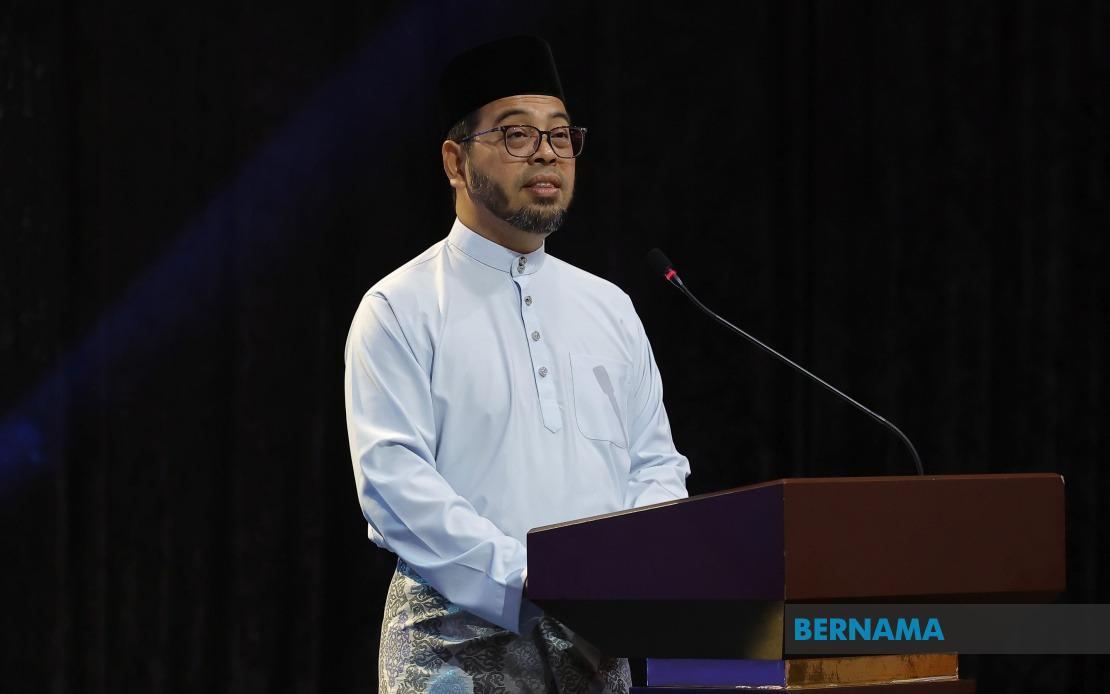
Religious Affairs Minister Dr Zulkifli Hasan has made an impassioned appeal for Malaysia's Muslim population to move beyond existing disputes and animosities, arguing that a cohesive ummah is essential for navigating the mounting complexities of the modern world. Speaking at a national-level Maal Hijrah celebration held at Putra Mosque in Putrajaya on June 17, Dr Zulkifli emphasised that meaningful progress within society depends fundamentally on individuals undergoing profound personal transformation—one that encompasses intellectual growth, spiritual advancement, and moral improvement across all dimensions of life.
The ceremony, themed "MADANI Dihayati, Ummah Diberkati", drew distinguished guests including Sultan Nazrin Shah of Perak and Deputy Prime Minister Datuk Seri Fadillah Yusof. The presence of such high-level officials underscored the government's commitment to elevating the discourse around community cohesion during the Islamic new year celebration. Dr Zulkifli's remarks centred on a straightforward but powerful proposition: a unified community attracts prosperity and divine blessing, whereas fragmentation inevitably breeds suffering and weakens the nation's collective strength.
The minister framed the concept of Maal Hijrah—the Islamic new year marking Prophet Muhammad's migration from Mecca to Medina—not merely as a historical commemoration but as a philosophical foundation for contemporary social renewal. He reinterpreted hijrah as an ongoing personal and collective journey away from destructive behaviours and destructive patterns, and simultaneously towards cultivating virtues and character traits that cement social bonds among Muslim communities. This reframing transforms the religious observance from a moment of reflection into a practical roadmap for practical and spiritual advancement, suggesting that modern Muslims must undertake their own migrations away from division towards unity.
Dr Zulkifli grounded his argument in Malaysia's vulnerability to international economic headwinds that show no signs of abating. Supply chain disruptions emanating from geopolitical tensions and broader economic uncertainty have rippled across Asia-Pacific nations, threatening stability in export-dependent economies like Malaysia. The minister contended that facing such interconnected challenges requires more than policy adjustments or technical fixes—it demands a unified populace capable of absorbing shocks and supporting government initiatives without fracturing along existing fault lines of belief or background. His remarks reflect an underlying concern that internal discord could amplify the impact of external pressures.
Beyond economic pragmatism, Dr Zulkifli articulated a vision where Islamic values serve as a stabilising force in Malaysian society. He urged continuous public backing for government programmes designed to elevate Muslim dignity and ensure Islamic principles remain vibrant within the nation's multicultural fabric. This positioning is significant for Southeast Asia's largest Muslim-majority democracy, where maintaining equilibrium between religious identity and pluralistic governance remains an ongoing challenge. The minister's framing suggests that strengthening Islamic values need not come at the expense of national cohesion—indeed, he argued the opposite.
Crucially, Dr Zulkifli extended his message beyond the Muslim community alone, stressing that all Malaysian citizens, regardless of faith tradition, share a fundamental obligation to preserve the nation's peace, stability and prosperity. This universalist language acknowledges Malaysia's religiously diverse population while maintaining a particular focus on Muslim community renewal. The distinction matters in a context where religious harmony has periodically faced strain, and where articulating inclusive visions of national purpose remains necessary for social stability.
The National Tokoh Maal Hijrah award was presented to IIUM Rector Prof Emeritus Datuk Dr Osman Bakar, recognising his contributions to Islamic scholarship and institutional leadership in Malaysia. Simultaneously, the International Tokoh Maal Hijrah award went to Moroccan scholar Dr Ahmad Al-Raysuni, reflecting Malaysia's engagement with broader Islamic intellectual traditions. These selections signify official recognition that Muslim unity and advancement depend partly on intellectual and scholarly contributions that transcend narrow nationalism.
For Malaysia's government, Dr Zulkifli's message represents a deliberate effort to mobilise religious identity towards national ends—strengthening social cohesion and public support during economically uncertain times. The invocation of ummah unity serves simultaneously as a call for internal Muslim reconciliation and as a broader rallying cry for national resilience. In a region where several Muslim-majority nations grapple with sectarian tensions and where Malaysia has experienced periodic flare-ups in religious discourse, such ministerial appeals carry particular weight.
The emphasis on internal spiritual and intellectual transformation as prerequisites for external change reflects Islamic theological traditions emphasising personal rectification. However, it also sidesteps structural or political dimensions of division, framing discord primarily as a matter of individual moral failure rather than competing interests or ideological positions. This rhetorical strategy allows space for emphasising unity without necessarily requiring substantive resolution of underlying disagreements about governance, religious authority, or resource distribution within Muslim communities.
As Malaysia navigates post-pandemic economic recovery and contends with regional geopolitical tensions, the government appears to be banking on renewed emphasis on religious and national identity as cohesive forces. Dr Zulkifli's Maal Hijrah address exemplifies this broader strategy, linking Muslim spiritual renewal directly to national prosperity and positioning religious leadership as essential to managing contemporary challenges. Whether such appeals can translate into substantive improvements in social cohesion amid competing pressures remains an open question for policymakers and community leaders across Malaysia.