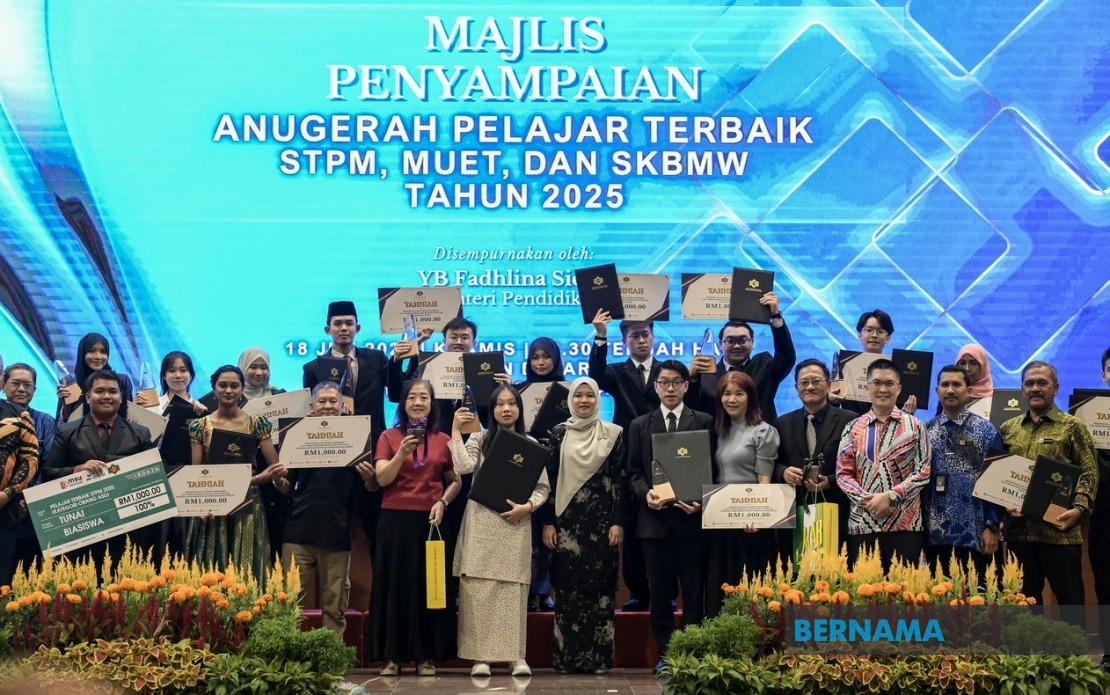
The Malaysian government has unveiled a scholarship programme targeting the nation's eighteen most accomplished STPM students, with tuition fees covered by public universities as recognition of their academic prowess. Education Minister Fadhlina Sidek announced the initiative at a press conference following the 2025 STPM awards ceremony, positioning the scheme as part of broader efforts to invigorate the Form Six education pathway and persuade greater numbers of Malaysian secondary school graduates to pursue this well-established pre-university route rather than alternative qualifications.
This scholarship initiative represents a strategic pivot in how Malaysia's public higher education institutions engage with top-performing students at the pre-university level. Rather than leaving exceptional STPM graduates to navigate university selection independently, participating public universities have committed to actively recruiting and supporting these achievers through direct financial assistance. The arrangement underscores a recognition that Form Six remains a foundational pathway for many of Malaysia's most academically accomplished young people, despite competition from international A-levels, American Advanced Placement programmes, and other alternatives increasingly available in Malaysian schools.
Fadhlina emphasised that the scholarship programme forms part of a comprehensive governmental strategy to enhance the Form Six ecosystem, which has faced questions about its relevance and appeal to contemporary students. Beyond the scholarship initiative, the Education Ministry has implemented a suite of supporting measures including expansion of Form Six College facilities across the country, deployment of smartboards in classrooms to modernise teaching delivery, early schooling assistance schemes, and the MADANI Book Vouchers programme designed to ease the financial burden on Form Six students and their families.
The announcement carries particular significance given Malaysia's ongoing discussion about educational pathways and student progression routes. Form Six education has historically served as a primary conduit for domestic university admission, yet declining enrolment trends and the proliferation of alternative pre-university options have prompted concerns about the pathway's sustainability. By offering direct scholarships to top performers, public universities signal renewed institutional commitment to Form Six and create tangible incentives for exceptional students to remain within the system rather than exploring overseas or alternative domestic qualifications.
Performance data released alongside the announcement indicates positive momentum within the STPM system itself. The national Cumulative Grade Point Average climbed to 2.88 in 2025, up marginally from 2.85 the previous year, suggesting that overall academic standards within the cohort have strengthened incrementally. While the improvement may appear modest in numerical terms, Fadhlina characterised the trend as reflecting the strengthening effects of recent ecosystem enhancements and institutional investments in Form Six infrastructure and support systems.
The timing of this initiative reflects deliberate policy sequencing by the Education Ministry. By introducing the scholarship programme to the 2025 STPM cohort, the government establishes a sustainable model that can expand as public universities develop integrated recruitment and financial support mechanisms. This approach allows institutional capacity to develop gradually rather than imposing sudden financial obligations on universities, whilst simultaneously demonstrating immediate commitment to rewarding academic excellence at the pre-university level.
From a Malaysian higher education perspective, the scheme creates competitive advantages for public universities in talent recruitment. International ranking systems increasingly emphasise the quality of student intake as a measure of institutional performance. By directly engaging with the nation's highest-achieving pre-university students, public universities strengthen their future undergraduate cohorts and enhance their competitive positioning relative to private institutions that have traditionally held advantages in student recruitment and financial package offerings.
The broader context for this announcement includes ongoing efforts to strengthen Malaysia's education system following pandemic-related disruptions. Form Six completion, which involves demanding curriculum content and culminates in rigorous national examinations, has proven resilient despite extended school closures and learning interruptions. The scholarship programme can be understood partly as recognition of student and institutional resilience, and partly as investment in maintaining momentum within this critical educational pathway.
For Malaysian secondary school students and their families, the scholarship initiative signals that academic excellence remains valued and rewarded within domestic higher education systems. This messaging counters perceptions that exceptional Malaysian students must necessarily pursue overseas education to access premium learning opportunities. By offering tuition fee sponsorships, public universities reduce financial barriers that might otherwise encourage talented students from middle and lower-income households to consider alternative pathways or overseas qualifications perceived as more accessible financially.
Regional implications warrant consideration as well. Malaysia competes regionally for talent, particularly in attracting the region's top performing students. Enhanced domestic scholarship offerings strengthen Malaysia's ability to retain high-achieving students within the national education system and prevent brain drain to neighbouring countries' universities. The initiative also aligns with Southeast Asian trends toward expanding financial support for high-achieving students as governments and universities seek to strengthen domestic talent pipelines.
Looking forward, the success of this scholarship initiative will likely depend on several implementation factors. Clear communication about application processes, selection criteria, and scholarship terms must reach intended recipients effectively. Public universities will need to coordinate across institutions to ensure efficient administration and prevent duplication or confusion. Additionally, sustaining the programme across multiple cohorts requires predictable funding mechanisms and institutional commitments that extend beyond initial announcements.
The initiative also raises questions about downstream effects on university admissions more broadly. If eighteen scholarships target only the absolute top performers, this leaves substantial numbers of strong STPM graduates without equivalent support despite possessing genuine academic merit. This may eventually prompt discussions about whether scholarship provision should extend beyond the elite performers to encompass broader cohorts of capable students, particularly those from disadvantaged socioeconomic backgrounds.
Ultimately, the 2025 STPM scholarship programme represents strategic investment in domestic education quality and student retention. By recognising academic excellence through direct institutional support, Malaysian public universities demonstrate renewed commitment to Form Six pathways and create incentives for exceptional students to pursue higher education domestically rather than abroad. The initiative sits within a larger ecosystem of Form Six enhancements that collectively signal government determination to sustain and strengthen this traditional pre-university pathway as a competitive, attractive option for Malaysia's most academically accomplished young people.