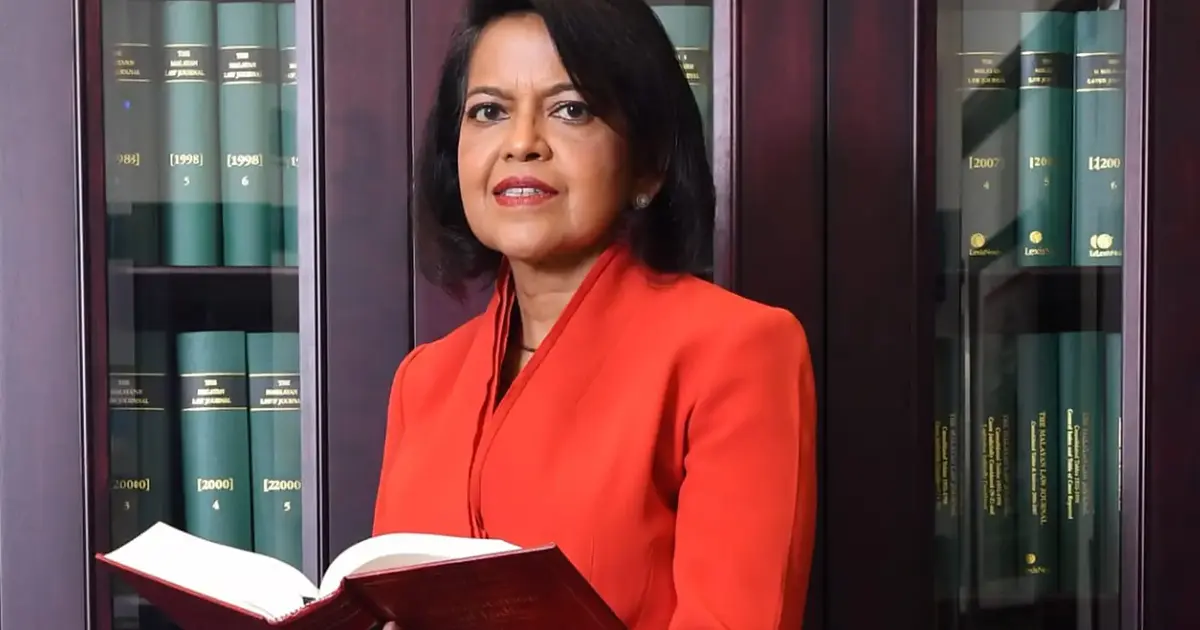
The Malaysian Media Council has appointed Nallini Pathmanathan, a former Federal Court judge, as its new chairman, signalling a strategic pivot toward judicial expertise at a time when the media landscape faces mounting pressures from multiple directions. The appointment represents a notable shift for the industry's self-regulatory body, which has traditionally sought leaders from journalism and media backgrounds.
Pathmanathan's transition from the bench to the media council brings with it considerable gravitas and legal authority. Her tenure on the Federal Court would have exposed her to complex issues involving freedom of expression, media law, and the intersection of journalism with constitutional rights—subjects that remain central to industry governance today. The council's decision to recruit someone with her background reflects recognition that contemporary media challenges increasingly demand both regulatory acumen and legal sophistication.
The Malaysian media industry has indeed endured a turbulent period, contending with structural transformations driven by digitalization, business model disruption, and shifting audience habits. Traditional revenue streams have eroded significantly, pushing newsrooms to reinvent themselves while maintaining editorial standards. Simultaneously, questions surrounding press freedom, political interference, and the regulation of online content have intensified scrutiny on how Malaysia's media operates and who holds it accountable.
The Media Council itself occupies a delicate position within Malaysia's media governance architecture. As a self-regulatory body, it lacks statutory enforcement powers held by governmental agencies, yet it remains the primary mechanism through which the industry attempts to maintain professional standards and public trust. This distinction becomes critical when addressing complaints about editorial conduct, factual accuracy, and ethical breaches. The council's effectiveness depends entirely on the respect it commands and its demonstrated commitment to impartiality.
Pathmanathan's judicial background carries implications for how the council might approach dispute resolution and standard-setting. Her familiarity with constitutional law and judicial reasoning could strengthen the council's ability to articulate clear, legally defensible positions on contentious issues—particularly regarding the boundaries between legitimate regulation and undue restriction of editorial independence. This matters considerably for Malaysia, where tensions between media freedom and government authority have periodically tested the limits of self-regulation.
The appointment also reflects broader concerns about media credibility and institutional trust. Public confidence in Malaysian news organizations has fluctuated amid accusations of political bias, ownership concentration, and sensationalism. An experienced jurist leading the Media Council might help restore institutional credibility by bringing perceived impartiality and a commitment to evidence-based decision-making to high-profile disputes and complaints. Her presence signals to both the industry and the public that standards and professional conduct will be taken seriously.
For newsrooms across Malaysia, Pathmanathan's leadership could shape how the council responds to emerging challenges. The digital age has blurred boundaries between journalism and other forms of content creation, creating ambiguity about which platforms and producers should fall under media ethical codes. The council will need to determine how to regulate or guide conduct in an increasingly fragmented media environment where traditional gatekeeping has diminished. An intellectually rigorous chair could advance more nuanced policy frameworks.
Regionally, Malaysia's approach to media self-regulation influences how Southeast Asian countries evaluate their own governance models. Several nations in the region maintain similar councils, and developments in one jurisdiction often inform discussions elsewhere. A legal specialist leading Malaysia's council might contribute valuable perspectives to regional conversations about balancing media freedom with accountability in democracies where both remain works in progress.
The timing of this appointment deserves consideration alongside current debates about online content regulation, misinformation, and the role of social media platforms. While the Media Council's jurisdiction traditionally covers traditional and digital journalism, the council increasingly finds itself addressing questions about where professional media standards apply in an ecosystem dominated by user-generated content and algorithms. Pathmanathan will inherit these boundary-pushing questions and must develop thoughtful responses that protect both public interest and editorial autonomy.
Pathmanathan's track record on freedom of expression cases during her judicial career will inevitably come under scrutiny. Journalists and media organizations will assess whether her past rulings and judicial philosophy suggest sympathy for robust press freedoms or a more restrictive interpretation of media rights. Those concerned about the council serving as a constraint on journalism will seek assurance that her leadership strengthens rather than undermines editorial independence.
Looking forward, the council under Pathmanathan's direction faces the challenge of remaining credible to both media organizations and the public simultaneously. This requires demonstrating that investigations into complaints are thorough and fair, that decisions are grounded in clearly articulated principles rather than political pressure, and that the council itself operates transparently. A chair with judicial experience understands the importance of reasoned argument and documented deliberation in maintaining institutional legitimacy.
The Malaysian media industry's effectiveness depends ultimately on public trust and professional accountability. By appointing Pathmanathan, the Media Council has positioned itself to engage more deeply with the legal and constitutional dimensions of media regulation. Whether this translates into strengthened standards, restored credibility, and more robust protections for both press freedom and public interest will become apparent through her tenure and the council's handling of contentious cases ahead.