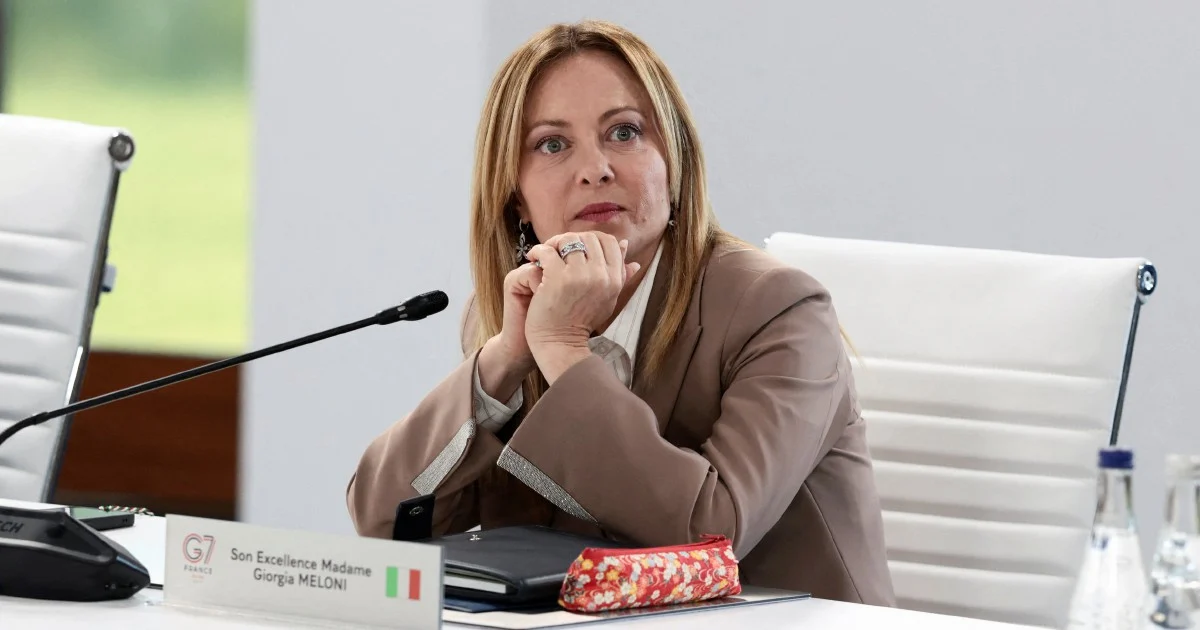
When Donald Trump assumed office for his second presidential term in 2025, Italian Prime Minister Giorgia Meloni stood alone among European leaders in receiving an invitation to his inauguration ceremony in Washington, a symbolic gesture that appeared to signal the beginning of an unprecedented period of warmth and cooperation between the United States and Italy. The invitation itself seemed to validate Meloni's cultivation of a close personal relationship with the American president and suggested that Rome might secure preferential treatment within the transatlantic framework—a positioning that would have strengthened Italy's hand in negotiations over trade, defence, and European affairs.
Meloni's cultivation of proximity to Trump reflected a deliberate strategic calculation rooted in Italy's broader political realignment. As the head of a centre-right government and a member of the Brothers of Italy party with nationalist and conservative credentials, Meloni recognised that alignment with Trump offered domestic political advantages while potentially elevating Italy's status within Western councils. Her early positioning as a Trump confidante contrasted sharply with the skepticism expressed by other European capitals, particularly among leaders uncomfortable with the American president's nationalist rhetoric, protectionist trade policies, and questioning of longstanding NATO commitments.
However, the relationship has deteriorated markedly since that prominent inaugural moment. Meloni has transitioned from a tacit enabler of Trump's agenda to an increasingly vocal critic willing to challenge his policies openly. This reversal speaks to the complex realities facing European leaders attempting to navigate an increasingly unpredictable American administration while defending their own national and regional interests. The Italian prime minister's willingness to articulate concerns publicly demonstrates that even leaders with ideological affinity to Trump find his governance approach problematic when its practical consequences affect their constituents.
The source of tension appears rooted in specific policy grievances rather than abstract principle. Trump's protectionist trade measures, including proposed tariffs that threaten Italian exporters, have created tangible economic consequences for Italy's manufacturing base. Agricultural interests, luxury goods producers, and industrial exporters all face vulnerability to American trade restrictions, making Meloni's initial diplomatic accommodation increasingly untenable domestically. Criticism of Trump on trade matters offers Meloni political cover with constituencies harmed by his policies while maintaining her conservative credentials.
Defence and NATO issues have also emerged as fracture points. While Meloni initially appeared sympathetic to Trump's pressure on European nations to increase defence spending, the American president's broader skepticism toward the NATO alliance itself presents Italy with strategic anxiety. Italy, as both a NATO member and a nation hosting significant American military installations, cannot afford American withdrawal from the collective defence architecture without jeopardising its own security calculations. This tension places Meloni in an awkward position: she cannot simply endorse Trump's transatlantic skepticism without contradicting Italy's fundamental security interests.
The diplomatic shift also reflects broader European recalibration following Trump's return to office. Initial hopes that his second administration might prove more predictable or institutionalised than his first term have given way to recognition that Trump's unpredictability remains a defining characteristic. European leaders, even those sympathetic to his general ideological orientation, have concluded that close alignment does not necessarily yield policy concessions or protection from disruptive decisions. Meloni's public criticism thus joins a chorus of reassessment across the continent.
For Malaysian and Southeast Asian observers, Meloni's trajectory illuminates the instability inherent in depending on American policy consistency under Trump. Nations across the region that have invested in strengthened ties with Washington may face similar reversals if American policy prioritises bilateral advantage over relationship maintenance. The Italian experience suggests that ideological alignment offers limited protection against transactional decision-making that prioritises immediate American interests.
Meloni's willingness to publicly challenge Trump also carries implications for European unity and the future of transatlantic relations. Rather than splintering into competing national strategies, her criticism has occurred alongside positions articulated by other European leaders, suggesting possible convergence around protecting European interests against American protectionism. This convergence, however tentative, may strengthen Europe's collective negotiating position while limiting individual nations' ability to secure separate advantageous arrangements.
The Italian prime minister's evolution from Trump confidante to critic reveals the limits of personality-driven diplomacy in managing structural tensions between capitals with divergent interests. Trump's expectation that ideological affinity or personal rapport would translate into unqualified support has proven naive when confronted with the hard realities of national interest. Meloni, despite her conservative credentials and nationalist sympathies, ultimately prioritises Italian economic welfare and security over deference to an American president.
Looking ahead, Meloni's shifting stance suggests that European responses to Trump will likely remain differentiated rather than unified, with leaders adopting positions determined by specific national vulnerabilities and advantages. Italy's exposed position within global supply chains and its significant exposure to American trade sanctions ensures that Meloni will continue emphasising economic concerns. This fragmented European response, paradoxically, may result in less effective collective leverage against American demands than would a more unified position, even as individual leaders attempt tactical repositioning.