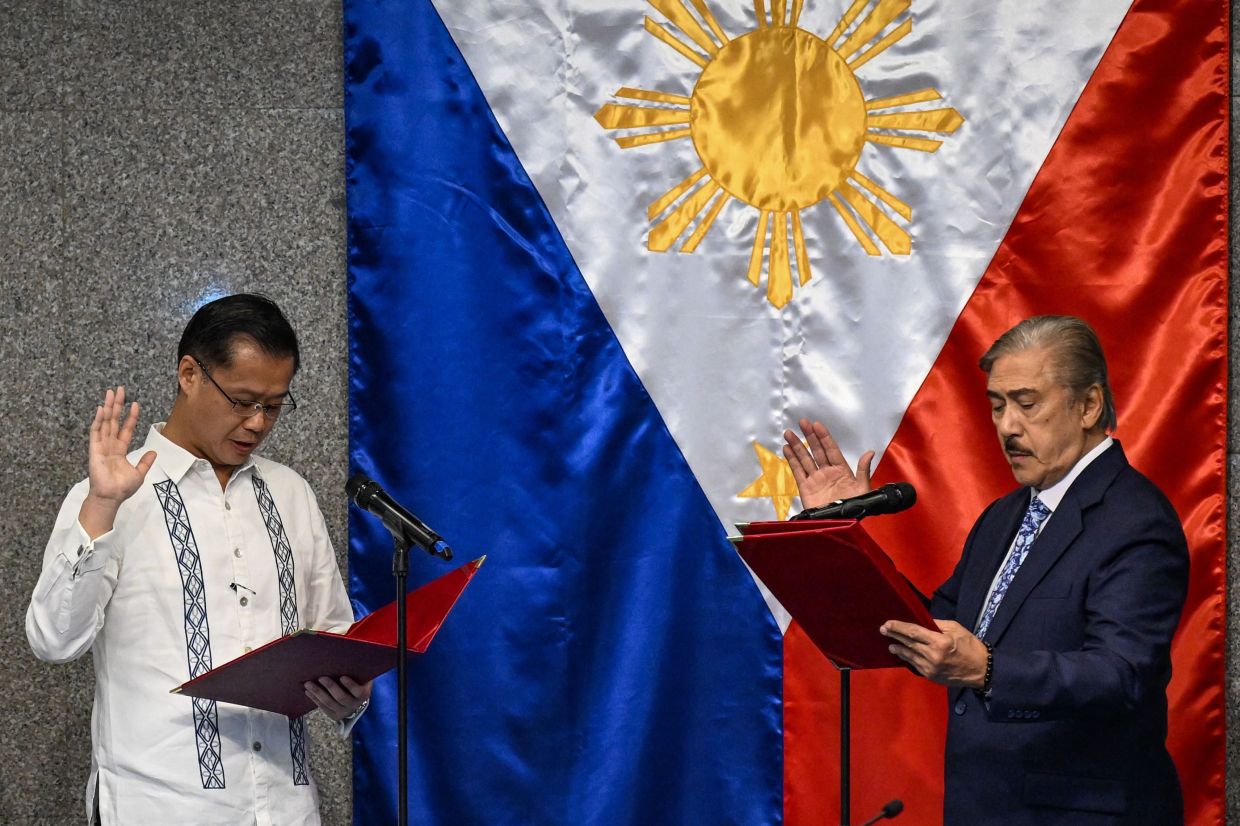
Senator Sherwin Gatchalian has been elected president of the Philippine Senate, capping weeks of internal political manoeuvring that saw the chamber's leadership shift hands in a dramatic reversal of fortune. The 24-member body convened in special session on Wednesday, June 17, with thirteen senators casting their votes for Gatchalian—precisely the minimum threshold needed to validate the election of a new presiding officer and establish his mandate to lead the chamber.
Gatchalian's ascension to the Senate presidency marks a significant career milestone for the longtime legislator, whose political résumé includes service as Mayor of Valenzuela City in Metro Manila and multiple terms as a House Representative. His election concludes a turbulent succession period that began only weeks earlier when Alan Peter Cayetano assumed the presidency in May. The instability at the top reflects broader friction within the Senate, where coalition loyalties remain fluid and numerical superiority can shift with individual defections.
The path to Gatchalian's victory became clear on June 3, when twelve senators formally elected him as Senate president pro tempore—a procedural move designed to challenge Cayetano's legitimacy. On that same day, Cayetano insisted he retained the presidency and argued that at least thirteen senators were constitutionally required to participate in any legitimate vote regarding the election or removal of Senate officers. The dispute essentially hinged on a question of parliamentary mathematics: did Cayetano's faction command enough votes to survive a challenge, or had his support eroded beyond recovery?
The critical turning point emerged on Tuesday when Senator Joel Villanueva, a previously reliable ally of Cayetano, switched his allegiance to Gatchalian's faction. This defection proved decisive. Villanueva's shift represented more than a simple numerical change; it symbolised the collapse of Cayetano's coalition and triggered an immediate reassessment among other senators about the political viability of his position. The momentum became irreversible. Cayetano, recognising the arithmetic had fundamentally shifted against him following conversations with Villanueva, announced his intention to step down from the Senate presidency rather than face a formal vote of no confidence.
The Senate's composition remains unstable, further complicating legislative operations and governance. The chamber currently operates with only twenty-two active members, two below its full complement. Senator Jinggoy Estrada, one of the missing members, surrendered to police earlier this month and now faces corruption charges. The Sandiganbayan, the Philippines' specialised anti-graft court, ordered Estrada's suspension from office for ninety days beginning Tuesday, effectively removing him from legislative proceedings. Meanwhile, Senator Ronald Dela Rosa remains a fugitive; the International Criminal Court has issued a warrant for his arrest, and his current whereabouts remain unknown to Philippine authorities.
These absences carry significant implications for the Senate's operational capacity. With only twenty-two sitting members and Gatchalian's election requiring exactly thirteen votes, the government coalition operates with minimal margin for error. A handful of additional defections could destabilise Gatchalian's presidency just as they destabilised Cayetano's, suggesting that leadership in the Senate remains precarious and dependent upon maintaining disciplined bloc voting. The vulnerability of the presidency reflects deeper institutional fragility within Philippine legislative structures, where coalition cohesion often depends on personalities and immediate political calculations rather than ideological consistency or long-term institutional loyalty.
For Malaysian observers and Southeast Asian analysts, the Philippine Senate's internal dynamics offer instructive lessons about the challenges of managing coalition governments and legislative majorities in presidential systems. The rapid succession of presidents within weeks underscores how formal institutional rules—such as the thirteen-vote threshold—can mask deeper questions about legitimacy and political momentum. Cayetano's swift departure following Villanueva's switch suggests that individual senators respond not merely to fixed factional allegiances but to perceptions of which faction commands the strongest momentum and which choice positions them advantageously within shifting power structures.
Gatchalian's election also raises questions about executive-legislative dynamics in the Philippines at a moment when both branches navigate competing priorities and resource constraints. The Senate president's role extends beyond ceremonial functions; the position controls committee assignments, legislative scheduling, and the chamber's operational agenda. Gatchalian's ability to consolidate his coalition and establish effective working relationships with fellow senators will substantially influence the government's capacity to advance key legislative initiatives throughout the remainder of the congressional term.
The underlying instability in the Senate presidency reflects broader patterns within Philippine politics, where personalised networks and opportunistic coalition-building often supersede institutional stability or programmatic coherence. As the chamber navigates critical issues affecting the nation—from economic policy to judicial independence to international relations—the question remains whether Gatchalian can transform his narrow electoral victory into a durable political foundation capable of sustaining legislative action across multiple parliamentary sessions.