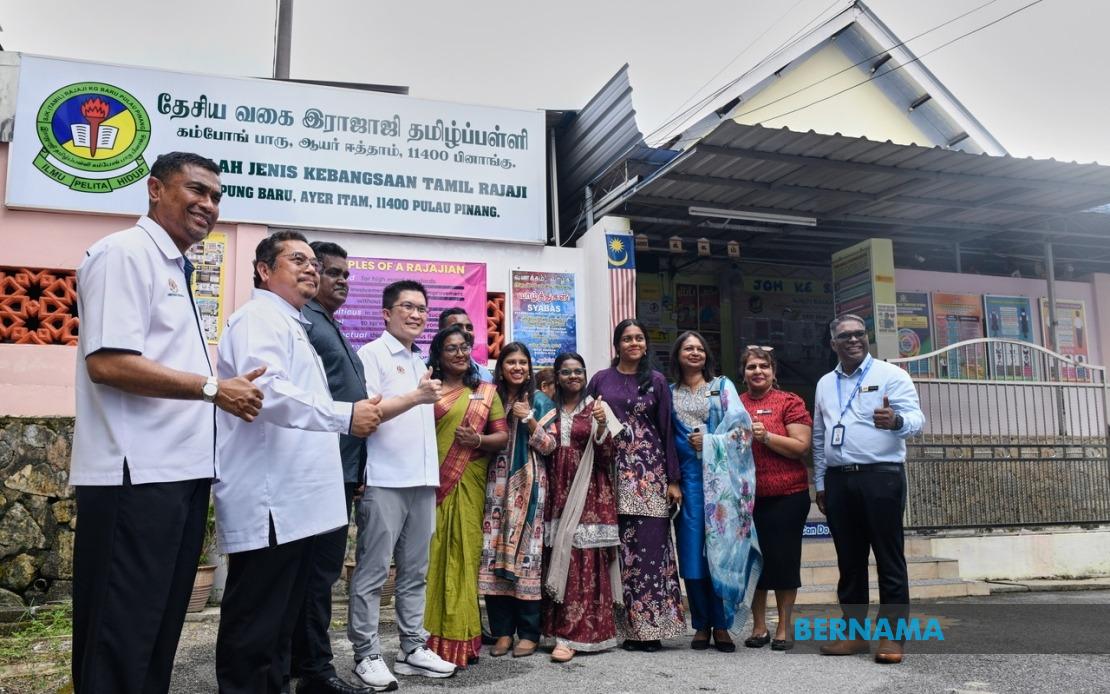
SJKT Rajaji, a Tamil-medium primary school operating in George Town for over seven decades, is set to undergo a transformative relocation that reflects broader efforts across Penang to modernize educational infrastructure for minority-language communities. The Education Ministry has approved a RM8 million construction project to establish the school at a new site in Farlim, Bandar Baru Ayer Itam, addressing longstanding operational challenges that have hindered student learning outcomes and administrative efficiency.
Deputy Education Minister Wong Kah Woh unveiled the approval on June 15, emphasizing that the initiative represents a critical intervention for an institution that has struggled within inadequate physical constraints. The school, which currently enrolls approximately 100 pupils, has operated in severely cramped conditions that prevent proper classroom segregation, limit extracurricular activities, and constrain library and recreational facilities essential for holistic child development. The relocation promises to unlock educational potential by providing purpose-built spaces designed for contemporary pedagogical approaches.
The construction timeline projects completion within 18 months, positioning SJKT Rajaji to commence operations at the new Farlim location by the 2029 academic session at the latest. This phased approach allows the school to complete administrative preparations and staff training while construction proceeds, minimizing disruption to students' learning trajectories. The selected site spans 2.3 acres, approved by the Penang government in 2022, situated approximately 500 metres from the existing campus—close enough to preserve community connections yet sufficiently distant to access a purpose-built environment.
Central to the project's feasibility is its funding mechanism. Rather than imposing additional fiscal pressure on state education budgets already stretched across competing priorities, the RM8 million investment will be entirely underwritten by a developer through corporate social responsibility commitments. This public-private partnership model offers a template for other minority-language schools facing infrastructure deficits, demonstrating how business entities can contribute meaningfully to community development while fulfilling CSR obligations. The arrangement signals recognition within the corporate sector of its stakeholder responsibilities toward Malaysia's linguistic and cultural diversity.
State Housing and Environment Committee chairman Datuk Seri S. Sundarajoo contextualized the SJKT Rajaji project within Penang's broader Tamil-medium education expansion strategy. The state currently operates 28 Tamil national-type schools, a network requiring systematic modernization to ensure equitable access to quality facilities across socioeconomically diverse communities. Multiple institutions are simultaneously undergoing developmental initiatives targeting permanent site acquisition, infrastructure improvements, and capacity enhancement—reflecting coordinated state-level commitment to Tamil education sustainability.
Sundarajoo disclosed that groundbreaking ceremonies for at least three additional SJKT projects are anticipated during the current calendar year, signaling momentum in the construction pipeline. Furthermore, previously stalled projects involving SJKT Sungai Bakap and SJKT Juru are being reactivated, suggesting renewed budgetary prioritization and administrative focus on Tamil-medium educational development. These cumulative efforts indicate recognition that linguistic and cultural minorities require deliberate institutional support to maintain educational parity with Malay-medium counterparts.
The significance of the SJKT Rajaji relocation extends beyond facility upgrades to encompass systemic equity considerations. Tamil-medium schools have historically received disproportionately lower capital investment compared to national schools and Malay-medium institutions, a disparity that compounds over decades and marginalizes minority communities educationally. By mobilizing substantial resources for Tamil school improvements, Penang's initiative addresses these structural inequities while signaling that linguistic diversity strengthens Malaysia's multicultural fabric and warrants corresponding public institutional support.
For Malaysian policymakers contemplating education resource allocation, the SJKT Rajaji model offers instructive insights. The combination of government approval, private-sector funding, and coordinated state-level planning creates sustainable pathways toward infrastructure modernization without budgetary strain that often constrains education ministry operations. This approach also demonstrates how CSR integration into development planning can serve genuine community needs rather than functioning merely as charitable gesture, thereby enhancing business legitimacy within society.
The 76-year institutional history of SJKT Rajaji reflects Tamil community resilience and educational commitment despite infrastructural challenges. Students attending the school have navigated learning environments designed for smaller cohorts decades ago, yet continued demonstrating academic engagement and cultural pride. The forthcoming relocation represents institutional vindication—acknowledgment that their perseverance merits commensurate governmental and societal investment in world-class educational facilities. This symbolic recognition carries weight extending beyond George Town's Tamil community, signaling broader societal affirmation of minority educational rights.
As Malaysia navigates increasingly competitive regional education rankings and employer skill requirements, Tamil-medium schools' institutional health directly impacts national human capital development. Graduates from well-resourced Tamil schools contribute linguistic expertise, cultural knowledge, and multilingual capabilities valuable for Malaysia's regional engagement and international competitiveness. Consequently, investments like SJKT Rajaji's relocation project represent not merely minority accommodation but strategic national interest in cultivating diverse talent pools.
The timeline extending to 2029 permits stakeholders—school management, parent associations, and community organizations—to prepare comprehensively for transition. This gradualist approach reduces disruption while allowing legacy institutional identity preservation, ensuring that the school's historical significance and community connections survive physical relocation. The Farlim site's proximity to the current campus facilitates continuity of community relationships and accessibility for families navigating school transitions.
Looking forward, SJKT Rajaji's trajectory offers potential benchmarks for addressing similar infrastructure deficits affecting other minority-language educational institutions across Malaysia. Should the project deliver expected outcomes—enhanced pupil enrollment, improved academic performance, and strengthened community educational engagement—replication across other states becomes feasible. Successful implementation could catalyze systematic Tamil school modernization nationwide, addressing longstanding equity gaps and affirming inclusive educational values central to Malaysia's constitutional multicultural framework.