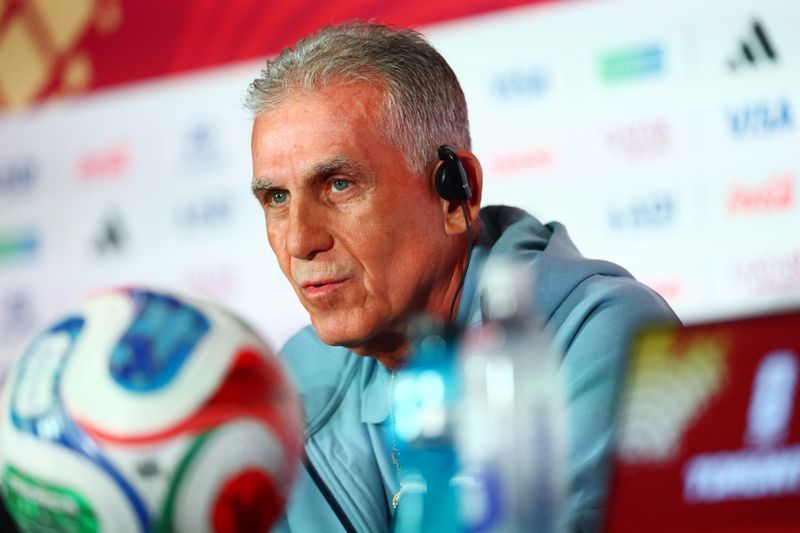
Ghana's World Cup aspirations hang in a delicate balance ahead of their crucial Group L encounter against Panama at Toronto Stadium, a contest that has become overshadowed by an off-field legal battle. The crux of the matter centres on midfielder Thomas Partey, whose attempt to enter Canada has been rejected by authorities, triggering an appeal that reached federal court on Tuesday—just one day before the scheduled kickoff. Coach Carlos Queiroz, however, struck a defiant tone at a pre-match press conference, insisting that Ghana will field a competitive team regardless of whether Partey's legal status is resolved in his favour.
The Villarreal midfielder faces serious allegations of rape and sexual assault in Britain, charges he has categorically denied. These accusations have cast a shadow over Ghana's tournament preparations, and Queiroz made clear his intention to sidestep the controversy, declining to elaborate on Partey's legal predicament. Instead, the veteran Portuguese coach pivoted firmly toward tactical matters, emphasising that his focus lay solely on deploying the resources available to him on matchday. His measured approach suggested an attempt to shield his squad from mounting external distractions at a critical stage of the competition.
Queiroz's statement that "we have our plan settled" underscored Ghana's organisational readiness, signalling that contingency arrangements have been prepared should Partey remain unable to participate. The coach's pragmatic outlook—viewing the situation as simply another variable to manage within the broader scheme of preparation—reflects the professionalism expected at the World Cup level. Yet the timing of the court decision, coming so close to kickoff, leaves little room for the coaching staff to pivot their strategy should circumstances shift dramatically.
When turning his attention to the Panamanian challenge, Queiroz demonstrated respect for the opposition whilst projecting confidence in his team's ability to compete. He characterised Panama as a well-organised and tactically experienced unit, attributes that have earned the Central American nation respect across the international football community. However, the 73-year-old coach was careful to avoid defensive pessimism, noting that every team possesses identifiable weaknesses that sufficiently resourced opponents can exploit.
Ghana's tactical framework, according to Queiroz, rests on several competitive pillars. The squad boasts considerable experience accumulated through prior tournaments and continental competitions, a factor that proves invaluable in knockout-stage environments where composure and decision-making separate victors from the vanquished. Beyond experience, Queiroz pointed to his team's technical quality, emphasising pace and individual skill as differentiating factors. The coach suggested that Ghana would particularly flourish in one-on-one duels, implying a strategy that leverages direct confrontation and personal dexterity rather than relying entirely on possession-based football.
The psychological angle of Queiroz's comments merits attention for Malaysian readers familiar with how Southeast Asian teams often compete against established footballing nations. His assertion that Ghana possesses both strength and showcase potential speaks to a confidence rooted in detailed preparation. This mirrors the mindset required of regional sides when facing more fancied opponents—acknowledgement of limitations coupled with clear identification of where advantages lie and how to maximise them.
Beyond the immediate tactical contest, Queiroz used his platform to lodge a subtle critique against FIFA's newly implemented mandatory hydration breaks during World Cup matches. These stoppages have proven controversial among players and coaching staff, who question whether the interruptions genuinely serve player welfare or instead accommodate broadcasting and marketing interests. Queiroz's call for an integrity report at tournament's conclusion reflects broader scepticism within the football community about FIFA's decision-making processes and whether commercial considerations override player safety.
The coach's request for transparent evaluation of the hydration-break policy carries implications beyond this single match. It signals growing unease among international coaches about the increasing intersection of tournament regulations with commercial imperatives. For Malaysian football administrators and coaches, Queiroz's principled stance offers a template for advocating evidence-based policy changes within FIFA's governance structures, particularly as Southeast Asian nations seek greater influence in international football bodies.
The convergence of legal proceedings, squad preparation, tactical analysis, and governance concerns in the lead-up to Ghana's Panama fixture illustrates how modern international football operates at multiple simultaneous levels. Queiroz's measured responses across these domains—refusing to be drawn into speculation about Partey while confidently articulating his team's competitive case—demonstrates the mental compartmentalisation required of elite coaches navigating complex institutional and personal pressures.
As the match approaches, Ghana faces not merely a sporting challenge but a test of organisational resilience and mental fortitude. The uncertainty surrounding Partey's participation, rather than serving as an excuse, may instead galvanise the squad's collective commitment. Queiroz's confident assertion that Ghana possesses solutions to Panama's tactical strengths suggests a coach who has engineered sufficient preparation depth to absorb setbacks. Whether that confidence translates into three points will be determined not on the eve of the tournament but on the pitch itself, where only Ghana's players can validate their coach's systematic faith.


