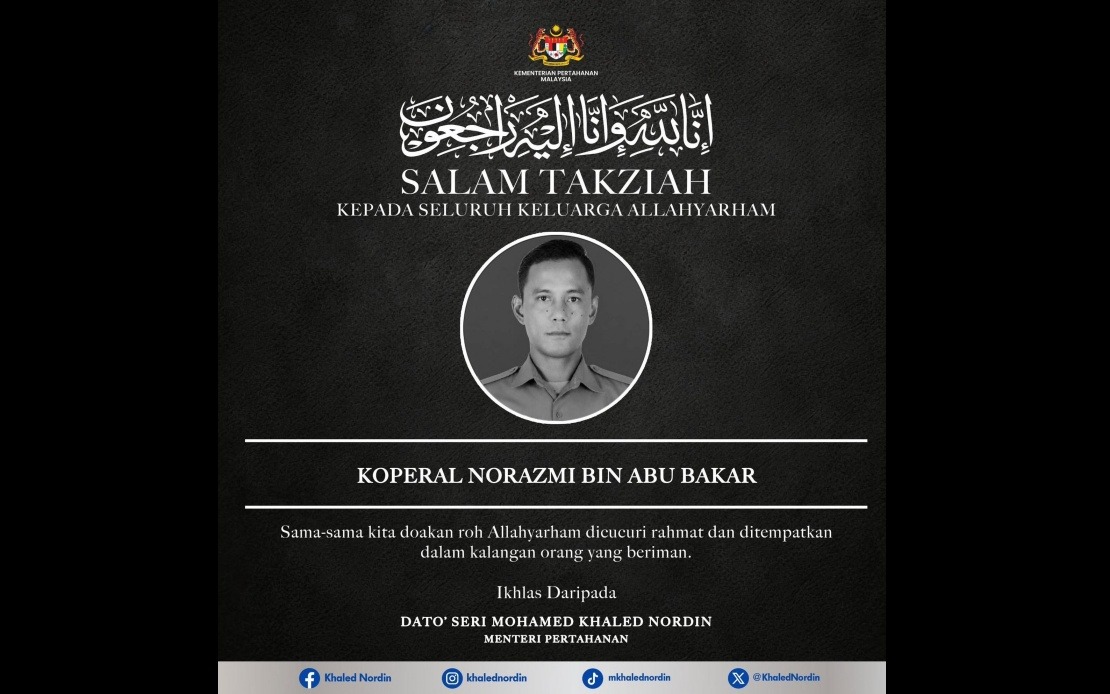
Malaysia's government and Defence Ministry have extended sympathies to the families of two military personnel who died in a training explosion on June 16. Corporal Norazmi Abu Bakar of the 6th Battalion, Royal Malay Regiment, and Private Siti Khadijah Sungip of the 1st Squadron, Royal Army Engineers Regiment, were fatally injured during a grenade-throwing exercise at Hobart Camp firing range in Gurun, Kedah. Both servicemembers sustained severe injuries at 10:57 am and succumbed while being transported to Sultan Abdul Halim Hospital in Sungai Petani.
Defence Minister Datuk Seri Mohamed Khaled Nordin released a statement expressing profound sorrow over the incident and pledging official support to the bereaved families. The minister articulated the government's commitment to standing alongside the relatives during this difficult period, noting that the ministry and government hoped the families would find the strength and fortitude needed to navigate their loss. Through his social media address, Nordin conveyed the formal sympathies of the entire defence establishment.
In his statement, Nordin invoked religious sentiments appropriate to Malaysia's Muslim-majority composition, requesting divine mercy for the departed soldiers and forgiveness of their transgressions. The minister's remarks underscored the profound respect accorded to military personnel who sacrifice their lives in service to the nation, positioning the incident within a broader framework of national duty and honour. The acknowledgment of both victims by rank and unit demonstrated the Defence Ministry's recognition of their individual contributions to national defence.
The incident represents a significant tragedy within Malaysia's armed forces and raises important questions about training safety protocols. Military exercises involving explosives and weaponry inherently carry inherent risks, yet the occurrence of fatalities during peacetime training operations underscores the necessity for rigorous safety evaluations and procedural reviews. The Malaysian Army's commitment to investigating the circumstances reflects institutional accountability to both the affected families and the broader public interest in understanding how such accidents occur.
General Tan Sri Azhan Md Othman, the Army Chief, has mandated a comprehensive investigation to ascertain the underlying causes of the blast. This directive signals the military's intention to identify any contributing factors—whether related to equipment malfunction, procedural deviation, environmental conditions, or human error—that may have precipitated the tragedy. Full investigations into such incidents are standard practice within professional armed forces and serve multiple purposes: accountability, institutional learning, and preventing similar occurrences.
For Malaysian servicemembers and their families, training accidents carry particular weight. Unlike combat-related casualties that occur in operational contexts, training deaths represent preventable losses that can shake confidence in institutional safety systems. The Army's investigation will be closely monitored not only by the families involved but also by the broader military community and defence oversight bodies. The findings will likely influence future training procedures and safety guidelines across the armed forces.
This incident also highlights the role of women in Malaysia's military establishment. Private Siti Khadijah Sungip's death marks a loss within the Royal Army Engineers Regiment, where female personnel have increasingly taken on operational roles. Her participation in combat engineering training reflects the modernisation of Malaysia's defence forces and women's expanding contributions to national security. The inclusive nature of military recruitment means that casualties now affect families across diverse backgrounds within the service.
The firing range at Hobart Camp in Gurun has likely been a training venue for multiple military units conducting exercises in explosives and weaponry. The base's continued operation for training purposes makes it essential that comprehensive safety reviews are implemented to restore confidence among personnel rotating through such facilities. Military training requires realistic simulation of combat conditions, yet this must be balanced against implementable safety measures that protect personnel without compromising preparedness.
From a regional perspective, military training accidents are not unique to Malaysia. Armed forces across Southeast Asia periodically experience similar incidents, highlighting the universal tension between military effectiveness and personnel safety. Malaysia's transparent acknowledgment of this tragedy and commitment to investigating its causes reflects professional standards expected of modern defence establishments in the region. The Defence Ministry's formal response demonstrates institutional maturity in addressing such incidents.
For the families of Corporal Norazmi Abu Bakar and Private Siti Khadijah Sungip, the coming weeks and months will involve navigating grief while awaiting investigation findings that may provide some measure of understanding regarding how their loved ones died. The government's expressions of support, while necessary, cannot diminish their loss. However, the commitment to thorough investigation and the likelihood of procedural improvements may offer some assurance that lessons learned could prevent future tragedies.
The Defence Ministry's continued communications regarding the incident will be monitored closely as investigation proceedings develop. Public disclosure of findings, when appropriate and sensitive to security considerations, will be important for maintaining institutional trust. Malaysia's armed forces, like their counterparts globally, must continually balance operational preparedness with personnel safety, and this incident serves as a sobering reminder of the stakes involved in that ongoing effort.