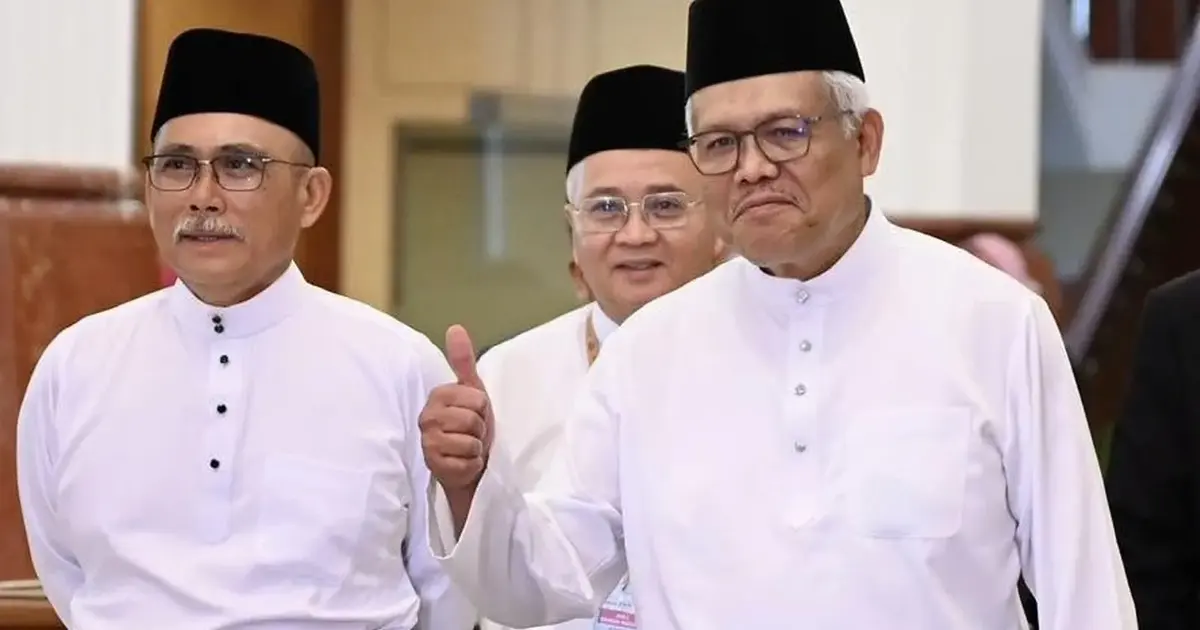
Larut MP Hamzah has been formally designated as the opposition leader, a decision that reflects significant parliamentary backing across multiple coalitions. The appointment comes at a critical juncture in Malaysia's political landscape, where the fragmentation of the opposition bloc has created both challenges and opportunities for reorganization. According to suspended Bersatu vice-president Kiandee, the choice of Hamzah was underpinned by demonstrable support that extended beyond single-party boundaries.
Kiandee's statement emphasizes that PAS, one of Malaysia's largest opposition parties by parliamentary representation, threw its weight behind Hamzah en-bloc. This wholesale endorsement from PAS signals a deliberate move to consolidate opposition voices under a unified leadership structure rather than allowing them to remain fragmented. For PAS, backing a Bersatu-affiliated figure like Hamzah represents a strategic calculation—the party recognizes that effective opposition requires coordinated action in parliament, and Hamzah's appointment offers a framework through which competing opposition factions can coordinate their efforts.
Beyond PAS's unified support, Kiandee points out that Hamzah secured endorsement from a majority of Bersatu MPs. This internal party backing is particularly noteworthy given Bersatu's own fractious state and the ongoing tensions within its ranks. The fact that more than half of Bersatu's parliamentary contingent rallied behind Hamzah suggests that a significant segment of the party views him as capable of representing their collective interests in the opposition. For Malaysian observers, this represents a rare moment of cross-factional agreement within a coalition that has been beset by internal disputes and defections.
Hamzah's elevation to the opposition leader role carries substantial implications for how Malaysia's parliamentary opposition will function in the coming legislative session. The opposition leader position is not merely ceremonial; it grants the occupant considerable influence over parliamentary tactics, question time scheduling, and the framing of opposition arguments on major policy issues. In a parliament where government majority has been narrower than in previous sessions, an effective and unified opposition can meaningfully shape legislative deliberations and hold the government accountable on major spending decisions and policy initiatives.
The timing of this appointment also reflects broader calculations within the opposition ecosystem. By coalescing around Hamzah, opposition parties are signaling to their respective bases that they remain capable of organizing politically despite their differences on numerous substantive issues. This unity of purpose, though perhaps limited in scope, demonstrates that opposition politics in Malaysia need not descend into complete chaos even when individual parties pursue divergent strategic interests. For voters dissatisfied with government performance, the appointment suggests that opposition parliamentarians can coordinate effectively enough to provide meaningful scrutiny of executive actions.
Kiandee's role in explaining the decision carries its own significance, particularly given his status as a suspended vice-president. His willingness to publicly defend the appointment indicates that despite disciplinary measures against him, he retains sufficient standing within Bersatu to comment on party matters. This suggests the party's internal structures remain fluid enough to accommodate dissenting voices, even if they face temporary suspension. His intervention also underscores that the decision to back Hamzah commanded sufficient party consensus that even suspended officials felt compelled to explain its rationale to the broader public.
The consolidation behind Hamzah also reflects calculations about who can command cross-coalition respect. Hamzah's background in Bersatu, combined with apparent acceptability to PAS, positions him as a figure capable of bridging at least two major opposition constituencies. In a political landscape where trust between opposition parties has frequently been strained, finding a leader acceptable across party lines is no trivial achievement. His Larut seat provides him with a solid parliamentary base, while his party affiliation ensures continued backing from Bersatu MPs who view him as representing their collective interests.
For Malaysian politics more broadly, the appointment represents a modest step toward opposition coherence after years of fragmentation and realignment. Since the 2022 general election, opposition parties have struggled to present unified legislative strategies, with PAS, DAP, and Bersatu often at cross-purposes. Hamzah's elevation as opposition leader provides a focal point for coordinating positions on parliamentary business and government accountability. Whether this coordination extends to broader policy platforms remains uncertain, but even limited parliamentary coordination represents progress from previous periods of complete opposition disarray.
The decision also carries implications for Southeast Asian comparative politics. In a regional context where opposition movements frequently fragment or become captured by individual personalities, Malaysia's opposition has managed to preserve institutional structures while pursuing distinct party strategies. Hamzah's appointment, backed by systematic support from multiple parties, reflects this institutionalization of opposition politics rather than reliance on charismatic leadership alone. This structural approach to opposition organization may offer lessons for other Southeast Asian democracies navigating similar challenges of maintaining coherent opposition forces while preserving party autonomy.
Looking ahead, Hamzah's effectiveness in the role will depend substantially on whether PAS and Bersatu can maintain sufficient coordination on parliamentary business despite their divergent positions on numerous policy matters. The opposition leader position requires not only parliamentary savvy but also diplomatic skill in managing competing party interests and ambitions. Kiandee's public endorsement suggests that at least within Bersatu, there exists confidence that Hamzah possesses these qualities, though sustaining such confidence across multiple parties will prove more challenging as parliamentary business becomes more contentious.