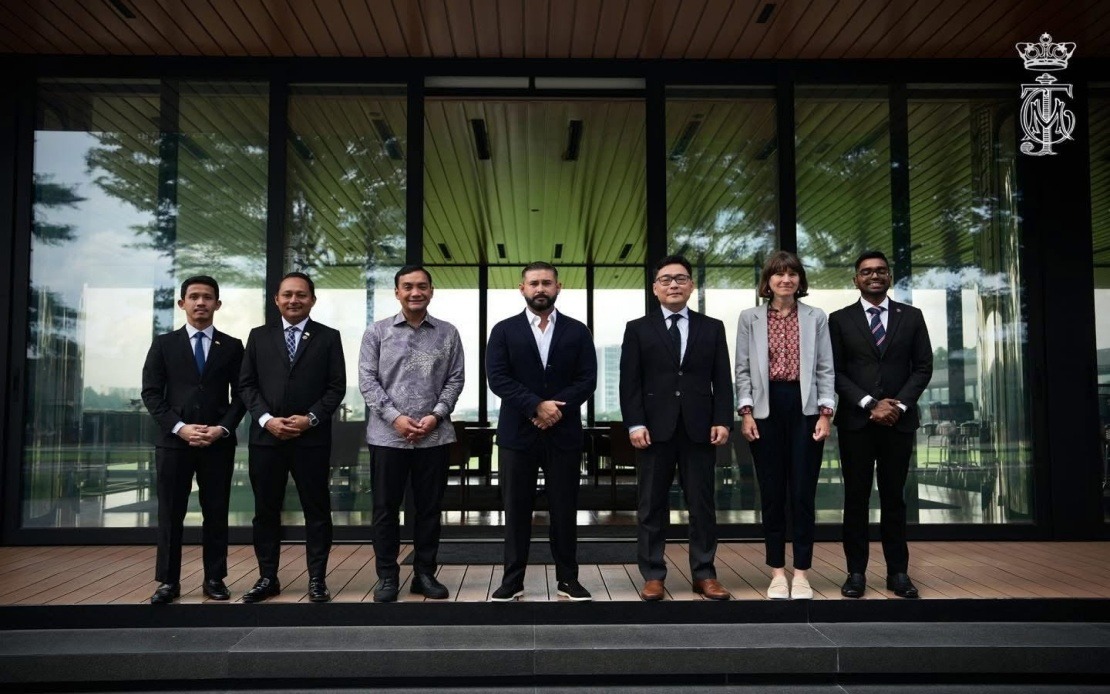
A landmark educational partnership between the Johor State Government and Harvard University will bring the prestigious Program for Scientifically-Inspired Leadership (PSIL) to 100 secondary school students in the state, beginning January 2027. The initiative represents a significant step in elevating Malaysia's education standards through exposure to world-class learning methodologies developed at one of the globe's foremost universities. Johor State Education and Information Committee chairman Aznan Tamin announced the collaboration, which emerged from recent discussions between the Regent of Johor Tunku Mahkota Ismail and a delegation from Harvard College.
The PSIL curriculum, which Harvard established in 2019, is built on pedagogical pillars that extend beyond conventional classroom instruction. The programme prioritizes active learning—encouraging students to engage directly with material rather than passively absorb it—alongside cultivating critical thinking skills essential for complex problem-solving in an increasingly intricate world. Equally important are components focused on effective communication and leadership development, equipping young Malaysians with competencies that employers and universities increasingly demand. For Johor, a state seeking to position itself as an education hub in Southeast Asia, the partnership signals institutional confidence and opens pathways for students to experience international-standard learning cultures without leaving the region.
The initial cohort will draw from two secondary institutions: SMK Tasek Utara and SMK Seri Kota Puteri 2, both operating under the SRBJ (Sekolah Rintis Bangsa Johor) pilot school framework. This targeted approach allows for careful implementation and assessment before potential expansion. The selection of pilot schools reflects strategic thinking—these institutions can serve as laboratories for innovation while maintaining connection to Malaysia's mainstream education system. The concentration of 100 students, rather than a scattered approach across numerous schools, enables deeper embedding of Harvard's teaching philosophy and creates critical mass for peer learning and exchange of ideas.
Parallel to student engagement, the programme extends substantial benefits to 40 SRBJ educators through dedicated active learning pedagogy workshops. This teacher-training component is arguably as crucial as the student curriculum, as it ensures sustainability beyond the initial partnership period. By equipping local educators with Harvard-developed instructional techniques, the collaboration builds institutional capacity within Malaysia's education sector. Teachers returning to classrooms with fresh methodologies can amplify impact across their broader student populations, creating ripple effects that transcend the 100 direct beneficiaries. The workshops focus on strengthening interactive, creative and effective teaching methods—a deliberate shift toward student-centered, discovery-based approaches that contrast with traditional transmission models still prevalent in many Malaysian schools.
SRBJ itself operates under a distinctive educational philosophy that balances multiple objectives often viewed as competing. The school system emphasizes English language mastery while deliberately preserving Malay linguistic competency, recognizing that bilingual proficiency serves Malaysian students' futures in both global and domestic contexts. Simultaneously, SRBJ strengthens science, technology, engineering and mathematics (STEM) capabilities—critical for participation in the knowledge economy—while not neglecting personality development and student marketability. This holistic approach aligns well with Harvard's emphasis on developing rounded leaders rather than narrow specialists, suggesting strong ideological compatibility between the institutions.
The partnership reflects broader regional trends in education, where Southeast Asian governments increasingly pursue strategic international collaborations to enhance competitiveness. China, Singapore, and Vietnam have similarly invested in educational partnerships with elite Western institutions, recognizing that such connections elevate institutional prestige and provide template frameworks for improvement. For Johor specifically, the Harvard connection strengthens the state's brand positioning amid competition from other Malaysian states and regional neighbours for talented students and investment. The Tunku Mahkota's personal involvement in welcoming the Harvard delegation signals high-level political commitment, suggesting the partnership extends beyond transactional engagement to represent a calculated strategic investment in state capacity-building.
The Harvard delegation, led by Dr Dominic Mao (assistant director of Undergraduate Studies and lecturer in Molecular and Cellular Biology) and Dr Andrea Wright (assistant dean of Harvard College), brought substantive expertise to discussions. Their presence indicates Harvard's institutional seriousness about the collaboration rather than a cursory exploration. These appointments suggest the partnership will benefit from leadership genuinely engaged with undergraduate pedagogy and student development—areas where Harvard maintains cutting-edge research and proven track records. The composition of the delegation also hints at potential STEM emphasis, given Dr Mao's molecular and cellular biology credentials, which aligns with SRBJ's STEM prioritization.
Implementation beginning January 2027 provides sufficient lead time for detailed curriculum adaptation, logistical preparation, and teacher training delivery. The timeline suggests deliberate phasing rather than rushed deployment—a prudent approach given the complexities of transplanting educational programmes across vastly different contexts. Cultural adaptation will be essential; Harvard's leadership curriculum must resonate with Malaysian values and education ministry policies while maintaining programme integrity. The framework explicitly notes alignment with Ministry of Education policies, indicating collaborative government approval and reducing risk of later institutional resistance or policy misalignment.
The competency assessment component deserves particular attention. SRBJ's implementation of international-standard assessments provides crucial external validation of student learning outcomes, moving beyond subjective evaluation to comparative benchmarking. For Malaysian students and employers, certifications meeting international standards create portable credentials enhancing university applications and job market positioning. This assessment rigour distinguishes the Harvard partnership from superficial cultural exchange programmes, establishing measurable accountability for outcomes and programme effectiveness.
For Malaysia's broader education landscape, this initiative raises important considerations about scaling and equity. While 100 students represent meaningful impact, they constitute a minute fraction of Johor's secondary student population. Questions naturally arise regarding pathway to broader implementation, resource requirements, and potential for replication in other states. Successful pilot outcomes could justify expansion, yet challenges of teacher availability, funding, and curriculum integration may constrain growth. The programme also benefits students from two relatively established secondary schools; disadvantaged communities in rural Johor or lower-income urban areas remain largely unaffected by this particular collaboration.
Strictly evaluating longer-term implications, this partnership exemplifies Malaysia's positioning within global education hierarchies. While beneficial for participating students and teachers, the reliance on foreign expertise also reflects persisting confidence gaps in domestic capacity—a dynamic both productive and concerning. The most sustainable outcome would involve Malaysian educators eventually internalizing Harvard's methodologies, creating indigenous expertise that reduces future dependence on external partnerships. The teacher training workshops represent a step toward this goal, yet their sufficiency depends on implementation quality and sustained institutional commitment beyond initial enthusiasm.
The collaboration also carries diplomatic weight within Malaysia's international relations strategy. Educational partnerships with prestigious American institutions strengthen soft power ties and align with Malaysia's positioning as a global player open to international engagement. For Harvard, the partnership extends its global reach and demonstrates commitment to diverse geographical contexts—important for an institution increasingly attuned to international footprints and non-Western perspectives. This mutual benefit strengthens likelihood of sustained engagement beyond initial phases.