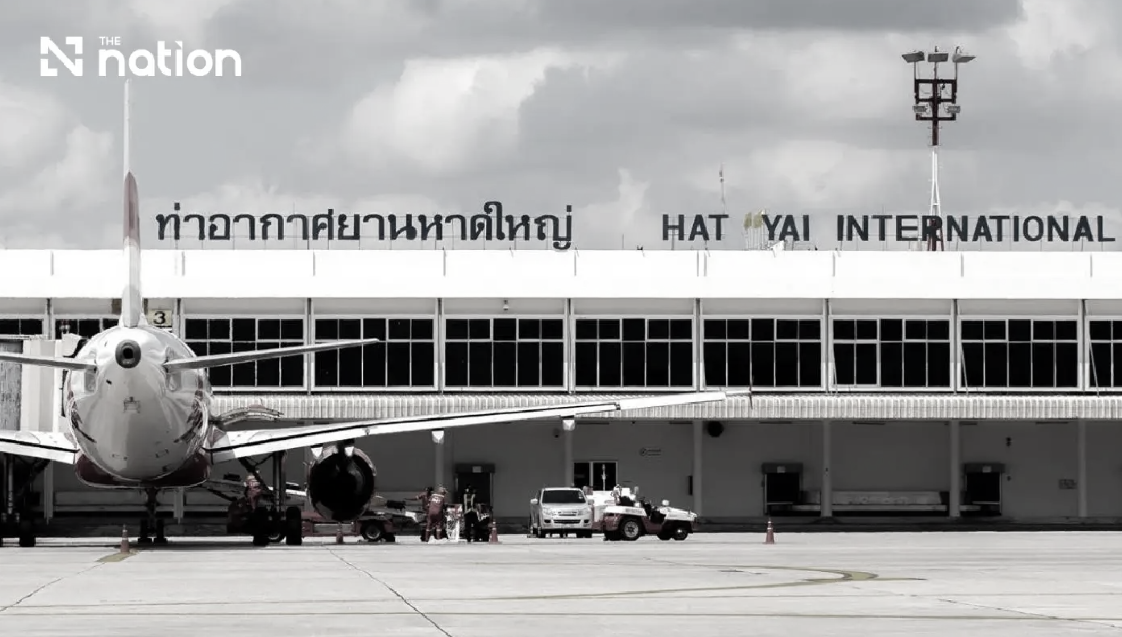
Hat Yai International Airport in Songkhla province was forced to temporarily shut down one of its main runways on Wednesday afternoon after an airport fire engine became involved in an accident on the tarmac, triggering a series of flight diversions and operational disruptions that underscored the airport's vulnerability during emergency situations.
The incident centred on Runway 26, which the airport authority closed at 1.55pm and did not reopen until 4.30pm on June 17. During those roughly two and a half hours, aircraft attempting to land at the facility had no option but to divert elsewhere. This type of runway closure has significant ripple effects across an airport's operations because it reduces landing capacity to zero if an airport operates with a single usable runway, as Hat Yai does during peak hours. For regional aviation hubs serving southern Thailand and northern Malaysia, such closures create immediate congestion as flights are redistributed to alternate airports.
The airport authority issued a formal NOTAM—a navigational notice to aviation personnel—alerting pilots and airlines to the closure. These notices serve as critical safety communications in aviation, ensuring that pilots and crew members worldwide are informed of hazardous conditions or operational changes at specific airports. The decision to close the runway entirely rather than restrict it reflected the seriousness with which airport officials treated the incident, prioritising safety over operational continuity.
At least two confirmed flights were diverted to Krabi Airport, roughly 150 kilometres away, as a direct consequence of the closure. Thai Airways flight TG263 and Thai Lion Air flight SL712 both changed their destination from Hat Yai to Krabi, according to tracking data from Flightradar24, a real-time aircraft monitoring platform. This diversion imposed substantial inconvenience on passengers who expected to arrive at Hat Yai, adding several hours to their total journey time and requiring rerouting through ground transportation or alternative arrangements.
Detailed circumstances surrounding the fire engine accident itself remained limited in the immediate aftermath of the incident. Airport officials disclosed to inquiring passengers and relatives that an unspecified emergency had occurred but declined to elaborate on what had actually happened or how the fire engine came to be involved in the accident. This lack of transparency, while understandable during active incident management, left travellers and the public largely in the dark about the severity of the situation and whether there were any injuries or property damage to report.
One passenger's relative who was aboard Thai Airways flight TG263 contacted the airport directly seeking clarification about why the aircraft could not land. When airport personnel fielded the inquiry, they acknowledged an emergency situation but offered no specifics. The passenger subsequently confirmed that TG263 eventually touched down safely at Krabi Airport, suggesting that the diversion was executed smoothly despite the sudden change in landing location. This reflected the professionalism of the flight crew and air traffic control in managing an unexpected operational change on short notice.
For Malaysian travellers and businesses, Hat Yai Airport's operational challenges carry particular relevance. The facility serves as a vital gateway for cross-border traffic between Thailand and Malaysia, with many Malaysian tourists visiting popular destinations in Songkhla province, including Hat Yai city itself and coastal areas nearby. Similarly, Thai nationals frequently pass through Hat Yai en route to Malaysia. Any disruption to runway capacity directly affects connectivity and convenience for this bilateral traffic flow.
The incident highlights vulnerability in Hat Yai Airport's infrastructure and emergency response protocols. A single fire engine accident was sufficient to force complete runway closure, raising questions about whether ground safety procedures and vehicle traffic management on the runway need reinforcement. International civil aviation standards require strict protocols governing which vehicles are permitted on active runways and under what circumstances, yet accidents still occur. The fact that a fire service vehicle—typically operated by trained personnel responding to emergencies—was involved suggests the accident may have been unavoidable, but it nevertheless exposes potential gaps in safety systems.
For the broader Southeast Asian aviation network, the Hat Yai incident serves as a reminder that regional airports, while important connectors, sometimes lack the infrastructure redundancy of larger hubs. Airports with multiple runways can often absorb a single-runway closure with manageable delays, but facilities dependent on one primary runway face binary outcomes: either flights operate normally or they must divert. This structural limitation affects capacity planning and operational resilience, particularly during periods of high demand or adverse weather.
Airlines operating from Hat Yai, including Thai Airways and Thai Lion Air, must factor such incidents into contingency planning. Diverting flights to Krabi, while operationally feasible, imposes costs and customer service challenges that accumulate across multiple incidents. Insurance implications, fuel surcharges, hotel accommodations for stranded passengers, and reputational impacts all follow from runway closures caused by accidents on airport property.
Government and airport management authorities in southern Thailand may need to evaluate whether additional investments in ground safety systems, vehicle access controls, or even runway lighting and sensor technology could prevent similar incidents. Such investments require capital expenditure but could reduce the frequency of costly operational disruptions. In a region increasingly dependent on air travel connectivity, reliable runway access has become essential infrastructure rather than a luxury commodity.
The incident resolved without reported injuries or major damage, and normal operations resumed by late afternoon. However, the temporary paralysis of a key regional airport underscores the fragility of aviation systems and the cascading consequences of even localised accidents. For passengers, airlines, and the broader travel ecosystem connecting Malaysia and Thailand, the Hat Yai closure demonstrated how quickly plans can change and why choosing airlines with strong alternative routing capabilities remains prudent when booking through regional hubs.