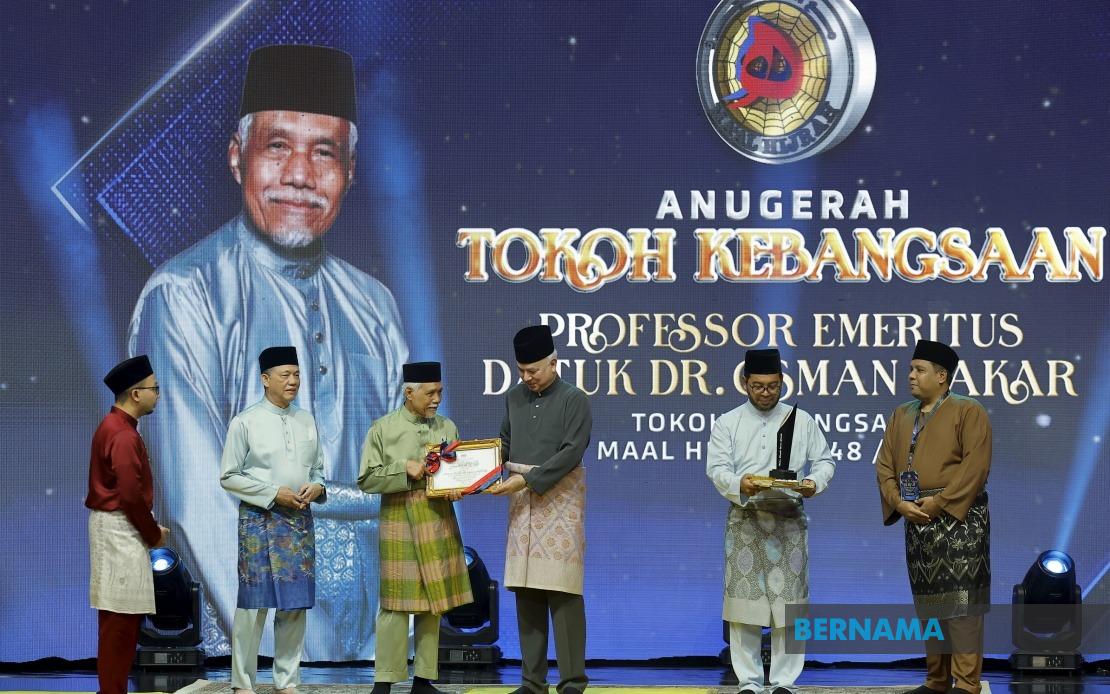
International Islamic University Malaysia Rector Prof Emeritus Datuk Dr Osman Bakar has received the National Tokoh Maal Hijrah award at the national-level Maal Hijrah 1448H/2026 celebration held at Putra Mosque in Putrajaya. The recognition underscores his significant contributions to Islamic scholarship and education throughout his academic career in Malaysia. His selection reflects the government's acknowledgement of individuals who embody values of learning, leadership and service within the Muslim community.
The ceremony, conducted on June 17, also distinguished Dr Ahmad Al-Raysuni, a prominent Islamic scholar from Morocco, as the International Tokoh Maal Hijrah recipient. This dual recognition highlights Malaysia's commitment to engaging with Islamic thought leadership both domestically and on the global stage. The International award demonstrates the nation's openness to celebrating Muslim intellectual figures whose work transcends borders and influences Islamic discourse across multiple regions.
Sultan Nazrin Shah, the Sultan of Perak, presented the awards to both recipients during the formal ceremony. Along with their trophies and certificates of appreciation, the honourees received cash prizes recognising the significance of their achievements. The presentation by the Sultan underscored the ceremonial importance placed on these awards and their role in honouring exemplary figures within Malaysian Islamic circles.
This year's Maal Hijrah celebration adopted the theme "MADANI Dihayati, Ummah Diberkati," which translates to a vision of practising MADANI principles while the Muslim community benefits from divine blessings. The theme encapsulates broader government initiatives emphasising compassion, unity and collective welfare as foundational values for the nation's development. By framing the celebration around these principles, organisers sought to connect religious observance with tangible social outcomes and community strengthening.
Deputy Prime Minister Datuk Seri Fadillah Yusof and his wife Datin Ruziah Mohd Tahir attended the proceedings, reflecting the ceremony's status as a significant national event. Their presence, alongside Minister in the Prime Minister's Department (Religious Affairs) Dr Zulkifli Hasan, demonstrated high-level government engagement with the recognition programme. The attendance of senior cabinet figures signals the Malaysian government's prioritisation of celebrating Islamic scholarship and its integration within the nation's institutional frameworks.
Osman Bakar's recognition carries particular significance given his extensive background as rector of one of Southeast Asia's leading Islamic universities. IIUM has established itself as a major institution for Islamic higher education across the region, producing graduates who contribute to scholarship, governance and professional sectors. His honour thus reflects not only individual achievement but also the institutional role IIUM plays in advancing Islamic knowledge and moderate Islamic thought.
The Tokoh Maal Hijrah awards programme serves as an annual mechanism for identifying and celebrating individuals whose work exemplifies Islamic values and contributions to societal advancement. The selection process typically involves careful consideration of candidates' scholarly output, community impact and alignment with national values. By instituting such recognition, Malaysia demonstrates its commitment to elevating discourse around Islamic education and institutional leadership.
Maal Hijrah itself commemorates the Islamic calendar's new year and the migration of Prophet Muhammad and his followers from Mecca to Medina. In contemporary Malaysia, the observance has evolved beyond religious commemoration to encompass broader reflection on community values and national progress. The celebration provides a framework through which the government can reinforce its vision of development anchored in Islamic principles and ethical conduct.
The selection of both a Malaysian and an international scholar as recipients reflects a strategic approach to Islamic leadership recognition. Domestically, honouring figures like Osman Bakar encourages excellence within Malaysian institutions and validates the contributions of local scholars to regional and global Islamic thought. Simultaneously, recognising figures like Al-Raysuni signals Malaysia's engagement with the broader Muslim world and its openness to diverse expressions of Islamic scholarship.
For Malaysian academic institutions, such recognition provides validation of their scholarly missions and their role in producing leaders and thinkers. IIUM's association with Osman Bakar's honour elevates the university's profile while reinforcing the importance of rigorous Islamic scholarship within Malaysian higher education. This recognition may also motivate other institutional leaders and scholars to pursue contributions worthy of similar national distinction.
The ceremony at Putra Mosque, one of Malaysia's most significant religious buildings, provided an appropriate venue for honouring individuals whose work reflects Islamic intellectual traditions. The choice of location amplified the ceremonial significance and connected the awards to Malaysia's broader religious and cultural heritage. Such venues serve as physical manifestations of the nation's commitment to Islamic values and institutions.
Looking forward, the recognition of scholars like Osman Bakar establishes precedent for valuing academic leadership and institutional contribution alongside individual scholarly accomplishment. This approach encourages thinking about how universities and their leaders can serve broader national objectives of advancement and values-based development. The awards thus function not merely as honours but as signposts guiding institutional aspirations within Malaysia's educational and religious sectors.