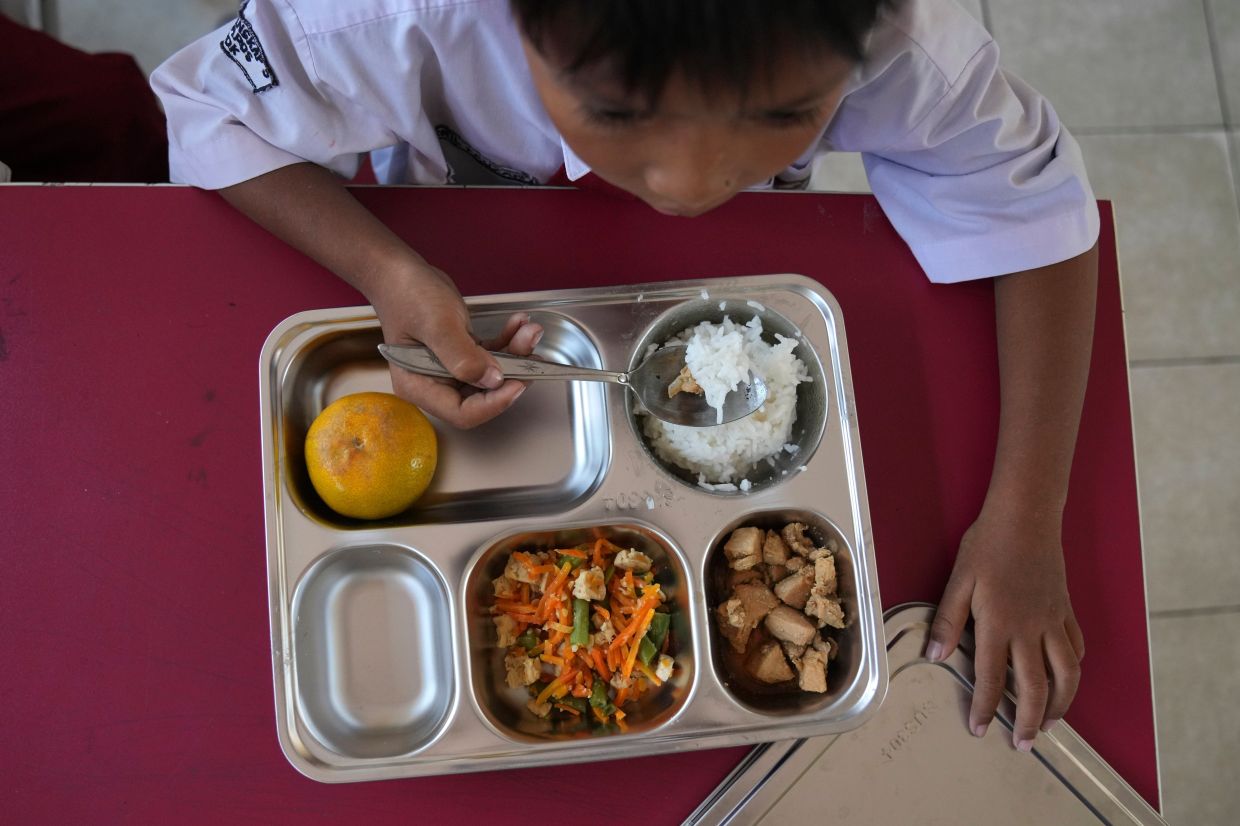
Indonesia's leading anti-corruption organisation is pushing for a complete suspension of President Prabowo Subianto's vast free meals programme and wants authorities to expand their investigation far beyond the officials already arrested. Indonesia Corruption Watch, a prominent group committed to advancing clean governance and social justice, contends that the National Nutrition Agency, or BGN, which manages the scheme, should be dissolved entirely rather than merely reformed. The agency, tasked with overseeing a nationwide initiative budgeted at approximately US$15 billion aimed at combating malnutrition and poverty, has become the focal point of an unprecedented corruption scandal that threatens to undermine one of the government's signature policy initiatives.
Wana Alamsyah, who directs the investigation and legal affairs unit at Indonesia Corruption Watch, emphasised in recent comments that the scale of potential wrongdoing extends well beyond the already-detained officials. Authorities arrested Dadan Hindayana, the former head of BGN, following his removal from office earlier this month, with the Attorney-General's office launching a formal corruption inquiry into his conduct. Four additional individuals remain in custody, among them two former deputies of Hindayana, while ICW maintains that a far more comprehensive examination is warranted given that the agency, despite existing for less than two years, already distributes meals to over 60 million individuals across the country.
According to Wana's assessment, investigators must scrutinise every participant in the programme's supply chain who may have profited from its inadequate governance structures. This includes not only senior bureaucrats but also food vendors, procurement officials, and committee members involved in selecting contractors and monitoring implementation. The anti-corruption watchdog argues persuasively that the meals initiative was hastily conceived and launched without sufficient planning, creating an environment where mismanagement and corruption could flourish unchecked. The investigation, Wana stressed, cannot remain confined to the upper echelons of BGN but must penetrate the entire apparatus supporting the programme's delivery across multiple regions.
The programme's new leadership has signalled a shift in approach, with recently appointed agency head Nanik S. Deyang announcing plans to refocus the initiative toward efficiency and more modest operational targets. Rather than pursuing the original ambition to reach 82.9 million recipients, Deyang indicated the agency would concentrate resources on remote and disadvantaged areas while trimming annual expenditure below the 268 trillion rupiah budgeted for 2024. She emphasised that the revised strategy prioritises nutritional quality and food safety over maximising the number of beneficiaries, suggesting that the revamped programme will leverage existing infrastructure such as school canteens rather than constructing additional facilities. This recalibration represents a significant departure from the grand scope of Prabowo's original vision for the initiative.
President Prabowo himself has publicly declared zero tolerance for financial mismanagement within the scheme, addressing thousands of government officials and programme partners shortly after Hindayana's arrest. His uncompromising statement, that "the people's money" cannot be permitted to be "stolen" under any circumstances, signals political will to address the corruption allegations. Yet observers note that the damage to public confidence has already been substantial, with widespread revelations of procurement irregularities, food quality complaints, and allegations of foodborne illness outbreaks raising serious questions about the programme's implementation from the outset.
Public opposition to the initiative has intensified considerably, manifesting in street protests that have turned confrontational. In mid-June, police clashed with student demonstrators in Jakarta who were demanding the programme's complete cancellation and challenging the government's spending priorities. Subsequent protests erupted across multiple major cities on the following Monday, prompting authorities to deploy more than 6,000 police and military personnel to maintain order in the capital alone. These demonstrations reflect broader public anxiety about the initiative's cost and effectiveness, concerns that have been compounded by the corruption revelations.
Economic stakeholders and policy analysts have grown increasingly concerned about the budgetary implications of sustaining such an enormous expenditure. Investors worry that the programme's massive cost is straining Indonesia's fiscal position, particularly as rising fuel subsidies driven by regional geopolitical tensions consume additional resources. Several economic research organisations and independent think tanks have questioned whether the initiative will deliver on its promises of improved employment, health outcomes, and broader economic development for participating communities. These doubts have been strengthened by evidence that the programme was rolled out uniformly across all Indonesian schools rather than being strategically targeted at rural and poorer regions where nutritional deficiencies are most acute.
Wana's analysis of the government's handling of the corruption scandal offers a pointed critique of official responsiveness. He noted that problems with the free meals programme have been widely recognised for months, with extensive complaints circulating on social media regarding poor food quality, ultra-processed ingredients, and procurement irregularities. Yet the government took no action until formal complaints prompted official investigations, raising questions about why authorities waited until mid-2024 to confront issues that were publicly visible in 2025. Wana suggested that fiscal pressures may have finally forced the government's hand, requiring officials to restructure the programme while attempting to contain political fallout by holding individuals accountable.
Indonesia Corruption Watch has previously documented systemic vulnerabilities within the programme's kitchen network that render it susceptible to political patronage and cronyism. A comprehensive review of 102 foundations operating meal preparation facilities across 38 provinces revealed extensive connections between these organisations and politically-connected individuals, including politicians, bureaucrats, military officers, law enforcement personnel, and business interests. A separate investigation by the Jakarta-based Centre of Economic and Law Studies determined that 79 per cent of surveyed respondents recognised potential conflicts of interest arising from the direct appointment of food vendors without competitive procurement processes. These findings underscore the structural weaknesses that enabled corruption to take root within the scheme's architecture.
Deyang's announcement of a moratorium on establishing new kitchen facilities represents an attempt to inject greater rigour into the screening and vetting process for future operators. The revised strategy will prioritise utilising pre-existing infrastructure rather than constructing additional facilities, a shift designed to reduce opportunities for padded budgets and inflated construction costs. Whether these administrative reforms prove sufficient to restore public confidence and prevent future misconduct remains an open question, particularly given the deep institutional vulnerabilities that independent researchers have identified. The unfolding scandal raises fundamental questions about the government's capacity to implement massive social programmes effectively and transparently, a concern that will likely resonate throughout Southeast Asia as other nations contemplate similarly ambitious nutrition and poverty-reduction initiatives.