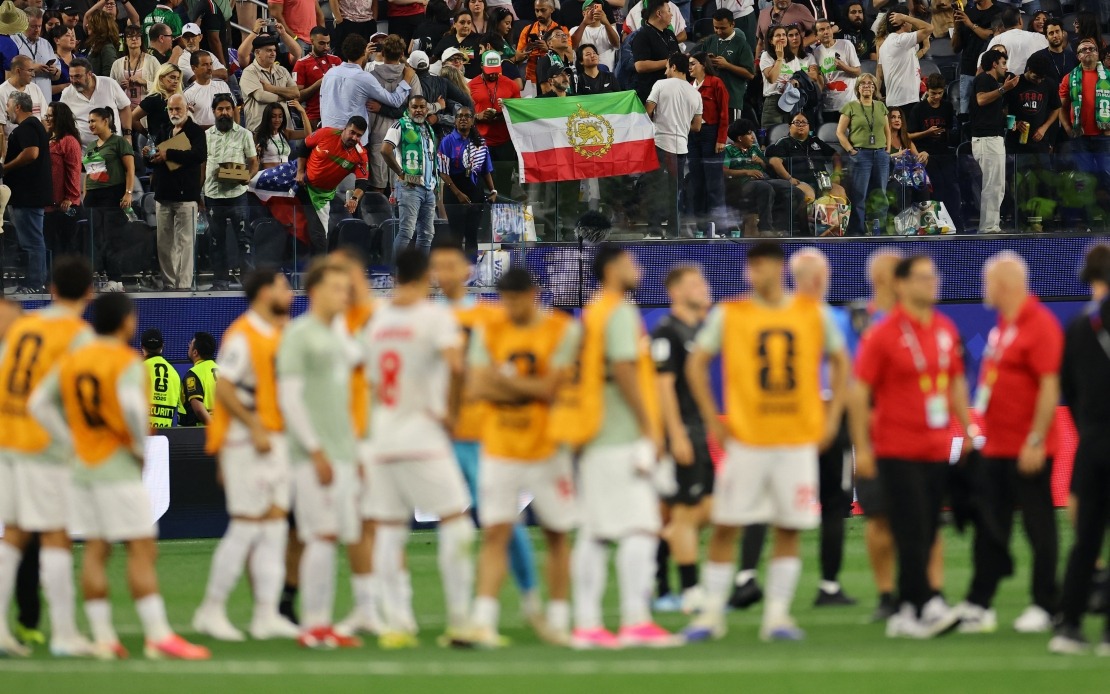
Iran's national football team manager Amir Ghalenoei has made striking allegations about the restrictions placed on his squad during the World Cup, describing the Iranian side as operating under unprecedented logistical constraints compared to other participating nations. Speaking in Istanbul, Ghalenoei revealed that his coaching staff and players were directed to depart Los Angeles for their Mexican training facility in Tijuana almost immediately following Monday evening's match against New Zealand, preventing them from undertaking a planned recovery session in California.
The unexpected departure order came as a significant disruption to the team's preparation schedule. Ghalenoei explained that the coaching staff had anticipated remaining overnight in Los Angeles, allowing the players to rest and conduct recovery protocols the following day before travelling to their Mexican base. Instead, tournament officials communicated to the delegation that they must vacate immediately upon the final whistle. This abrupt instruction meant the Iranian contingent faced extended travel commitments when fatigue management was most critical for competitive athletes.
The manager's frustration centred on the cumulative effect of travel burden on his players' physical condition and mental readiness. "We spent so much time in the air commuting, they didn't even give us time to recover," Ghalenoei stated through an interpreter, according to ESPN. The protracted journeys between venues and temporary bases represented a significant disadvantage in the context of international football competition, where match preparation and recovery cycles significantly influence subsequent performances. For a squad already operating from a geographically remote training location in Mexico rather than within the United States, this additional displacement compounded existing challenges.
While Ghalenoei declined to specify which authority had issued the departure directive, Iranian team captain Mehdi Taremi referenced FIFA President Gianni Infantino's presence in the team's dressing room following the New Zealand encounter. Taremi's remarks carried diplomatic weight, suggesting layers of complexity beneath the surface narrative. "For sure, he wants to try to help us, but it's about other things, too. Everyone knows it," Taremi observed, making oblique reference to the protracted geopolitical tensions underlying US-Iran relations. His cryptic statement appeared calculated, acknowledging institutional efforts to assist while simultaneously hinting at broader political considerations influencing tournament logistics.
The captain's measured comments reflected the delicate positioning required of Iranian athletes operating within an international sporting framework while their nation maintains complicated diplomatic relations with the host country. Taremi's assertion that "everyone knows it" represented an invitation for international observers to consider the contextual backdrop—a period marked by extraordinary regional tensions, with Taremi noting that over a century-long conflict appeared positioned for imminent resolution through a peace agreement. His deliberate understatement conveyed frustration rooted in circumstances extending far beyond conventional sporting logistics.
Iran's participation in this tournament had already involved significant logistical complications stemming from diplomatic and administrative obstacles. The national federation originally designated Tucson, Arizona, as their primary training headquarters for the tournament duration, a location offering reasonable proximity to California venues where their matches were scheduled. However, visa processing difficulties and practical complications surrounding facility access forced officials to restructure their entire operational base. In late May, the delegation relocated their entire camp to Tijuana, Mexico, an arrangement that positioned them significantly further from their competition venues and eliminated the geographical advantages of a US-based headquarters.
The relocation to Mexico represented a substantial operational disadvantage, requiring extended travel for match days and complicating the conventional rhythms of tournament preparation that typically involve stable, proximate training facilities. Moving from Arizona to the Mexican border town meant the Iranian contingent faced substantially longer journeys to participate in games, creating scheduling complexities that other nations with US-based training camps did not experience. This geographic displacement fundamentally altered their competitive positioning relative to teams enjoying more convenient logistical arrangements.
Ghalenoei's characterisation of his team as "the most repressed team in the whole World Cup" carried implications extending beyond mere travel inconvenience. His choice of language suggested a broader pattern of operational constraints that he perceived as disproportionately affecting the Iranian delegation. Whether these restrictions derived from official tournament regulations, host nation security protocols, or diplomatic considerations remained ambiguous, though the implications were unmistakable—the Iranian contingent operated within tighter parameters than their competitors.
For Malaysian observers and Southeast Asian football communities, the Iranian situation illuminated the complex intersection of international sports governance and geopolitical realities. Tournament hosting nations possess considerable discretionary authority in implementing logistical arrangements, security protocols, and operational frameworks that can substantially advantage or disadvantage particular delegations. While such decisions are typically framed in neutral, administrative language, the practical effects create measurable competitive consequences that extend beyond traditional sporting variables.
The episode also underscored how World Cup participation transcends pure athletic competition, particularly for nations operating within constrained diplomatic environments. Iranian athletes competing at football's premier tournament found themselves navigating political dimensions that teammates from most other nations rarely encountered. Such circumstances inevitably influence team morale, physical preparation quality, and the psychological factors that contribute to competitive performance at elite levels.
The broader tournament context matters significantly for understanding these allegations. FIFA's professed commitment to universal sporting principles exists in tension with the practical realities of hosting in particular nations with specific political configurations and international relationships. How tournament administrators balance these competing demands—maintaining competitive fairness while respecting host nation prerogatives—remains an ongoing challenge in international sports governance. The Iranian team's experience suggested that such balance may not always be achieved equitably.