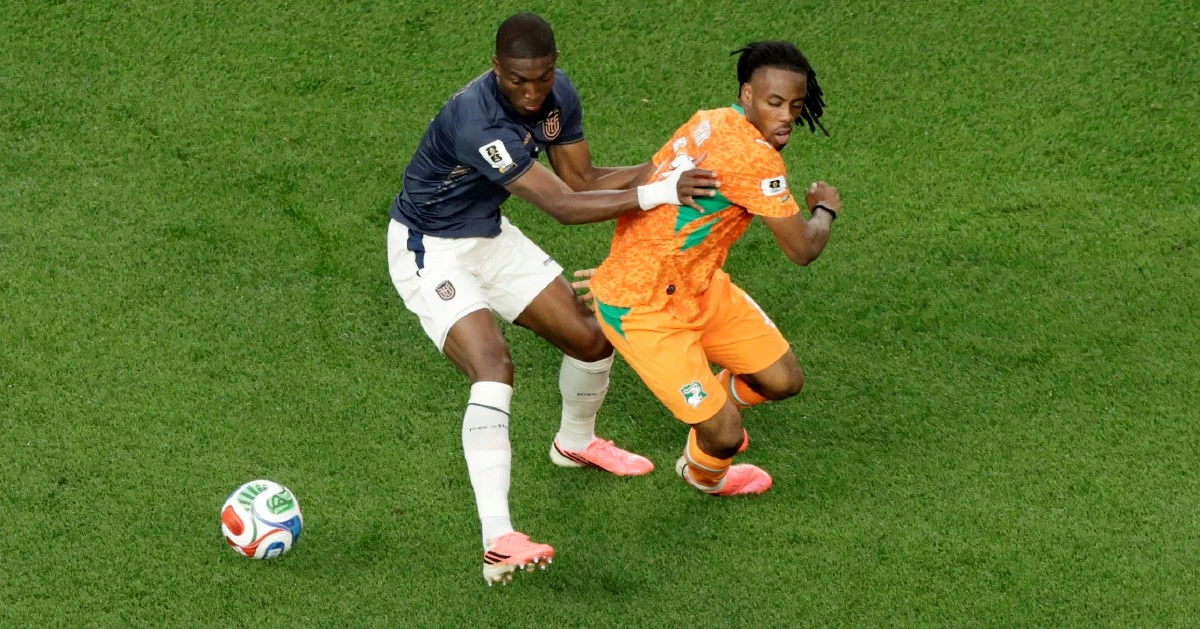
Ivory Coast has taken the decisive step of preventing forward Elye Wahi from participating in this weekend's World Cup qualifier against Germany in Canada, marking a significant intervention by the Ivorian Football Federation (FIF) announced on Thursday. The action follows the emergence of allegations linking the player to a suspected match-fixing scheme centred on a French top-division encounter, underscoring the serious nature of the claims being investigated.
The suspension reflects a broader crackdown on match-fixing that has intensified across European football in recent months. Sports corruption investigations have become increasingly sophisticated, with authorities employing financial tracking and communications analysis to identify irregular patterns consistent with match-manipulation schemes. The Ligue 1 investigation that ensnared Wahi represents one of several probes now underway across major European competitions, signalling that regulatory bodies are taking a harder line on integrity breaches.
For Malaysian and Southeast Asian football enthusiasts, the case illustrates how corruption in distant European leagues can have cascading effects on the global sporting calendar. World Cup qualifiers represent peak moments in a footballer's career, and the suspension places Wahi in an invidious position—unable to represent his country at a crucial juncture whilst facing potential disciplinary proceedings. The timing compounds the difficulty, as his absence removes a capable forward from Ivory Coast's attacking options against a formidable opponent in Germany.
The FIF's decision to preemptively exclude Wahi rather than await the conclusion of the investigation demonstrates an institutional commitment to safeguarding the tournament's integrity. By acting swiftly, the federation signals to sponsors, fans, and governing bodies that it will not tolerate players under suspicion of corruption competing in official matches. This approach aligns with FIFA's increasingly stringent stance on match-fixing, which carries severe consequences including lengthy bans and substantial fines for guilty parties.
Elye Wahi has emerged as one of Ivory Coast's promising attacking talents, and the allegations pose a threat not merely to his immediate career trajectory but to his long-term marketability and earning potential. Players implicated in match-fixing investigations often find themselves marginalised by clubs and sponsors, even if ultimately acquitted. The reputational damage compounds the sporting sanctions, creating a chilling effect that extends well beyond the immediate suspension.
The investigation's focus on Ligue 1 is noteworthy given the French league's position as one of Europe's five most prominent domestic competitions. French football authorities have grappled with recurring match-fixing allegations over several years, necessitating enhanced monitoring protocols and coordination with law enforcement agencies. The fact that corruption has surfaced again underlines that even established leagues remain vulnerable to illicit manipulation, a concern that extends to football jurisdictions worldwide.
From a Southeast Asian perspective, the incident offers cautionary lessons as regional football leagues continue their professionalization efforts. The Asian football community has encountered match-fixing scandals of its own, particularly in the lower divisions and second-tier competitions where financial incentives for manipulation are often greatest. The Wahi case demonstrates that no level or geography is immune, and that integrity frameworks must remain consistently vigilant and stringently enforced.
The absence of Wahi alters the tactical calculus for Ivory Coast's encounter with Germany. The Ivorian squad will need to adapt its attacking approach, potentially shifting to alternative formations or promoting less-experienced forwards. Germany, conversely, benefits from the disruption to an opponent's preparations, though the match remains competitive given Ivory Coast's traditional strength in African football. The competitive implications extend beyond the immediate fixture, as World Cup qualifying points carry direct relevance to tournament seeding and group composition.
The broader institutional response to match-fixing investigations has evolved considerably over the past decade. Regulatory bodies have shifted from a purely post-incident punitive model toward one incorporating suspension pending investigation conclusions. This proactive framework reflects recognition that allowing suspected participants to compete risks both legitimacy and fairness. For players, the approach presents difficulties: suspension occurs before guilt is established, yet the protection of competition integrity justifies such precautionary measures.
The investigative process itself remains opaque to the public, with authorities typically withholding specifics to preserve investigative integrity and protect the accused's right to fair proceedings. Details about the suspected match-fixing scheme—the specific fixture involved, the betting patterns identified, or the financial flows allegedly involved—remain undisclosed. This opacity, whilst necessary, creates public uncertainty and speculation about Wahi's culpability.
Looking forward, the resolution of the underlying investigation will significantly influence Wahi's career prospects and Ivory Coast's squad planning. Should investigations conclude without substantive evidence, the player's suspension would be lifted and his career rehabilitation would begin. Conversely, confirmation of involvement would trigger formal disciplinary proceedings, potentially resulting in multi-year bans from professional football. The stakes underscore why match-fixing investigations command such serious responses from football's governing institutions.
The incident also reflects FIFA's global mandate to protect World Cup qualifying competitions from integrity threats. Qualifying tournaments represent the foundational layer of the World Cup system, and corruption at this level would fundamentally undermine the tournament's legitimacy. The FIF's decision aligns with this imperative, prioritising the integrity of the qualifying process above individual player interests or short-term competitive considerations.