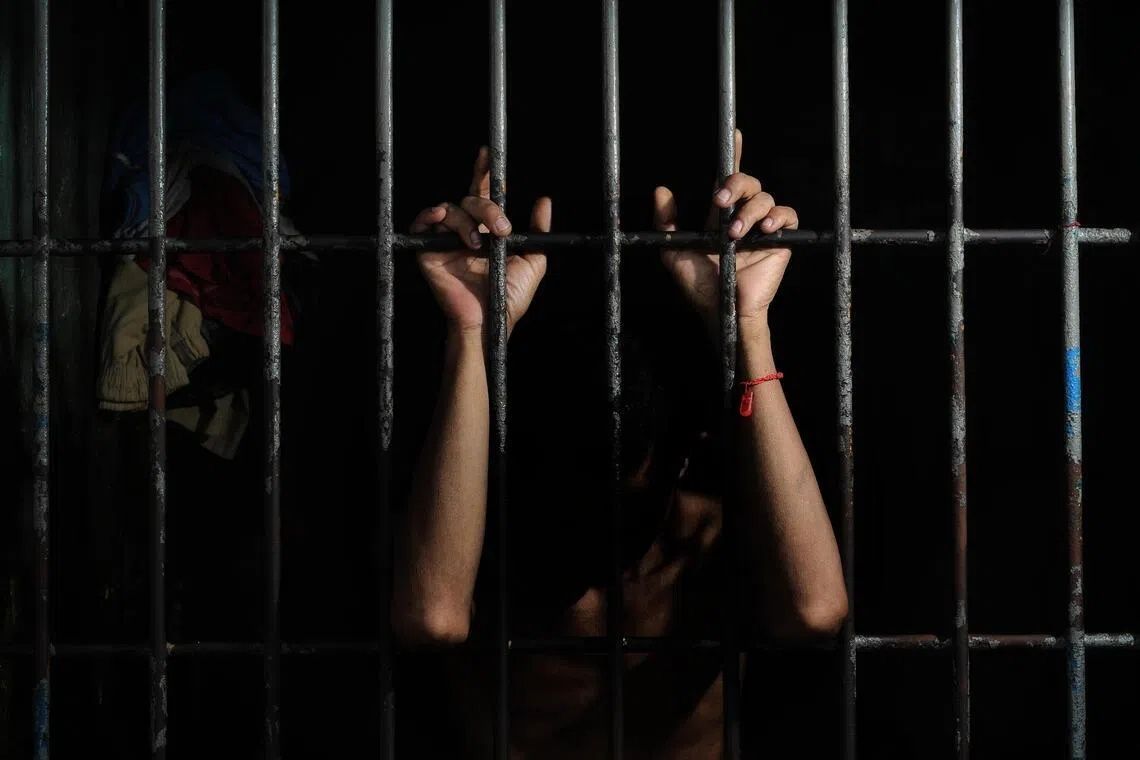
A mother in western Japan has launched legal action against the state seeking approximately 100 million yen in damages following the death of her 16-year-old daughter, whose body had wasted away to just 20 kilograms five months after her release from police custody. The lawsuit, filed at Kobe district court on Wednesday, June 17, centres on what advocates describe as a stark example of Japan's "hostage justice" system—a phenomenon whereby prosecutors and police are accused of using prolonged detention and coercive interrogation techniques to extract confessions from suspects, effectively holding them hostage until they comply.
The teenager, identified only as Runa in court documents to protect privacy, worked at a disability care facility in Hyogo prefecture when she was arrested in June of the previous year on suspicion of assaulting a patient during a Valentine's Day celebration. She consistently maintained her innocence throughout the ordeal, explaining that she had merely attempted to prevent the patient from biting another individual by gently pressing her hand against their chin. Despite her protestations and lack of evidence supporting a serious assault, authorities kept her detained for eighteen days before ultimately deciding to drop all charges entirely, a decision that came too late to prevent the profound damage to her physical and mental health.
During her confinement, Runa faced systematic isolation and psychological pressure designed to break her resolve. She was denied contact with her family, permitted only to communicate with her legal representatives, and subjected to repeated interrogations where officials explicitly threatened her with placement in a reformatory and warned that she would be unable to see her mother unless she confessed to the alleged crime. According to Masahiro Sasaki, the lawyer representing Runa's mother, investigators employing manipulative questioning techniques told the frightened teenager "You did it, didn't you? Just tell the truth," a refrain that Runa documented in a journal she kept during her incarceration. The psychological toll manifested quickly: she developed acute stress disorder, eating disorders, and post-traumatic stress disorder, conditions that would follow her even after her release.
The case underscores a fundamental criticism of Japan's criminal justice apparatus by international human rights organisations and legal scholars. In this system, the presumption of innocence operates more as a theoretical concept than a practical reality. Confessions carry enormous weight in securing convictions, yet the mechanisms through which these confessions are obtained frequently involve coercion, intimidation, and deprivation of basic rights. Suspects who exercise their right to silence or maintain their innocence face extended pre-trial detention, a consequence so severe that it effectively coerces many into false admissions simply to secure release. This dynamic has earned the pejorative label "hostage justice" because the freedom of the accused becomes hostage to their willingness to confess, regardless of actual guilt.
Runa's defence counsel has raised serious questions about the justification for her arrest in the first place. He argues that the alleged assault was of such trivial nature that detention could never have been necessary, particularly given her age as a minor, her clean history with no prior delinquency, and her stable home environment under parental supervision. Under Japan's legal standards, detention of juveniles should only occur when absolutely essential, yet prosecutors twice requested extensions of her custody while simultaneously blocking her lawyer's applications to the judge for release. The prosecutors' persistence in keeping her confined became especially troubling when, following a medical episode where she vomited, collapsed, and received brief hospital treatment, authorities finally released her on the grounds of non-prosecution—in essence, acknowledging they had insufficient grounds to proceed.
The dramatic physical deterioration that followed Runa's release speaks to the severity of her ordeal. By December, just months after her liberation from custody, her body had wasted away to a skeletal 20 kilograms, rendering her unrecognisable to her own mother. At her subsequent death, the cause was directly traceable to the malnutrition and trauma she had endured during those eighteen days of detention. Speaking at a press conference following the lawsuit filing, her mother expressed both her anguish and her determination to seek answers: "I want to know what happened to her, and why she was arrested, detained and had to die." This poignant question encapsulates not merely a personal tragedy but also an indictment of systemic failures that allow minors with no criminal history to be subjected to such devastating treatment for alleged infractions of minimal severity.
Sasaki's legal arguments centre on multiple failures in the handling of Runa's case. He contends that there was no probable cause to suspect the teenager of fleeing or destroying evidence, factors that would typically justify continued detention. Her age and circumstances should have warranted immediate release pending trial, not extended custody with interrogators applying psychological pressure. The fact that prosecutors ultimately decided not to proceed with charges suggests they recognised the weakness of their case from the beginning, raising the question of why they pursued aggressive detention tactics against someone they could not ultimately prosecute.
Runa's case is regrettably not isolated within Japan's criminal justice landscape. International observers and advocacy groups have repeatedly condemned the "hostage justice" phenomenon, with the most prominent recent example being that of Iwao Hakamada. Hakamada, who spent decades on death row—making him at one point the world's longest-serving inmate awaiting execution—had his convictions overturned in 2024 after Japan's Supreme Court determined that his confessions had been extracted through what the court explicitly characterised as "inhumane" interrogation methods. The fact that such systemic abuses had persisted for decades in his case, only to be rectified recently, demonstrates how deeply ingrained problematic practices have become within Japan's prosecutorial and police establishments.
The Kobe District Public Prosecutors Office has declined to comment on the lawsuit, stating that they had not yet formally received notification of the complaint. This silence itself reflects a broader pattern of institutional resistance to accountability within Japan's justice system. Without meaningful consequences for prosecutorial overreach and coercive interrogation practices, the incentive structure remains oriented toward securing convictions through confession rather than through rigorous investigation and evidence gathering. For Malaysian and Southeast Asian observers, Runa's case serves as a cautionary example of how even developed democracies with advanced legal systems can harbour deeply problematic criminal justice practices that disproportionately harm the vulnerable—particularly minors and those without resources to mount vigorous legal defences.
The broader implications for the region extend beyond Japan's borders. Southeast Asian justice systems, some of which share certain characteristics with Japan's approach to interrogation and confession-seeking, might consider Runa's tragic case as a sobering reminder of the human costs associated with systems that prioritise confessions over evidence and that permit extended detention of suspects without sufficient safeguards. The lawsuit Runa's mother has initiated represents an important mechanism for accountability, though the 100 million yen in damages sought can never restore what was lost. Her determination to pursue justice through the courts may yet contribute to systemic reforms that prevent other families from experiencing similar devastation. The case demonstrates that international pressure, combined with persistent advocacy by legal professionals and families of victims, remains essential to challenging deeply entrenched institutional practices that undermine fundamental human rights and the rule of law.