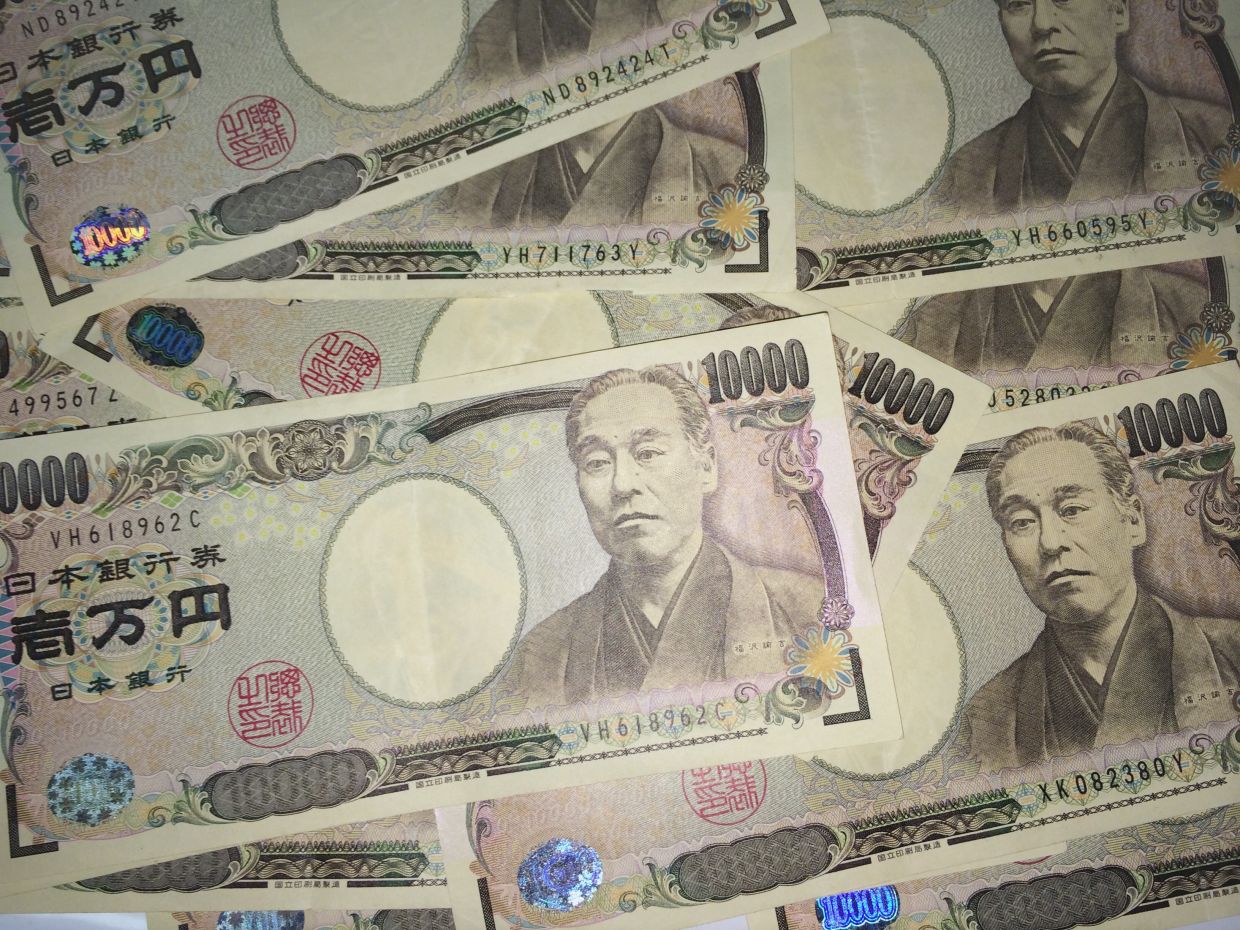
The Japanese yen is hovering at its weakest point in four decades as markets brace for potential government intervention, with currency traders noting that even the Bank of Japan's recent policy tightening has failed to reverse the unit's steady deterioration. Trading on Friday saw the yen hold at 161.205 against the U.S. dollar, a modest 0.1% appreciation from the previous session, though the reprieve proved temporary as the currency remains under sustained pressure. The thin liquidity environment created by holidays across the United States and much of Asia prevented any decisive moves, leaving the yen vulnerable to further depreciation.
The weakness in Japan's currency presents a significant puzzle for policymakers, given the dramatic steps already taken to support it. Earlier in the year, Japan's Ministry of Finance deployed substantial dollar-selling interventions, while the Bank of Japan raised interest rates to their highest level in 31 years last week, moves that would typically strengthen a currency. Yet neither measure has managed to stem the decline, suggesting that deeper structural concerns about the Japanese economy are overwhelming traditional support mechanisms. Market observers point to a combination of factors, including uncertainty surrounding new Prime Minister Sanae Takaichi's spending and policy agenda, which has apparently eroded investor confidence in the stability of Japanese economic management.
Analysts expect the Ministry of Finance to make fresh attempts to defend the yen, particularly at the psychologically important 161.95 level. Tony Sycamore, a market analyst at IG in Sydney, estimates that defending this threshold would require a deployment of approximately ¥11.7 trillion in intervention, comparable to the firepower deployed during April and May. However, such action would represent roughly 11 to 12 percent of Japan's total reserve capacity deployed over an exceptionally short timeframe with minimal demonstrable effect. This grim calculus suggests that Japanese authorities face a difficult choice between rapidly exhausting their intervention ammunition or becoming more selective with future support, a stance that could undermine the credibility of their defence efforts.
The inflation data released Friday underscores the central bank's policy dilemma. Japan's core inflation remained below the Bank of Japan's 2 percent target for the fourth consecutive month in May, a situation that might normally support arguments for accommodative policy rather than rate increases. However, the temporary suppression of price growth reflects government fuel subsidies that mask underlying cost pressures emanating from international energy markets and the ongoing Middle East conflict. Capital Economics analysts project that as these subsidies diminish their impact, inflation could accelerate to approximately 3.5 percent by early 2027, a scenario that would justify the central bank's hawkish stance but complicates the near-term outlook for currency support.
Minutes from the Bank of Japan's April policy meeting revealed that some board members advocated for more aggressive rate increases if Middle Eastern tensions persist, positioning inflation control as a priority that supersedes currency support. Deputy Governor Ryozo Himino reiterated on Friday that the central bank remains committed to continued rate increases, maintaining focus on the risk that underlying price pressures might accelerate beyond the official 2 percent target. This emphasis on price stability over currency strength suggests that the Bank of Japan views persistent inflation as the greater threat, even as the weak yen itself tends to import inflation through higher commodity costs, creating a feedback loop that complicates policy implementation.
The broad currency market environment provided little support for the yen. Most major currencies traded with minimal movement during Asian hours, with the U.S. dollar index, which tracks the greenback against a basket of six major currencies, holding near 100.81 after climbing 0.5 percent to reach a one-year high during Thursday's session. The recent peace agreement between the United States and Iran, which had briefly lifted shipping traffic through the strategically critical Strait of Hormuz, failed to provide lasting market reassurance, as traders remained sceptical about the sustainability of the truce. This diplomatic uncertainty, combined with persistent geopolitical tensions, has likely contributed to safe-haven demand that should theoretically support the yen but has instead been overwhelmed by other factors driving its decline.
Global monetary policy divergence continues to exert pressure on the yen relative to other currencies. The Bank of England decided to hold rates steady at 3.75 percent, judging that premature increases might amplify inflation pressures that remain uncertain in magnitude and persistence. The British pound remained flat at $1.3205, reflecting the hold decision and the broader cautious tone among developed-market central banks. Meanwhile, the Australian dollar slipped 0.1 percent to $0.7011, and the New Zealand dollar held at $0.5756, suggesting that regional currencies are also navigating headwinds despite varying economic conditions. This pattern indicates that the yen's weakness represents a Japan-specific phenomenon rather than a broad-based depreciation of Asian currencies.
The persistence of yen weakness despite rate increases carries significant implications for Japanese exporters, particularly those competing in regional markets like Southeast Asia and China where cost competitiveness remains paramount. A weaker yen enhances the price attractiveness of Japanese products abroad, potentially supporting export volumes and corporate profitability in the near term. However, the currency weakness also increases costs for Japanese importers and corporations with foreign currency liabilities, and it may accelerate inflation by raising prices for imported goods and raw materials. For Malaysian and regional investors with exposure to Japanese equities or those competing against Japanese manufacturers, the weak yen represents both an opportunity and a threat depending on the nature of their business exposure.
Market participants are maintaining heightened vigilance regarding further intervention announcements, as the Japanese government faces mounting pressure to justify its policy choices to an increasingly sceptical investment community. The challenge confronting Tokyo involves balancing the desire to support the yen against the fiscal and credibility costs of unsuccessful intervention. Should the yen eventually break decisively below the 161.95 level, the Ministry of Finance would face a crucial test of whether to escalate intervention with potentially limited effectiveness or to accept a new equilibrium that prices in structural weakness in Japanese assets. The outcome will likely depend on whether officials believe the recent yen weakness reflects temporary technical factors or a more fundamental reassessment of Japan's economic prospects by international investors.