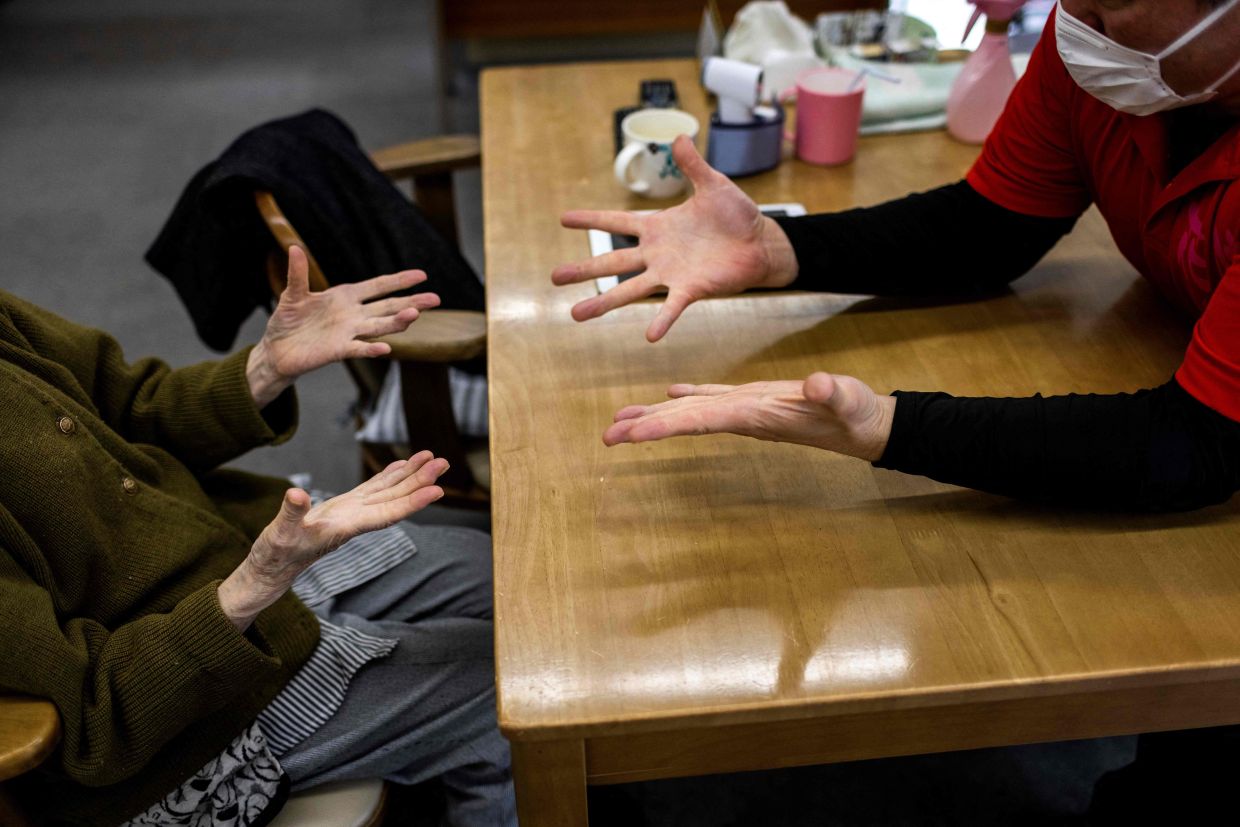
Japan's demographic time bomb is forcing uncomfortable conversations about end-of-life care, and one former physician has pushed the boundaries of that debate to their absolute extreme. Yo Kusakabe, a retired geriatric specialist from Osaka, has spent two decades developing a taboo literary concept that now challenges the nation to rethink how it handles its rapidly ageing population. His 2003 novel "Haiyoshin (Useless Body)" presents a dystopian vision where immobilised limbs are surgically removed from elderly patients to ease the burden on caregivers — a notion so provocative that filmmakers initially deemed it unfilmable. Yet the movie adaptation, released last month, has arrived on Japanese screens and unleashed a torrent of both moral outrage and unexpected philosophical reflection.
The premise, while shocking, emerges from documented realities within Japan's care system. The nation faces a projected shortage of approximately 570,000 caregivers by 2040, a gap that will widen as the population continues to grey. Currently, nearly one in three Japanese citizens are aged 65 or older, placing unprecedented strain on families and professional care facilities. Kusakabe's decades-old work has taken on renewed urgency precisely because the conditions he described have only deteriorated. The film's timing — arriving as Japan grapples with genuine systemic dysfunction — has transformed what could have remained a literary curiosity into a national conversation about whether radical measures might indeed be necessary.
Kusakabe's central argument rests on a utilitarian logic that prioritises practical care outcomes over conventional notions of bodily integrity. According to the 70-year-old author, paralysed limbs serve no functional purpose for bedridden patients; instead, they complicate every aspect of caregiving. Immobile arms and legs become obstacles during bathing, entangle patients in clothing, require constant repositioning, and substantially increase the physical strain on care workers. He notes that amputating these non-functional extremities would reduce the weight patients require lifting, diminish the risk of back injuries among predominantly female caregivers, and streamline the caregiving process. His proposal assumes full informed consent from patients, positioning amputation not as an involuntary measure but as an option patients might rationally choose if given genuine autonomy.
Within the narrative of "Haiyoshin," the amputation concept — termed "A-care" — initially yields unexpected benefits that complicate easy moral dismissal. Kusakabe recalls that some of his actual patients expressed longing to be rid of limbs that caused only suffering: the constant throb of paralysis, the involuntary convulsions, the helplessness. In the film, amputees paradoxically experience liberation, demonstrating newfound agility and engaging in activities like balloon-tossing and wheelchair navigation that their previously intact bodies prevented. This depiction raises a genuinely uncomfortable philosophical question about dignity in decline: whether forcing a suffering person to maintain non-functional body parts in the name of abstract bodily integrity actually serves their interests.
Yet Kusakabe's critique extends beyond the novel's speculative amputation premise. He identifies a deeper dysfunction in how Japanese society approaches end-of-life care compared to Scandinavian models. In Sweden and Denmark, palliative care protocols typically cease artificial feeding when elderly patients naturally lose the desire to eat, allowing natural death to proceed. Japan, by contrast, maintains the presumption that life extension through feeding tubes and intravenous drips represents the unquestionable ethical imperative, particularly for patients over 75. Insurance coverage heavily favours these interventions, and families often feel psychologically compelled to pursue them regardless of patient suffering or quality of life. Kusakabe argues this reflects cultural unwillingness to accept mortality rather than genuine compassionate care.
The phenomenon of "kaigo satsujin" — caregiving murders — underscores how unsustainable current conditions have become. Public broadcaster NHK's 2016 investigation revealed that overwhelmed or desperate caregivers kill their charges approximately once every two weeks in Japan. These deaths represent the system's catastrophic failure not merely in its efficiency but in its fundamental capacity to support human dignity across the lifespan. When caregivers are pushed to homicidal desperation, suggesting that amputation represents an even more extreme outcome seems less absurd, though no less ethically fraught. Kusakabe positions his proposal as a warning: without fundamental restructuring, Japan faces escalating care-related tragedies.
The film's reception has revealed genuine ideological fractures in Japanese society. Critics have variously labelled "Haiyoshin" as "shocking," "the year's most controversial film," and "terrifying madness." Yet more nuanced responses suggest some viewers recognise the proposal's internal logic, even while finding it morally repugnant. One eiga.com reviewer acknowledged that despite the amputation concept's apparent ruthlessness and unethicality, it "had a point." This willingness to grapple with the argument's premises rather than dismiss it outright reflects how comprehensively Japan's care infrastructure has failed to inspire confidence.
Kusakabe himself remains ambivalent about amputation's practical viability within contemporary Japan. He acknowledges that the "rational" pursuit of quality of life does not currently guide Japanese elderly care policy or practice. Japanese cultural resistance to accepting death, combined with family members' psychological inability to forgo any possible intervention, creates conditions where even proposing cessation of artificial feeding encounters fierce resistance. Amputation would require overcoming similar — and arguably greater — psychological and cultural barriers. As Kusakabe notes, this "inability to take a bold, rational approach probably makes something as radical as A-care a poor fit for Japan after all."
The novel itself undermines its own premise by the narrative's conclusion. The initial enthusiasm surrounding amputation is "brutally deflated by a tragedy," destroying the protagonist's confidence in the approach. This structural choice acknowledges that even radical solutions cannot resolve the underlying crisis if the conditions that necessitated them remain unaddressed. Kusakabe appears to understand that amputation functions primarily as metaphor — a deliberately extreme provocation designed to force Japanese society to confront its genuine caregiving crisis rather than a serious policy proposal.
For Malaysia and other Southeast Asian nations, Japan's experience offers sobering lessons. While Malaysia's population remains younger, demographic ageing will accelerate in coming decades, creating parallel care shortages and family pressures. Japan's struggle illustrates how swiftly caregiving systems can deteriorate and how inadequate planning and investment can push societies toward considering measures that would be unthinkable under less desperate circumstances. The film's emergence reflects not merely individual authorial provocation but systemic breakdown that demands attention.
Kusakabe's work ultimately functions as a catalyst for deeper conversations about what constitutes dignified ageing, how societies should balance life extension against quality of life, and whether current caregiving models are salvageable or require fundamental reinvention. While amputation remains extreme and likely impractical, the genuine crisis that prompted its fictional exploration demands serious response. Japan must either substantially increase caregiver recruitment, improve working conditions and compensation, invest in technological alternatives, or fundamentally reconceptualise end-of-life care itself. Without substantive action on these fronts, increasingly desperate proposals — whether metaphorical or literal — will continue to emerge from those bearing witness to the system's collapse.