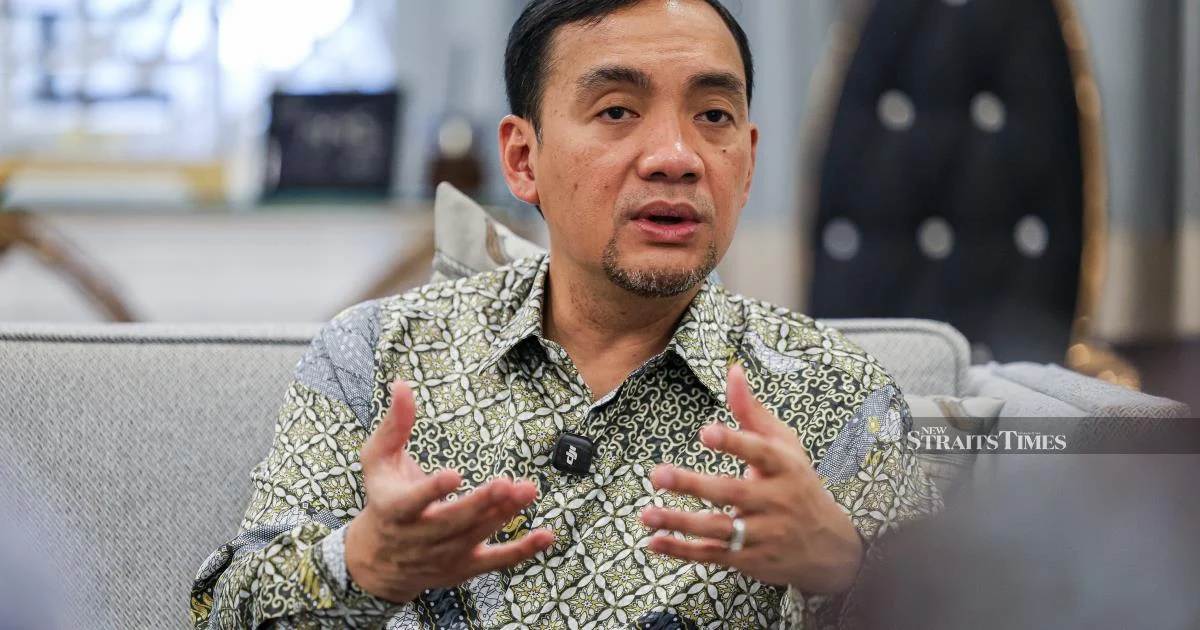
Johor's caretaker Menteri Besar Datuk Onn Hafiz Ghazi has definitively closed the door on any possibility of Barisan Nasional collaborating with the Democratic Action Party to establish a state administration should voters renew his coalition's mandate in forthcoming elections. The unequivocal stance from the senior Johor politician underscores the widening ideological rifts that continue to define Malaysian political alignments at the state level, even as pragmatic power-sharing arrangements have emerged elsewhere within the country's fractured electoral landscape.
Onn Hafiz's remarks carry particular weight in Johor, Malaysia's second-largest state by population and a traditional fortress for Umno-dominated coalitions. The Menteri Besar's intervention signals that despite national-level negotiations and tentative cooperation between Pakatan Harapan and Barisan Nasional in certain contexts, regional political dynamics remain distinctly polarised. The rejection reflects a calculation that Barisan's electoral prospects in Johor remain strong enough without requiring unconventional alliances, particularly given the DAP's historically limited support base in the state outside urban enclaves such as Johor Baru and Kulai.
The ideological framing deployed by Onn Hafiz points to core disputes that transcend conventional left-right politics in Malaysia's context. Barisan Nasional, anchored by Umno's Malay-Muslim political identity, maintains that its foundational principles—rooted in constitutional arrangements established at independence—are fundamentally incompatible with DAP's secular, multi-racial positioning. These philosophical differences have historically proven more resistant to compromise than policy disagreements, particularly when state-level legitimacy and the distribution of patronage resources are at stake.
For Johor voters and political observers across Southeast Asia monitoring Malaysia's democratic evolution, such pronouncements illuminate the constraints on coalition flexibility even as economic pressures and changing demographics reshape electoral calculations. The state government's control of significant resource distribution mechanisms, from civil service recruitment to development contracts, means that questions of ideological compatibility become intertwined with material interests and communal representation. Onn Hafiz's framing suggests that accepting DAP partnership would carry political costs among Umno's core constituencies that outweigh any benefit from expanding the electoral coalition.
The timing of Onn Hafiz's statement deserves consideration within broader patterns of Malaysian electoral politics. As political actors across the country respond to mounting public disenchantment with governance and economic performance, some have experimented with cross-ideological collaboration to consolidate anti-incumbent votes. However, Johor's particular political economy has long resisted such realignments. The state's significant Malay-Muslim majority, combined with Barisan's institutional dominance across district and municipal structures, suggests that Umno and allied parties can maintain electoral supremacy through traditional constituency management rather than ideological accommodation with opposition forces.
The DAP's own strategic positioning complicates any potential negotiations. As the largest ethnic Chinese-majority party in Malaysian politics, the DAP operates within constraints imposed by its community base and broader perceptions of its role within multi-ethnic Malaysia. The party's stronger performance in urbanised, economically developed areas aligns poorly with the spatial distribution of political influence in Johor, where rural constituencies and smaller towns with Malay-Muslim majorities carry disproportionate weight in determining electoral outcomes. Any serious collaboration would require the DAP to undertake unpopular concessions regarding its core policy platform, creating its own internal political difficulties.
Regionally, Johor's political configuration affects the stability of governments across Peninsular Malaysia and carries implications for ASEAN's largest economy. The state's geographic position adjacent to Singapore, combined with its significant role as a commercial and transportation hub, means that political uncertainty in Johor can reverberate through regional supply chains and investment flows. Foreign observers and business communities generally prefer predictable governance arrangements. Onn Hafiz's emphatic rejection of DAP partnership offers reassurance regarding the continuity of existing governance structures, even as it precludes certain alternative outcomes that might theoretically offer different solutions to Johor's policy challenges.
The hardening of ideological boundaries in Johor also reflects generational dynamics within Malaysian political leadership. Onn Hafiz represents a cohort of Umno politicians who have consolidated power through appeals to communal sentiment and institutional advantage rather than through ideological flexibility or cross-cutting policy platforms. The emphasis on ideology—rather than pragmatic governance or competence—suggests that even as Malaysia's political economy evolves, traditional fault lines continue to structure elite behaviour and coalition calculations at the state level.
For Malaysian civil society and voters contemplating electoral choices in forthcoming Johor contests, the Menteri Besar's statement establishes the parameters within which coalition formation will occur. The explicit rejection of DAP eliminates one possible configuration while potentially strengthening Barisan's appeal among voters prioritising communal representation and traditional power arrangements. Whether this approach adequately addresses Johor's substantive governance challenges—from urban infrastructure to rural development—remains a separate question that campaign discourse has yet to meaningfully engage.