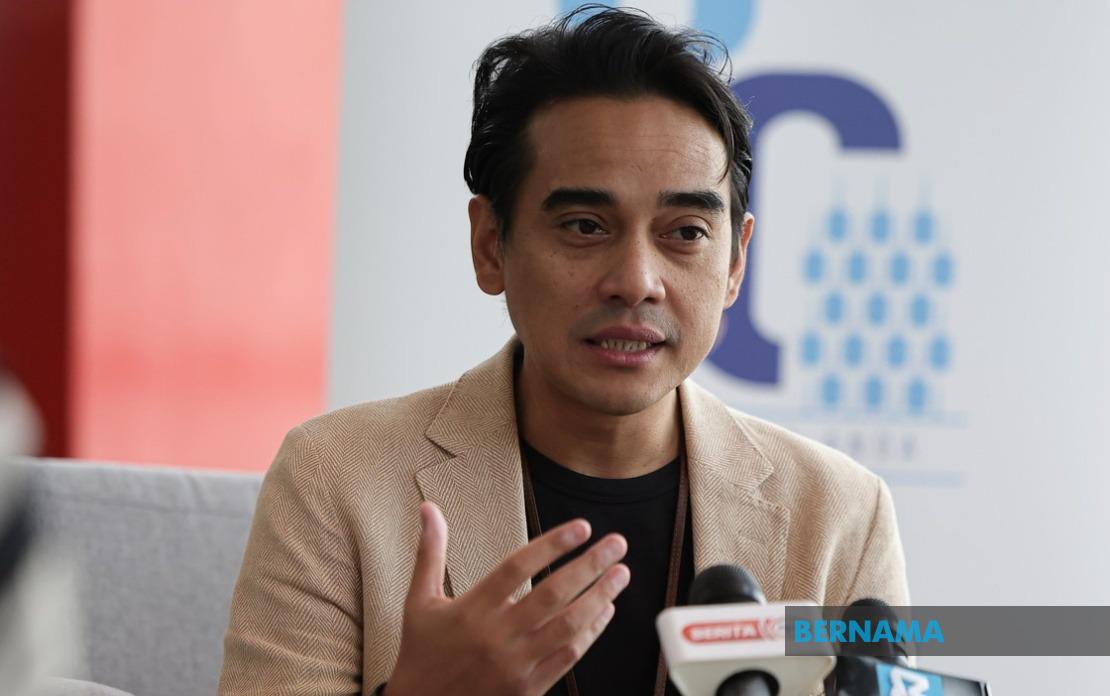
The future of journalism in Malaysia depends not on resisting technological change but on newsroom professionals acquiring the competency to harness artificial intelligence effectively, according to Ashwad Ismail, Director-General of Broadcasting. Speaking on Bernama TV's The Nation programme, Ismail presented a nuanced perspective on the role of AI in contemporary media, framing the technology not as an existential threat but as an essential professional toolkit that separates competitive journalists from those at risk of redundancy.
Ismail articulated his concern with stark clarity: the competitive advantage will belong to practitioners who master AI integration, not necessarily because machines will replace newsroom workers wholesale, but because skilled colleagues who leverage technology will advance faster. His formulation cuts to the heart of industry anxiety—the threat is not automation itself but rather professional obsolescence among those who fail to adapt. This perspective aligns with global trends in media organisations where early adopters of AI-assisted reporting, data analysis, and content distribution have demonstrated measurable efficiency gains and expanded audience reach.
Critically, Ismail rejected a zero-sum framing of AI and journalism. Rather than positioning the technology as a competitor to human journalists, he characterised it as a capability multiplier that preserves and amplifies distinctly human journalistic qualities. This distinction matters significantly for Malaysian media professionals who may fear that embracing automation signals complicity in their own displacement. By reframing AI as complementary to rather than substitutive of human skills, Ismail articulated an optimistic but conditional vision: journalists who develop facility with these tools enhance their capacity to investigate, analyse, and communicate stories with greater depth and speed.
The Malaysian media landscape faces particular pressure to modernise. Regional competitors, particularly in Singapore and increasingly in Indonesia, have aggressively integrated AI into newsroom workflows for tasks ranging from preliminary research and fact-checking to predictive audience analytics and automated routine reporting. Malaysian newsrooms that lag in adopting these capabilities risk losing competitive advantage in an increasingly crowded digital information ecosystem where speed, accuracy, and personalisation determine audience loyalty. For an industry already navigating declining print revenues and subscription challenges, technological competitiveness becomes a survival mechanism.
Ismail simultaneously acknowledged the legitimate concerns driving resistance to workplace automation. Job displacement anxiety within the media industry is not paranoia but reflects real historical precedent—previous technological transitions have eliminated certain categories of media work while creating others. His emphasis on developing clear organisational guidelines to govern AI use in newsrooms suggests recognition that unfettered adoption risks genuine harm to workforce stability. These guidelines serve a dual function: protecting workers by constraining AI deployment to enhancement rather than replacement roles, and ensuring ethical journalism standards remain intact as technology accelerates news production cycles.
The relationship between AI implementation and journalistic ethics represents a critical tension Ismail identified. Artificial intelligence systems trained on historical news data can perpetuate embedded biases, automate assumptions, and generate plausible-sounding but factually dubious content. Malaysian newsrooms, operating in a complex political and social environment where media credibility remains contested, cannot afford ethical shortcuts. Responsible AI governance within newsrooms requires that human editorial judgment, contextual understanding, and accountability structures remain paramount—AI augments these capacities rather than replacing them.
Rebuild public trust in media institutions constitutes Ismail's second major concern. He advocated returning to fundamental journalistic practices, particularly hyperlocal reporting that establishes direct community relationships and demonstrates tangible value to local audiences. This emphasis on grassroots connection complements rather than contradicts technological adoption. AI can liberate journalists from routine administrative tasks and lower-complexity reporting to focus on the investigative, interpretive, and community-focused work that differentiates quality journalism from machine-generated content. The human touch Ismail emphasised—genuine engagement with communities, local expertise, and accountability to specific audiences—represents the irreplaceable competitive advantage journalism possesses against algorithmic content systems.
The timing of Ismail's advocacy carries strategic importance as HAWANA 2026, a significant regional media conference, culminates with remarks from Prime Minister Datuk Seri Anwar Ibrahim. That gathering, anticipated to draw over 1,200 participants including media practitioners and ASEAN delegates at PICCA Convention Centre @ Arena Butterworth on June 20, positions Malaysia as a deliberative voice within regional journalism conversations about technology, standards, and professional development. Ismail's emphasis on guided AI adoption rather than either wholesale rejection or unregulated implementation could influence how neighbouring Southeast Asian countries approach similar challenges.
For Malaysian journalism organisations specifically, Ismail's framework suggests a pragmatic middle path: investing in staff retraining programmes that develop AI literacy and competency; establishing clear usage guidelines that prevent AI from displacing investigative work or editorial judgment; and leveraging efficiency gains to strengthen community reporting and trust-building initiatives. Newsrooms that successfully navigate this transition will likely emerge more competitive—faster to verify information, more capable of analysing complex datasets, and better positioned to customise content for diverse audience segments while maintaining editorial integrity.
The evolution of journalism in Malaysia over the next five years will substantially depend on how quickly and thoughtfully the industry embraces Ismail's core insight: that technological adaptation is not optional for competitive survival, that AI tools require human wisdom and oversight to function ethically, and that the core value proposition of journalism—truthful, contextually informed storytelling that serves community interests—becomes more rather than less important as automated information systems proliferate. For individual journalists weighing professional development priorities and for media organisations allocating training budgets, this perspective suggests that AI literacy is no longer a specialised skill but a fundamental professional competency.