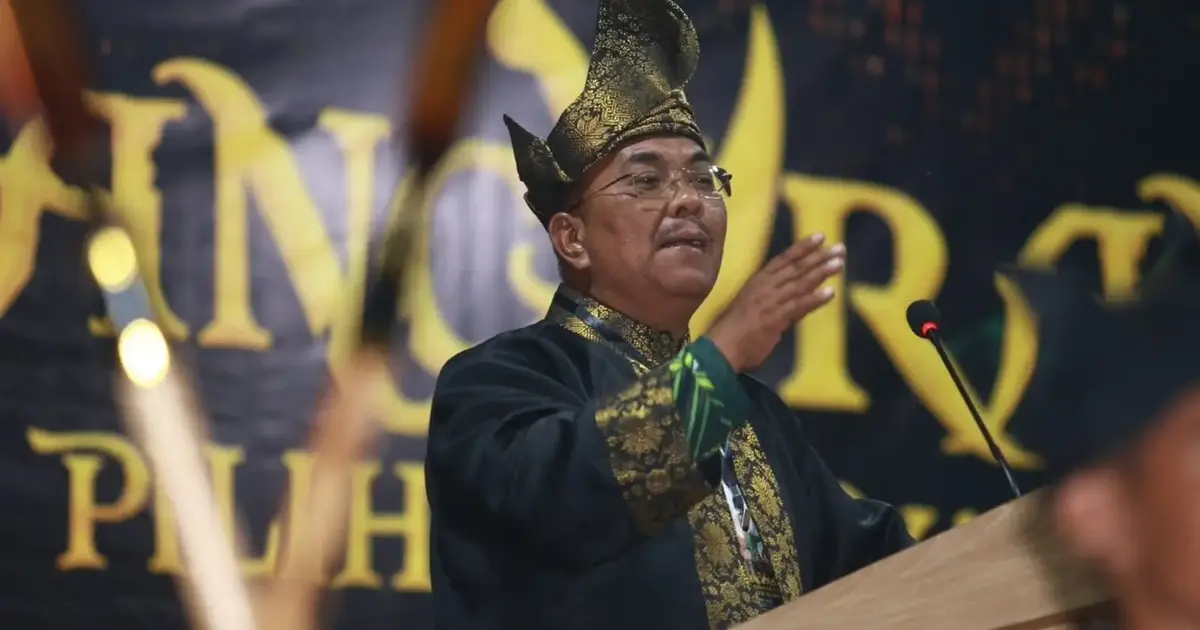
Two opposition politicians in Kedah have pushed back strongly against suggestions that Menteri Besar Muhammad Sanusi Md Nor and his coalition partners are poised for an overwhelming electoral triumph in the state, asserting instead that voter decisions will ultimately rest on the tangible quality of governance rather than political rhetoric or perceived momentum.
Bau Wong Bau Ek, the PKR representative from the state, contended that the electorate evaluates state administrations through the lens of concrete achievements and failures rather than abstract party narratives. His position reflects a broader opposition strategy to reframe the electoral conversation away from sentiment and towards the lived experience of constituents—a tactic that depends heavily on whether voters perceive improvements or deterioration in key service areas such as infrastructure, education, healthcare delivery, and economic opportunity.
Meanwhile, Teh Swee Leong of the DAP offered a parallel critique, suggesting that the apparent political ascendancy of the PAS-PN combination has been significantly overstated by observers and perhaps amplified by media coverage. This characterisation challenges the prevailing narrative that has dominated Malaysian political discussion in recent months, wherein the Islamic-Malay-focused coalition has been depicted as riding an unstoppable wave of grassroots support across multiple states.
The scepticism voiced by these two opposition figures carries particular weight given Kedah's recent political history. The state, which borders Thailand and sits strategically in Malaysia's northern corridor, has experienced considerable electoral volatility. The 2022 state election saw dramatic swings in support across multiple constituencies, reflecting how quickly voter sentiment can shift when economic conditions deteriorate or when state governments fail to deliver on key promises.
Kedah's economy, historically anchored by agriculture, manufacturing, and increasingly tourism and services sectors, faces ongoing pressures from global supply chain disruptions and domestic cost-of-living concerns. If the current Sanusi administration has struggled to address rice farmer distress, palm oil price volatility, or unemployment in northern regions, opposition claims about performance-based voting hold considerable legitimacy. Conversely, if visible development projects, improved administrative efficiency, or tangible welfare improvements are evident on the ground, such opposition rhetoric may ring hollow to voters.
The broader context here involves the national political realignment that has unfolded since 2022. The collapse of the Pakatan Harapan federal government and the subsequent dominance of coalitions involving PAS and Perikatan Nasional has created genuine uncertainty about electoral outcomes. While some analysts have interpreted this as evidence of irreversible voter shifts, others—including these Kedah opposition voices—maintain that electoral outcomes remain genuinely competitive and that declared political inevitability often crumbles when voters enter the ballot box.
Bau Wong Bau Ek's emphasis on performance-based evaluation suggests PKR believes it can recapture support by highlighting any governance shortcomings during the current administration's tenure. This approach requires detailed local knowledge and sustained grassroots engagement rather than broad national campaign messaging. For Malaysian readers following Kedah politics, this indicates that opposition parties are likely to focus campaign activity on specific constituencies and specific issues rather than attempting a wholesale ideological challenge to PAS-PN's stated vision.
Teh Swee Leong's assertion that the PAS-PN political wave remains weaker than portrayed deserves scrutiny in light of actual election results and polling data. If this claim rests merely on wishful thinking from an opposition perspective, it will quickly be exposed. However, if DAP analysis has identified genuine softening of support among specific voter blocs—urban professionals, non-Muslim minorities, younger voters concerned about economic opportunity—then this prediction warrants serious consideration as campaigns advance.
The question of whether Sanusi's administration will achieve overwhelming re-election success ultimately hinges on measurable state-level outcomes: How much have household incomes improved or deteriorated? Have unemployment rates shifted? Are roads, schools, and clinics in better or worse condition than before? Have local government services become more efficient or more frustrating for ordinary residents? These granular realities often matter far more than state or national political narratives in determining how Kedahans actually cast their votes.
For Malaysia's broader political trajectory, the assertion by these opposition representatives carries implications beyond Kedah alone. If voter behaviour continues to centre on evaluating governance quality rather than tribal political allegiances, this suggests that no coalition can assume electoral certainty regardless of current polling or sentiment analyses. This would theoretically maintain competitive pressures on all governing parties to deliver tangible results, though the historical record suggests such pressure often proves insufficient when faced with well-organised, well-funded political machines.
The coming months will reveal whether Bau Wong Bau Ek and Teh Swee Leong have accurately gauged Kedah voter sentiment or whether they are simply articulating opposition hope rather than recognising electoral reality. What remains clear is that their statements reflect a strategic choice by Kedah's opposition to abandon sweeping national rhetoric in favour of granular, performance-based critique—a gambit that could either revitalise opposition prospects or hasten their marginalisation, depending on whether Kedahans ultimately agree with their assessment.