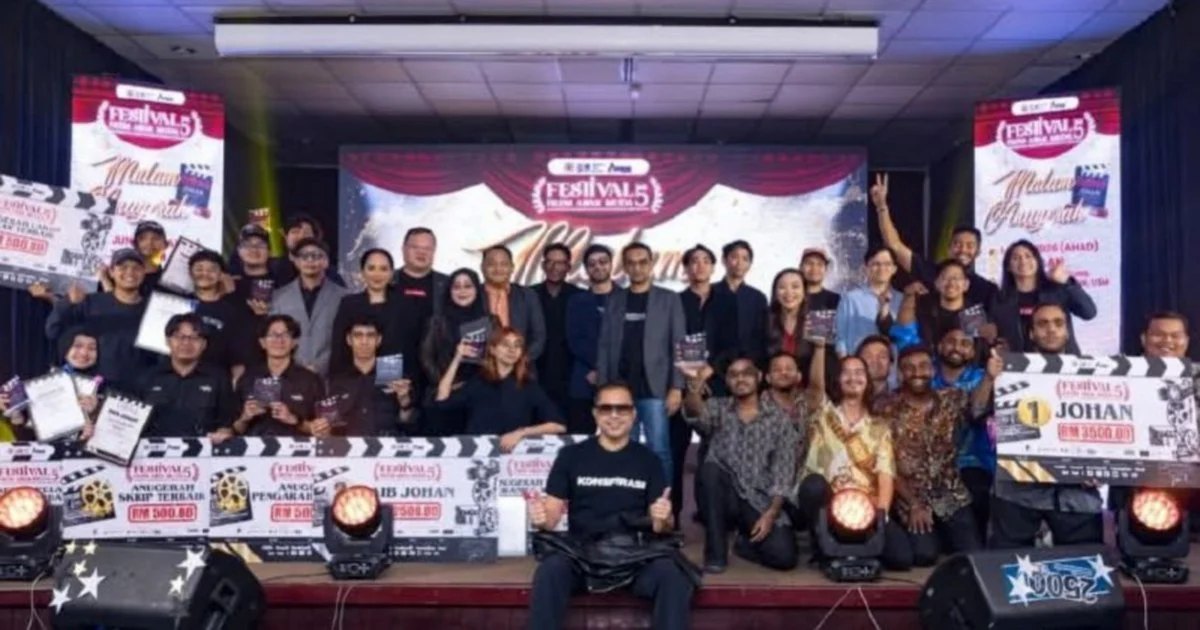
The Malaysian Anti-Corruption Commission has recognised that traditional enforcement alone is insufficient to embed integrity into society. Through its participation in the 5th Youth Film Festival at Universiti Sains Malaysia in Penang, the MACC is pivoting towards culturally resonant approaches that speak directly to young audiences increasingly shaped by visual media rather than conventional messaging.
This strategic alliance reflects a broader understanding within Malaysia's anti-corruption landscape that generational attitudes toward ethical conduct require intervention at the formative stage. Young people today consume content primarily through streaming platforms and social media, making film festivals an optimal venue for MACC to distribute its message. By positioning the commission as a facilitator of creative expression rather than merely an enforcement body, MACC seeks to destigmatise discussions around corruption and frame integrity as a positive value proposition rather than a regulatory burden.
The Youth Film Festival platform offers unique advantages that traditional MACC campaigns cannot replicate. Student filmmakers possess both technical skills and cultural authenticity that resonates within their peer networks. When young people encounter anti-corruption narratives crafted by their contemporaries rather than government officials, the message gains credibility and emotional resonance. This peer-to-peer approach acknowledges that integrity building among youth depends less on top-down directives and more on culturally embedded storytelling that feels organic to their lived experience.
For Malaysian universities, particularly Universiti Sains Malaysia as host institution, this collaboration signals institutional commitment to developing graduates with robust ethical foundations. In an era when corporate malfeasance and public sector scandals regularly dominate headlines, tertiary education providers increasingly recognize that their responsibility extends beyond technical skill development to include character formation. By hosting the festival, USM positions itself as an institution deeply engaged with national integrity frameworks.
The timing of MACC's involvement carries significance within Malaysia's political economy. Corruption remains a persistent challenge that undermines public trust in institutions, distorts economic competition, and diverts resources from development priorities. By investing in youth outreach now, the MACC operates from the premise that preventing corrupt attitudes from taking root during formative years represents superior long-term strategy compared to pursuing enforcement against entrenched offenders. This preventative orientation aligns with contemporary criminology research suggesting that early intervention in ethical development produces more sustainable behavioural change than post-facto punishment.
Film as a medium presents particular strengths for conveying complex anti-corruption concepts to diverse audiences. Documentary formats can expose real-world consequences of institutional corruption, while narrative fiction allows exploration of ethical dilemmas that individuals face in professional settings. The visual language of cinema transcends language barriers and makes abstract concepts tangible, enabling viewers to recognise corruption not as a distant phenomenon perpetrated by distant officials, but as something embedded within everyday institutional decisions that young people will encounter in their own careers.
The festival's location in Penang also carries regional significance. As Malaysia's second-largest metropolitan area and a major economic hub, Penang hosts diverse educational and business communities. Young people in Penang will graduate into positions across government, private sector, and civil society throughout Southeast Asia, making their exposure to anti-corruption values particularly consequential for the region's broader governance trajectory. The festival thus functions not merely as local engagement but as an investment in regional integrity capacity.
MACC's evolution toward creative partnerships reflects lessons learned from previous awareness campaigns. Government agencies worldwide have discovered that simplistic slogans and fear-based messaging often prove counterproductive, generating cynicism rather than commitment. By collaborating with artists and students, MACC acknowledges that anti-corruption campaigns gain traction when they challenge audiences intellectually and emotionally, offering them opportunities to explore ethical complexities rather than receiving pre-digested moral instruction.
The partnership also addresses a critical gap in Malaysia's institutional landscape. While MACC possesses investigative mandate and law enforcement powers, it has historically possessed limited capacity to shape cultural norms around integrity. By working through educational institutions and creative forums, MACC expands its sphere of influence into domains where formal authority carries less weight but where cultural influence operates more freely. Film festivals occupy precisely this liminal space—sufficiently structured to deliver coherent messaging, yet sufficiently open to accommodate genuine creative exploration.
Looking forward, this collaboration model has potential to proliferate across Malaysian universities and beyond. As MACC builds institutional relationships with tertiary education providers and creative sectors, it establishes infrastructure for sustained engagement with young people across multiple touchpoints. When students encounter anti-corruption messaging through their favourite medium—authentic, artistic, peer-created content—they develop more internalized commitments to integrity rather than mere compliance with external rules.
The success of this initiative will ultimately depend on MACC's willingness to allow genuine creative freedom rather than imposing didactic messaging. Young filmmakers need space to explore corruption narratives authentically, which may sometimes involve uncomfortable truths about institutional weaknesses that MACC itself might prefer to avoid. Balancing promotional objectives with artistic integrity represents the true test of whether creative partnerships can generate authentic cultural change around anti-corruption values among Malaysia's next generation of leaders and professionals.