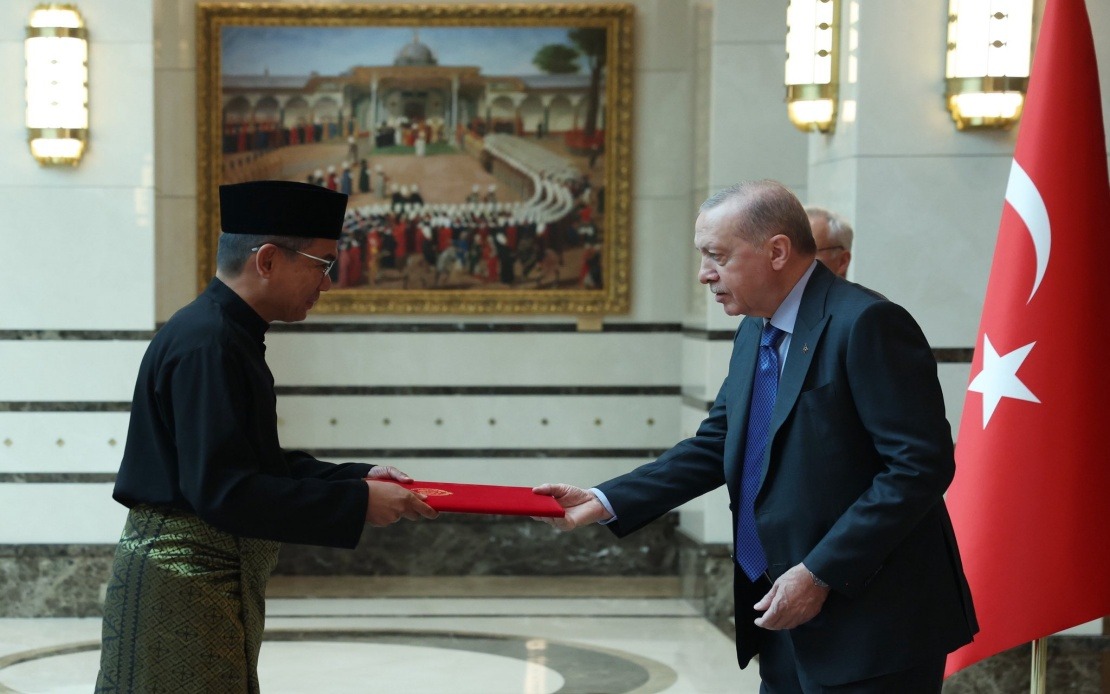
Malaysia has thrown its weight behind Türkiye's push to become an ASEAN Dialogue Partner, signalling deepening ties between the Southeast Asian nation and the Turkish state. The endorsement came through official channels when newly-appointed Malaysian Ambassador to Türkiye, Adlan Mohd Shaffieq, presented his credentials to Turkish President Recep Tayyip Erdoğan at the Presidential Complex in Ankara on June 17. The move underscores Malaysia's commitment to expanding Ankara's role within regional frameworks while strengthening bilateral relations that have grown substantially across multiple sectors.
Ambassador Shaffieq's statement positioning Türkiye as an increasingly valuable partner reflects broader strategic calculations within Kuala Lumpur's foreign policy apparatus. The envoy articulated that Türkiye has demonstrated growing economic commitment to Southeast Asia, coupled with a sophisticated understanding of regional dynamics and a genuine interest in people-to-people exchanges. This characterisation moves beyond ceremonial diplomacy, suggesting Malaysia views Turkish engagement with ASEAN as substantive rather than superficial. The ambassador's emphasis on economic engagement, strategic outlook, and cultural ties frames the dialogue partnership not merely as a diplomatic courtesy but as recognition of practical cooperation benefits.
In his remarks, Ambassador Shaffieq conveyed warm greetings from His Majesty Sultan Ibrahim, King of Malaysia, and Prime Minister Datuk Seri Anwar Ibrahim to President Erdoğan, personalising the engagement and demonstrating high-level governmental commitment. This gesture carries significance beyond protocol, reflecting the importance both Malaysian leadership and the Turkish government place on bilateral relations. The inclusion of royal and prime ministerial messages elevates the ambassador's visit from routine credential presentation to a substantive diplomatic statement regarding the trajectory of Malaysia-Türkiye partnership.
The bilateral relationship between Malaysia and Türkiye has matured considerably across multiple domains, particularly education, defence, and the burgeoning halal industry. Malaysia's recognition of Türkiye as a strategic partner builds upon decades of diplomatic engagement, but recent years have seen tangible expansion in cooperation mechanisms. The halal sector represents a particularly promising avenue for collaboration, given Türkiye's significant position in global halal markets and Malaysia's established expertise and certification infrastructure. Defence cooperation, meanwhile, reflects shared security interests and the value both nations place on interoperability and information sharing within regional security frameworks.
Ambassador Shaffieq underscored that Malaysia-Türkiye relations rest on foundations of mutual trust and respect, with both nations sharing overarching aspirations for peace, stability, and sustainable development. This framing is significant for Southeast Asian regional architecture, which increasingly emphasises consensus-based decision-making and inclusive partnership models. By characterising the relationship in these terms, Malaysia signals that Turkish integration into ASEAN dialogue mechanisms would contribute positively to these established principles rather than introducing disruptive elements.
The ambassador specifically highlighted the personal rapport between President Erdoğan and Prime Minister Anwar Ibrahim as a critical catalyst for deepening collaboration. Personal relationships between top leaders often translate into institutional momentum, enabling bureaucracies to pursue expanded cooperation across sectors. The suggestion that this personal dynamic should be leveraged indicates Malaysia's confidence that Turkish leadership shares compatible visions regarding regional development priorities and international engagement strategies. This interpersonal dimension frequently determines whether dialogue partner status translates into concrete cooperative outcomes or remains largely ceremonial.
President Erdoğan's response, expressing confidence in expanding trade relations and reaffirming the bilateral target of reaching US$10 billion in commerce, demonstrates Ankara's concrete commitment to deepening economic ties. This numerical target provides a measurable benchmark for bilateral relationship progress and suggests both governments have engaged in detailed trade negotiations and feasibility assessments. For Malaysian observers, the Turkish president's emphasis on commercial expansion indicates that ASEAN Dialogue Partner status would serve as a framework for facilitating the regulatory harmonisation and investment facilitation necessary to achieve ambitious trade targets.
Türkiye's pursuit of ASEAN Dialogue Partner designation reflects broader Turkish foreign policy emphasising greater engagement with Asia-Pacific regions and diversification away from exclusive reliance on traditional Western partnerships. For Southeast Asia, accepting Türkiye into dialogue mechanisms expands the bloc's international engagement portfolio while potentially facilitating access to Turkish expertise in areas ranging from defence technology to agricultural innovation. Malaysia's endorsement carries particular weight given its status as a bridge between the Islamic world and Western institutions, lending credibility to Turkey's credentials as a compatible regional partner.
The timing of this diplomatic initiative occurs within a context of ASEAN seeking to maintain strategic autonomy while engaging with multiple great powers competing for regional influence. By supporting Türkiye's dialogue partner aspirations, Malaysia positions itself as a nation comfortable with pluralistic regional engagement frameworks that include non-traditional partners alongside established dialogue partners like the United States, China, and Japan. This approach reflects ASEAN's longstanding principle of remaining unaligned while maximising benefits from multiple partnerships.
From Malaysia's perspective, supporting Turkish dialogue partnership status serves several strategic objectives. First, it demonstrates Malaysia's commitment to inclusive regional architecture that reflects emerging powers and Islamic-majority nations. Second, it creates opportunities for Malaysian businesses to leverage Turkish expertise and vice versa, potentially generating employment and innovation within both economies. Third, it positions Malaysia as a proactive agenda-setter within ASEAN, capable of championing partnerships that benefit the broader regional community.
The practical implications of Türkiye achieving dialogue partner status would extend beyond symbolic recognition. Dialogue partnership typically grants access to ASEAN Regional Forum mechanisms, East Asia Summit participation frameworks, and expanded consultative processes. For Türkiye, these institutional channels would provide platforms for articulating positions on regional security matters, maritime issues, and economic integration initiatives. For ASEAN members like Malaysia, Turkish participation would introduce alternative perspectives on global governance questions and potentially strengthen coalition-building around shared interests.
Looking forward, Malaysia's endorsement of Turkish aspirations likely signals broader ASEAN openness to expanding the dialogue partner roster. The Malaysian government's public and formal backing suggests that consensus around Turkish membership is building within ASEAN's decision-making structures. Success of Turkish dialogue partnership would validate Malaysia's diplomatic advocacy and potentially enhance Kuala Lumpur's influence within regional forums.
Ultimately, Malaysia's support for Türkiye's ASEAN dialogue partnership aspirations reflects a calculated assessment that Turkish engagement strengthens rather than complicates Southeast Asian regional architecture. By positioning Ankara as a valued partner with complementary strategic interests, Malaysia contributes to building a more diversified and resilient regional order capable of managing multiple simultaneous partnerships while maintaining ASEAN's centrality in Asian affairs.