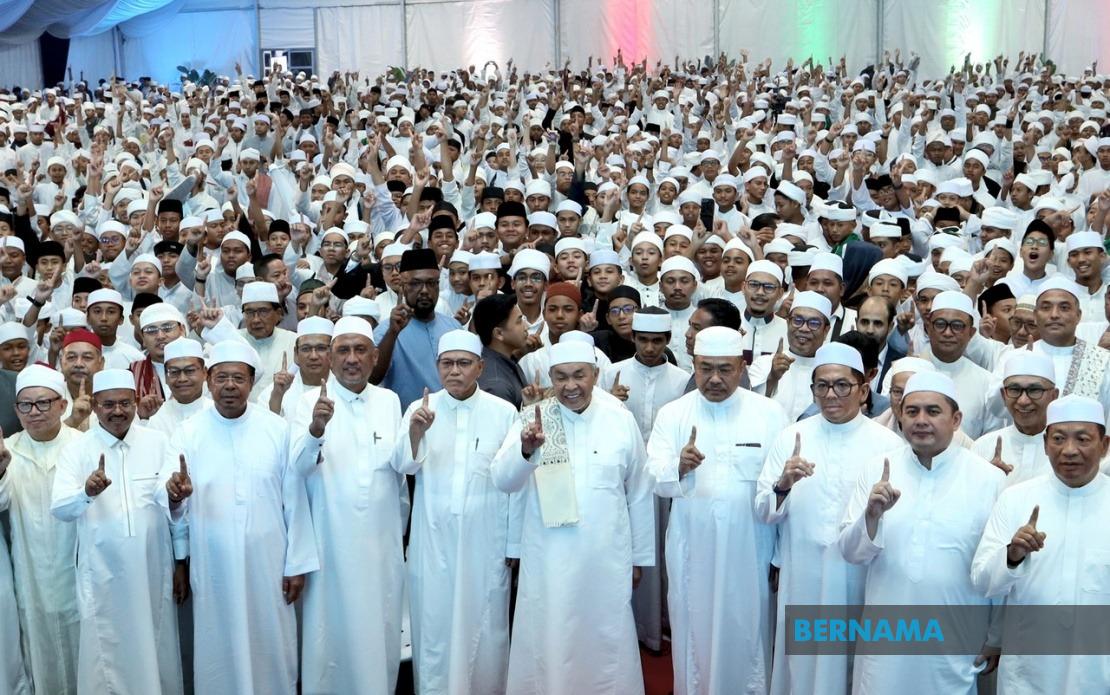
Malaysia has taken a significant institutional step to formalise and elevate tahfiz education by establishing a National Tahfiz Council, with the Cabinet approval coming last week. Deputy Prime Minister Datuk Seri Dr Ahmad Zahid Hamidi, who has been appointed as chairman of the council, announced the development at the Pahang State Huffaz Gathering 2026 in Kuantan, where more than 5,000 Quranic memorization students from across the state assembled. The council represents a watershed moment for Islamic education in the country, moving tahfiz from a primarily religious domain into a formally recognised educational stream with structured pathways and professional prospects.
The decision to create this national body reflects growing recognition among policymakers that tahfiz education requires systematic coordination and standardisation. Currently, tahfiz institutions operate with varying levels of recognition and quality assurance, creating inconsistencies in curriculum standards, teaching methods, and student outcomes across different states and organisations. By establishing a centralised council, the government aims to address these fragmentation issues and create a coherent framework that brings coherence to the sector. Ahmad Zahid emphasised that the council would oversee the direction of tahfiz education, establish uniform recognition standards, develop consistent academic models, and chart clear pathways for students progressing through the system.
A crucial aspect of the new framework involves integrating tahfiz education into Malaysia's broader education ecosystem. Rather than remaining isolated from mainstream academic institutions, tahfiz students will now have structured opportunities to transition into conventional schools, colleges, and universities. Ahmad Zahid articulated this vision clearly, stating his aspiration for hafiz students to progress from madrasah settings to university environments, from purely memorisation-based learning to skills-based training, and ultimately into professional careers. This represents a fundamental reconceptualisation of tahfiz education as a viable educational pathway rather than a narrow religious pursuit, which could significantly broaden the horizons and employment prospects for students committed to Quranic memorization.
Pahang has emerged as a pilot region demonstrating the viability of comprehensive tahfiz education development. The state has implemented a multi-tiered approach starting with early childhood initiatives, including Tadika Tahfiz Negeri Pahang, which introduces young children to Quranic learning in kindergarten settings. Ahmad Zahid credited the Sultan of Pahang, Al-Sultan Abdullah Ri'ayatuddin Al-Mustafa Billah Shah, with inspiring these early intervention efforts. Building from this foundational phase, Pahang has constructed a progressively more sophisticated educational architecture that extends through primary and secondary schooling to international-level qualification. This developmental model provides a template that other states can potentially adapt and implement, demonstrating that tahfiz education can be systematically organised without compromising religious objectives.
The government is simultaneously reviewing and enhancing the National Tahfiz Policy 2.0, which introduces several modernised components designed to make tahfiz education more comprehensive and career-relevant. The Technical and Vocational Education and Training (TVET) Tahfiz programme equips students with practical skills alongside their religious studies, addressing a historical gap where hafiz graduates often struggled to enter conventional employment sectors. The Malaysian Tahfiz Certificate 2.0 provides standardised qualifications recognised across institutions, while the Graded Hafazan Certification creates benchmarks for assessing memorisation achievements. These initiatives fundamentally reshape tahfiz education from an exclusively religious endeavour into a multidimensional learning experience combining spiritual development with economic viability.
Financial support mechanisms have been integrated into the reformed framework through the Huffaz Financing Scheme, which addresses one of the primary barriers to tahfiz education accessibility. Many families cannot afford the costs associated with sending children to tahfiz institutions, particularly if these facilities are located far from home or require boarding arrangements. By establishing dedicated financing schemes, the government removes economic obstacles and broadens access to tahfiz education across socioeconomic strata. The Malaysian Tahfiz Recognition Standard creates quality assurance mechanisms that ensure funded institutions maintain acceptable pedagogical and infrastructural standards, protecting the government's investment and ensuring value for recipients.
Strategic collaborations with higher learning institutions represent another transformative dimension of the reform agenda. By establishing formal partnerships between tahfiz centres and universities, polytechnics, and vocational institutes, the government creates tangible bridges between traditional Islamic education and contemporary professional training. These partnerships enable hafiz students to pursue tertiary qualifications in fields ranging from Islamic studies and education to engineering, medicine, and business, demonstrating that Quranic memorization expertise need not limit career trajectories. Such alliances also position Malaysian universities as regional leaders in integrating Islamic and secular knowledge, potentially attracting international students seeking this integrated educational model.
The memorandum of understanding signed at the gathering between Yayasan Pahang, the Community Development Department (KEMAS), and Majlis Amanah Rakyat (MARA) consolidates institutional collaboration at the operational level. KEMAS, responsible for community development initiatives, brings grassroots implementation capacity, while MARA's established infrastructure for skills training and entrepreneurship development provides pathways for hafiz graduates to develop livelihoods. This tripartite arrangement illustrates how existing government structures can be mobilised to support tahfiz education development without requiring entirely new bureaucratic apparatus. The emphasis on skills development alongside Quranic memorization addresses persistent concerns that tahfiz graduates lack practical competencies valued in modern labour markets.
For Southeast Asian context, Malaysia's approach carries regional significance as the country positions itself as a model for integrating Islamic education into modern development frameworks. Several other Muslim-majority nations in the region grapple with similar challenges of recognition and professional integration for tahfiz graduates. Malaysia's systematic approach, combining policy reform, financing mechanisms, quality assurance standards, and institutional linkages, offers a comprehensive template that neighbouring countries might study and potentially adapt to their own contexts. The establishment of the National Tahfiz Council signals Malaysia's commitment to demonstrating that Islamic education and modern professional development need not be mutually exclusive.
The broader implications extend to Malaysia's human capital development strategy. With significant numbers of students pursuing tahfiz education, ensuring this population can transition into productive employment benefits the entire economy. Hafiz graduates equipped with both religious expertise and professional qualifications represent a unique human resource that can serve religious institutions, educational sectors, government agencies, and private enterprises. By creating coherent pathways and standardised qualifications, the National Tahfiz Council removes barriers that previously forced many talented individuals to choose between religious commitment and economic advancement. This integration of religious and professional development aligns with Malaysia's aspiration to become a high-income nation requiring skilled, educated workforces across all sectors.