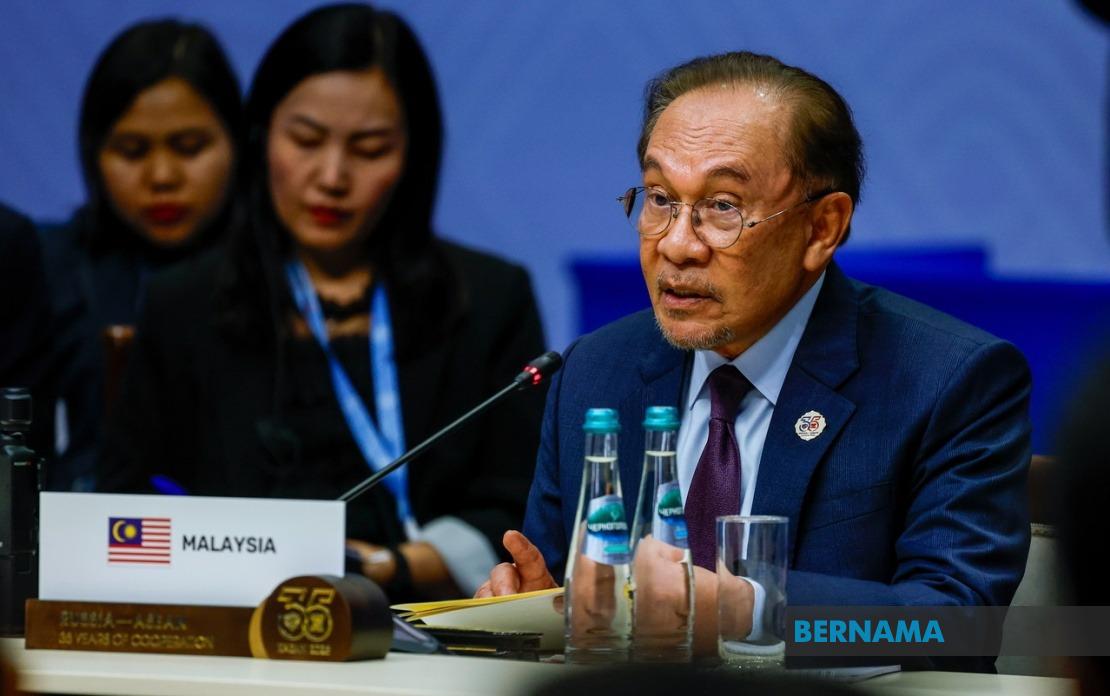
Prime Minister Datuk Seri Anwar Ibrahim has called for deeper strategic cooperation between ASEAN and Russia across multiple sectors, using a landmark summit in Kazan to underscore the importance of dialogue and diplomacy in an increasingly fractious global landscape. Speaking during the plenary session of the ASEAN-Russia Commemorative Summit, he positioned the gathering as a critical opportunity for the regional bloc and Moscow to pursue collaborative initiatives despite mounting international tensions.
The summit, held in Kazan, carries symbolic significance as it commemorates 35 years of ASEAN-Russia relations, a partnership that formally began in 1991 in Kuala Lumpur. This milestone provides both sides with a natural inflection point to assess past achievements and chart a new trajectory for engagement. Malaysia's presence at the highest political level, represented by Anwar himself, underscores the importance the country places on maintaining robust ties with Russia at a time when many Western nations have distanced themselves from Moscow.
Anwar outlined an ambitious agenda for bilateral and multilateral cooperation, emphasizing that lasting progress depends on expanding relationships beyond traditional diplomatic channels. He specifically highlighted trade and investment as priority areas where ASEAN and Russia can unlock mutual economic benefits. Additionally, he identified digital infrastructure, science and technology, and artificial intelligence as fields where collaboration could accelerate development across the region and contribute to Russia's own modernization efforts.
Energy cooperation emerged as another critical pillar in Anwar's vision. Given Southeast Asia's growing energy demands and Russia's substantial hydrocarbon reserves, strengthened partnerships in this sector could provide the region with more diversified energy sources while offering Moscow new markets. Food security and the halal industry also featured prominently in his remarks, reflecting both ASEAN's agricultural significance and the commercial opportunities available to Russian companies seeking to serve Muslim-majority markets across the region.
People-to-people exchanges formed the final component of Anwar's cooperation framework. He argued that deeper cultural, educational, and social connections between ASEAN societies and Russia would create lasting foundations for sustainable partnership. This emphasis on human-level engagement reflects a recognition that state-to-state relations, while important, require popular legitimacy and grassroots understanding to endure over time.
Centrally, Anwar reiterated Malaysia's unwavering commitment to resolving international disputes through peaceful means. He stressed that dialogue, understanding, and adherence to international law represent the only viable pathways toward durable peace. This positioning allows Malaysia to engage constructively with Russia while maintaining its principled stance on global governance and dispute resolution mechanisms.
The summit demonstrated this balance through ASEAN's continued engagement with Moscow despite Western pressure to isolate Russia. The attendance of Philippines President Ferdinand Marcos Jr., serving as this year's ASEAN Chair, alongside representatives from other member states, highlighted the bloc's desire to maintain independent foreign policy positions rather than automatically align with Western initiatives.
Regarding the Middle East, Anwar articulated Malaysia's long-standing position on the Palestinian question. He demanded an immediate halt to violence in Gaza, unimpeded humanitarian assistance, and respect for Palestinian self-determination rights. He further condemned the expansion of Israeli military operations into Lebanon and opposed any attacks on the United Nations Interim Force in Lebanon, reflecting Malaysia's consistent advocacy for Palestinian rights within ASEAN forums.
The summit is expected to produce four significant outcome documents that will shape ASEAN-Russia cooperation through 2030. These include the Kazan Declaration marking the partnership's 35-year milestone, joint statements on energy and cultural cooperation, and a comprehensive action plan spanning 2026 to 2030. These framework documents provide institutional scaffolding for the cooperation initiatives Anwar outlined, moving discussions from rhetoric into concrete commitments and implementation mechanisms.
The comprehensive action plan carries particular importance for Southeast Asia, as it will guide resource allocation and priority-setting for both sides. By establishing clear targets and implementation pathways, the document allows ASEAN countries to pursue tangible benefits in technology transfer, energy security, and market access, while Russia gains reliable partners in a region increasingly central to global economic and geopolitical dynamics.
For Malaysia specifically, this renewed emphasis on ASEAN-Russia ties aligns with broader foreign policy objectives. The country has consistently advocated for ASEAN centrality in regional architecture, arguing that the bloc should engage multiple great powers rather than submit to any single power's influence. Deepening ties with Russia reinforces this non-aligned positioning while potentially strengthening Malaysia's leverage in negotiations with Western partners.
The summit's timing reflects broader geopolitical realignments underway in Asia-Pacific. As great power competition intensifies between Western and non-Western powers, ASEAN's ability to maintain productive relationships across ideological divides becomes increasingly valuable. Malaysia's role in brokering and promoting deeper ASEAN-Russia cooperation positions the country as a constructive voice emphasizing inclusive multilateralism over exclusionary blocs.
Looking ahead, the success of these partnerships will depend on translating high-level declarations into tangible benefits for ordinary citizens and businesses across the region. Whether the agreed frameworks in energy, technology, and trade actually generate the promised investments and development opportunities will determine whether ASEAN-Russia cooperation evolves beyond diplomatic theater into a substantive partnership addressing real economic and security concerns.