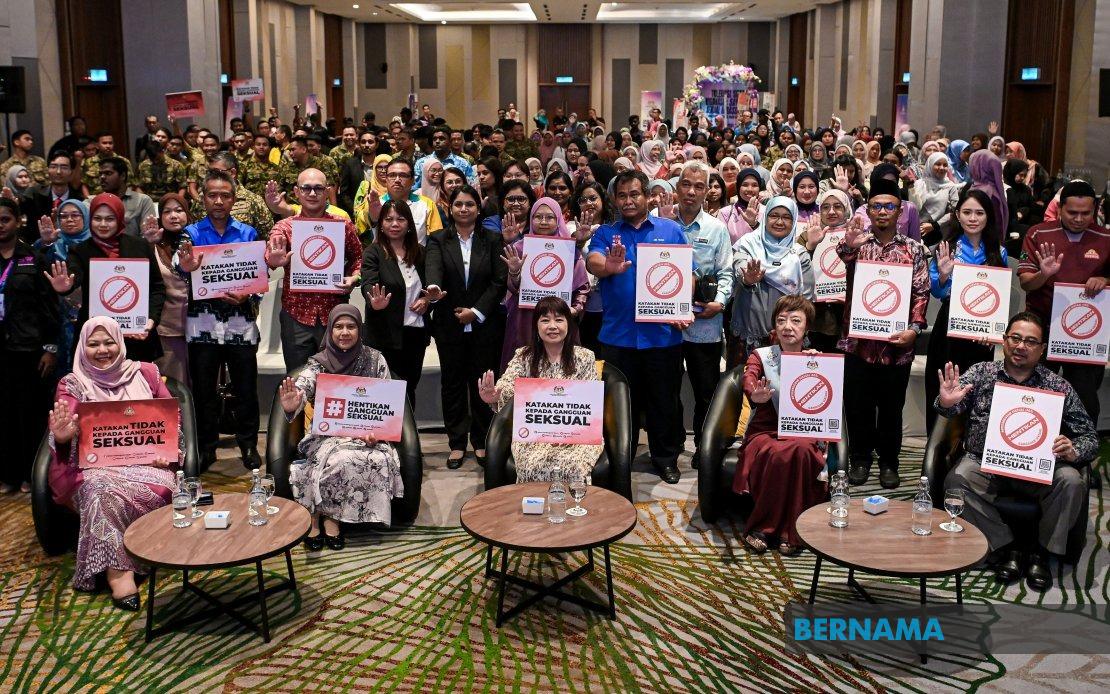
Malaysia has recorded 388 sexual harassment cases during the first five months of this year, a figure that reflects what government officials characterise as a complex mix of persistent workplace misconduct and growing willingness among victims to report violations. Deputy Minister of Women, Family and Community Development Lim Hui Ying disclosed the statistics in Port Dickson on June 18, highlighting data from the Royal Malaysia Police that demonstrates a significant escalation in documented incidents over recent years.
The trajectory of reported cases presents a striking picture of changing social dynamics. Police figures show that cases surged from 477 in 2022 to 1,038 the following year, representing more than a doubling of reported incidents within a two-year span. This dramatic climb warrants careful interpretation, as the numbers themselves tell only part of the story underlying Malaysia's harassment landscape.
Lim stressed that the mounting caseload should not be read simplistically as evidence of worsening misconduct alone. Rather, she framed the increase as a positive indicator of cultural shift—one in which victims increasingly feel empowered to break traditional silences and communities begin to recognise harassment as unacceptable. This distinction carries significant implications for how Malaysia addresses the problem, suggesting that comprehensive solutions require both preventing new incidents and dismantling the social barriers that historically prevented reporting.
According to data presented by the ministry, workplace environments emerge as the primary setting for harassment, with a troubling secondary pattern: many perpetrators maintain family connections to their victims. This combination of factors creates particular vulnerability, as victims navigate complex power dynamics alongside familial bonds and the prospect of social shame. The psychological weight of such circumstances frequently deters reporting, with victims weighing career consequences, family stability concerns, and social ostracism against the prospect of formal action.
While sexual harassment predominantly affects women in Malaysia's documented cases, the deputy minister emphasised that men also experience such violations, though in substantially smaller numbers. This broader acknowledgement reflects international understanding that harassment is fundamentally about power and misconduct rather than a phenomenon limited to any single demographic group. The relative invisibility of male victims within statistics may itself obscure actual prevalence and speak to additional reporting barriers specific to men in Malaysian society.
The Tribunal for Anti-Sexual Harassment, or TAGS, has emerged as a critical institutional mechanism for addressing complaints. As of mid-June, the tribunal had processed 100 complaints with 82 cases resolved within 60 days of initial hearing, demonstrating the capacity of formalised dispute resolution to accelerate justice delivery. This efficiency addresses one major barrier to reporting—the dread of protracted, re-traumatising proceedings that characterise traditional court systems. For Malaysian victims weighing whether to come forward, the prospect of swifter resolution through TAGS may prove instrumental.
The government's response extends beyond tribunals to encompass broader awareness and prevention initiatives. The ministry implements Women, Peace and Security advocacy programmes aligned with the National Action Plan 2025-2030, integrating sexual harassment reduction into national security and development frameworks. This approach reflects understanding that workplace safety, community cohesion, and women's meaningful participation in society depend on freedom from sexual misconduct. Such strategic positioning suggests that Malaysia increasingly recognises harassment not merely as an individual issue but as a matter of national import.
Support infrastructure represents a crucial component of the government's response strategy. The 24-hour Talian Kasih helpline, accessible via 15999, provides counselling and psychosocial support alongside local community centres. These services acknowledge that reporting and recovery processes require sustained emotional support. For victims struggling with trauma, shame, and uncertainty about next steps, accessible helplines operating round-the-clock offer critical interventions at moments when intervention may prove most effective.
Lim articulated a vision of distributed responsibility, calling upon parents, educators, employers, colleagues, and students to collectively cultivate zero tolerance toward harassment. This framing moves accountability beyond law enforcement into social domains where culture is actually formed. Early education about respectful interaction, she suggested, coupled with institutional willingness to support those who report violations, creates foundations for sustainable change. Without shifting norms at these foundational levels, legal remedies alone prove insufficient.
The deputy minister also sounded a preventive note, observing that unaddressed harassment frequently escalates into more severe forms of violence with cascading consequences for individuals and broader social cohesion. This progression underscores urgency in early intervention and reporting, suggesting that victims who remain silent inadvertently enable dynamics that deepen harm. The connection between workplace harassment and family violence, already evident in cases involving family-connected perpetrators, amplifies this concern.
For Malaysia's regional context, these patterns and responses carry particular relevance. Southeast Asian economies increasingly feature women in professional roles, yet customary attitudes regarding hierarchy, deference, and family honour sometimes create friction with workplace norms that should guarantee dignity and safety. Malaysia's experience may illuminate pathways for neighbouring nations grappling with similar transitions between traditional social structures and modern institutional expectations. The role of awareness campaigns, tribunal mechanisms, and helpline services offers a practical template for comprehensive response.
Moving forward, the challenge for Malaysian policymakers involves sustaining the momentum of reporting while simultaneously addressing root causes. Growing case numbers represent progress only insofar as they accompany genuine institutional change, perpetrator accountability, and meaningful support for survivors. The statistics, sobering as they are, ultimately serve as data points motivating society toward the cultural transformation that genuine zero tolerance demands.