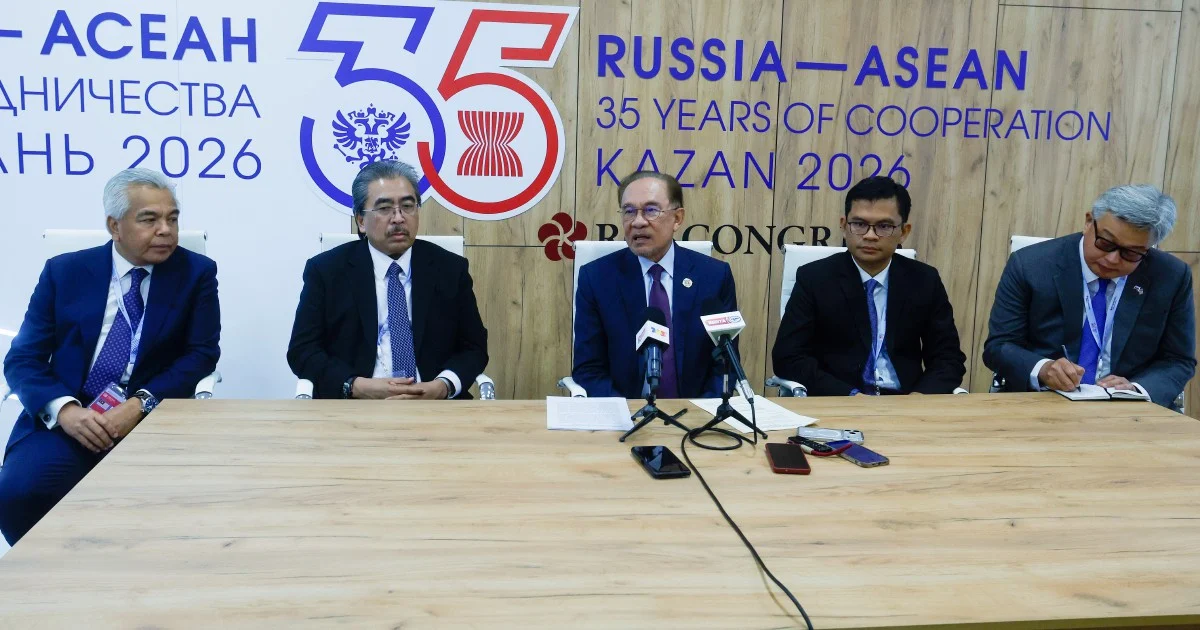
Prime Minister Datuk Seri Anwar Ibrahim has directed the government to expedite the rollout of visa-free travel arrangements for Russian visitors, signalling a strategic pivot to diversify Malaysia's tourism revenue streams. Speaking from Kazan, the Malaysian leader underscored the importance of removing bureaucratic barriers that have traditionally hindered travel flows between the two countries, particularly as the nation seeks to recapture tourist arrivals lost during recent international disruptions.
The directive reflects a deliberate policy shift aimed at repositioning Malaysia as an accessible tourist destination within the East Asian region. By eliminating visa requirements for Russian nationals, the government hopes to facilitate faster entry and encourage spontaneous leisure travel—a category that typically generates substantial hospitality sector spending. Russian tourists have historically represented a significant demographic for Southeast Asian destinations, drawn by competitive pricing, tropical climate, and established tourism infrastructure across popular zones.
Malaysia's tourism sector has faced considerable headwinds in recent years, with visitor numbers fluctuating due to geopolitical tensions, travel restrictions, and competition from neighbouring destinations. The deliberate targeting of Russian travellers addresses a specific market gap, particularly given shifting tourism patterns that have redirected flows away from certain traditional source countries. Implementing visa-free arrangements serves as a tangible inducement to reverse this trend and recapture market share that may have migrated to rival destinations like Thailand, Indonesia, and Vietnam.
The timing of this announcement carries diplomatic significance beyond mere tourism economics. Malaysia's cultivation of relations with Russia, evidenced by the Prime Minister's presence in Kazan, demonstrates Kuala Lumpur's commitment to maintaining balanced international engagement across diverse geopolitical blocs. Such bilateral tourism initiatives often signal broader governmental intent to strengthen people-to-people connections and foster goodwill between nations—factors that extend well beyond the travel and hospitality sectors.
From an operational perspective, expediting implementation requires coordination across multiple government agencies, including the Immigration Department, Tourism Malaysia, and relevant state authorities managing tourism infrastructure. The domestic airlines and hospitality sectors stand to gain considerably from increased visitor inflows, generating employment opportunities and stimulating related economic activity in transportation, accommodation, food services, and entertainment. Guesthouses, hotels, and restaurant operators throughout popular tourist zones—particularly in Kuala Lumpur, Penang, and Sabah's coastal regions—would likely experience enhanced booking volumes.
The visa-free initiative also reflects pragmatic recognition that administrative processes often constitute invisible barriers to travel. Russian tourists frequently cite cumbersome visa procedures, documentation requirements, and processing delays as deterrents to choosing Malaysia over competing destinations offering simpler entry processes. By removing these obstacles entirely, the government eliminates a significant competitive disadvantage and positions itself more attractively within the regional tourism marketplace.
Market analysts suggest that Russian tourists typically spend modestly but consistently throughout their journeys, favouring extended stays that distribute spending across multiple days and diverse service providers. This dispersal pattern benefits smaller operators and provincial tourism economies beyond major urban centres, creating more broadly distributed economic benefits than occasional high-spending visitor cohorts. The average Russian tourist's spending profile thus carries particular value for sustaining smaller accommodation providers and local attractions.
The implementation timeline remains crucial. Anwar's explicit instruction for expedited processing indicates that bureaucratic delays should not impede the policy's entry into effect. This requirement suggests direct prime ministerial oversight of departmental coordination, likely to accelerate approval procedures that might otherwise require extended consultation and formal regulatory amendments. The urgency conveyed from the highest level signals serious government commitment to achieving measurable results within defined timeframes.
For Malaysian tourism operators and regional investors, the announcement represents concrete policy direction that permits advance planning and infrastructure investment with reasonable confidence in demand generation. Tour operators can expand Russian-language services, accommodation providers can refurbish facilities in anticipation of increased occupancy, and transport companies can schedule additional capacity with reasonable confidence that demand will materialise.
International context matters significantly here. As some Western nations have substantially reduced engagement with Russian tourists through various restrictions and policy measures, Southeast Asian destinations increasingly attract Russian travellers seeking accessible, welcoming environments. Malaysia's proactive embrace of Russian visitors positions the nation as a preferred alternative within the broader regional ecosystem, potentially capturing market share from competitors hesitant about such arrangements.
The longer-term implications extend beyond immediate tourist arrivals. Repeat visitors often develop attachment to particular destinations, establish networks of local acquaintances, and generate word-of-mouth recommendations within their home markets. Sustained Russian tourist flows could thus create self-reinforcing demand patterns that persist beyond the initial policy implementation period, generating compounding returns on the government's policy investment.
Authorities have not yet specified precise implementation timelines or technical details regarding documentation requirements for Russian nationals. Clarification of these particulars will prove essential for tourism operators, airlines, and hospitality providers seeking to effectively market the new arrangements and optimise operational responses to anticipated demand increases.