Malaysia's Prime Minister's Department (Religious Affairs) has pledged to intensify its outreach to young people, positioning religious leaders as key players in countering the dual challenges of extremism and digital misinformation that increasingly threaten social cohesion in the region. The commitment follows a significant royal address by Sultan Nazrin Shah of Perak, who underscored the critical need for faith-based institutions to engage meaningfully with youth populations facing unprecedented pressures in an era dominated by rapid technological change and information fragmentation.
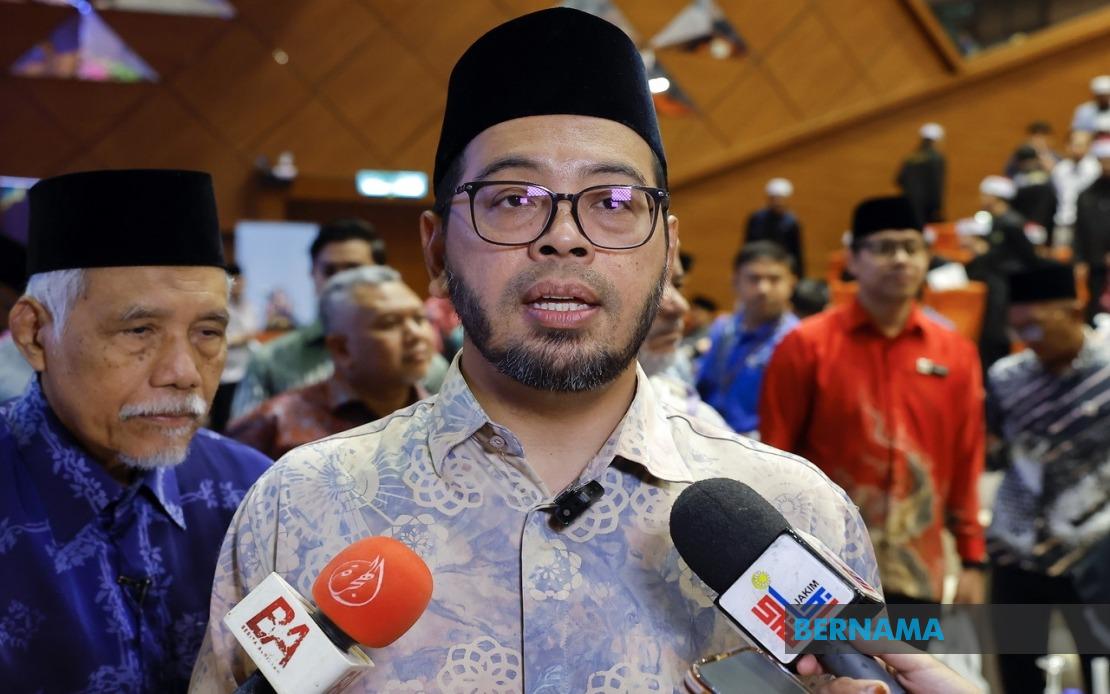
Dr Zulkifli Hasan, the minister overseeing religious affairs within the Prime Minister's Department, confirmed the government's intention to adopt the Sultan's directives as a framework for future programming and strategic initiatives. Speaking in Putrajaya on June 18 after presiding over the National and International Tokoh Ma'al Hijrah Premier Lecture 1448/2026, Dr Zulkifli emphasised that the royal message would serve as a guiding principle for how the ministry approaches the complex task of reaching young Malaysians with constructive, values-based alternatives to extremist narratives and divisive online rhetoric.
The Sultan of Perak's intervention reflects growing concern across Southeast Asia about the vulnerability of youth populations to radicalisation and polarisation, particularly through social media platforms where unverified information spreads rapidly and echo chambers reinforce extreme viewpoints. By calling on religious leaders to assume a more prominent and proactive role, Sultan Nazrin Shah identified what many governance experts view as a critical gap: the absence of trusted, authoritative voices from faith communities offering young people guidance and perspective on contemporary challenges.
Young Malaysians today navigate an exceptionally complicated landscape of competing pressures and uncertainties. Beyond traditional concerns about education and employment, the current generation faces existential anxiety surrounding climate change, international conflicts, economic instability, and erosion of trust in formal institutions. The digital environment amplifies these anxieties by creating algorithmic silos that fragment shared understanding and foster mutual suspicion across demographic and ideological lines. Into this volatile space, extremist recruiters and spreaders of misinformation inject content designed to capitalise on youthful idealism and legitimate grievances, redirecting them toward destructive ends.
The Prime Minister's Department's commitment to leverage this royal directive carries significant implications for how Malaysia approaches national cohesion and security. Religious institutions, which command substantial moral authority and maintain deep community networks, possess unique potential to deliver counter-narratives grounded in theological principles of compassion, justice, and peaceful coexistence. When mobilised effectively, religious leaders can model for young people how to engage authentically with faith traditions without adopting literalist interpretations that feed extremism, and how to think critically about information without succumbing to cynicism.
Malaysia's approach also carries regional significance at a moment when several Southeast Asian nations grapple with surging religious polarisation and the rehabilitation of returning foreign fighters. The government's emphasis on youth engagement represents a preventative rather than purely punitive strategy, addressing root causes of radicalisation rather than only managing consequences. This reflects a maturation in counter-extremism thinking that recognises criminalisation alone cannot solve problems rooted in identity confusion, social marginalisation, and the search for belonging.
Implementing this expanded youth engagement agenda will require substantial coordination across government departments, religious authorities, educational institutions, and civil society organisations. The ministry will need to develop age-appropriate programming that speaks authentically to young people's actual concerns rather than delivering top-down messaging that young audiences instinctively reject. This includes creating safe spaces for theological discussion where young Muslims, in particular, can explore complex questions about faith and modernity without fear of surveillance or condemnation, allowing religious scholarship to breathe rather than ossifying into dogmatic formulas.
The digital dimension deserves particular attention, as online spaces are where misinformation proliferates most efficiently. Religious authorities and government agencies must develop capacity to counter false narratives with credible alternatives, while media literacy initiatives teach young people to interrogate sources, recognise manipulation tactics, and distinguish authoritative religious commentary from fringe interpretations or outright fabrications. This work demands sustained investment in training religious teachers to engage young people online, creating authentic digital presence rather than abandoning these spaces to extremists and fraudsters.
Dr Zulkifli Hasan's affirmation that the department will mainstream the Sultan's message across its programmes suggests a systemic reorientation toward youth-centric approaches. This could encompass reformed curricula in Islamic education institutions, expanded mentorship programmes pairing young people with established religious scholars, community dialogue initiatives bringing together youth from different faith backgrounds, and partnerships with technology companies to enhance platform safety and information authenticity. The effectiveness of these efforts will depend on genuine youth participation in programme design, ensuring that initiatives resonate with actual young people rather than reflecting adult assumptions about youth preferences and concerns.
The Sultan's address and the government's response also highlight the importance of religious leaders transcending purely ceremonial or ritualistic roles to engage as public intellectuals and social commentators. Young people need to see religious authority figures addressing contemporary moral questions—artificial intelligence ethics, environmental stewardship, economic justice, digital rights—from faith-based perspectives, demonstrating that religious thought remains relevant to their lived experiences. This intellectual engagement can become inoculation against extremism, as young people exposed to sophisticated, compassionate religious reasoning become resistant to simplistic extremist propaganda.
Looking forward, the success of Malaysia's renewed youth engagement strategy will be measurable not in rhetorical commitments but in tangible outcomes: declining radicalisation rates among young people, improved religious literacy and critical thinking, stronger inter-faith understanding, and increased youth participation in community and national affairs through legitimate channels. The coming months will reveal whether the ministry translates the Sultan's vision into concrete programmes backed by adequate resources, or whether the initiative remains largely aspirational. For a country striving to maintain multicultural stability while managing rapid social change, this commitment to purposeful youth engagement represents both an ethical imperative and a strategic necessity.