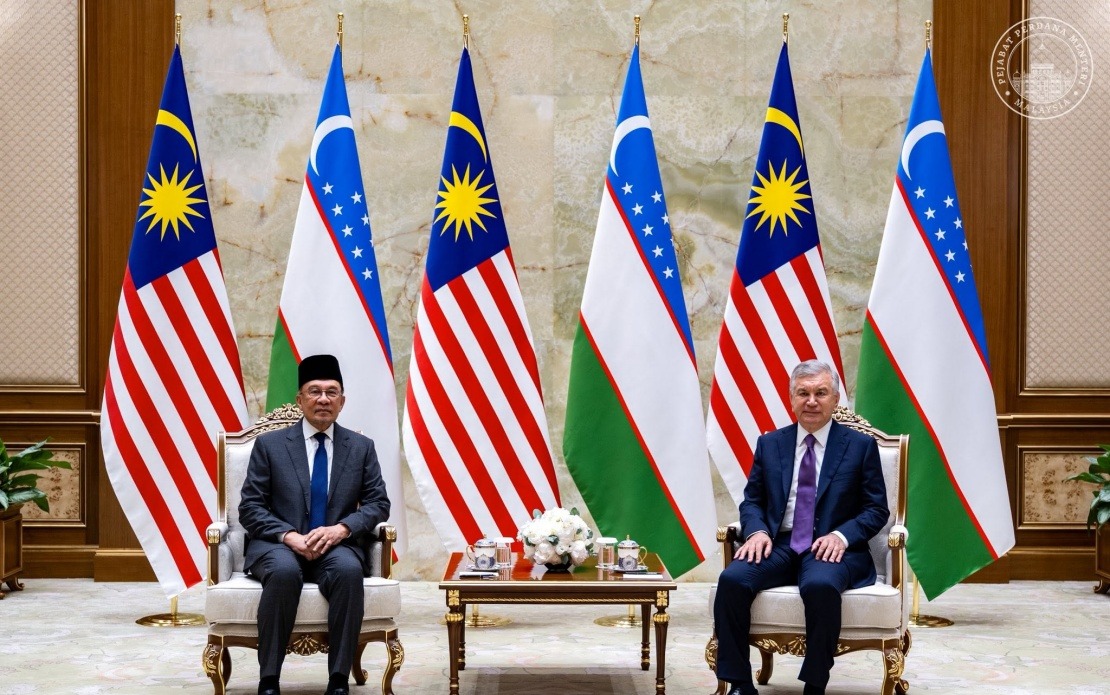
Prime Minister Datuk Seri Anwar Ibrahim has identified substantial room for Malaysia and Uzbekistan to expand their bilateral relationship across multiple high-value sectors, signalling Kuala Lumpur's growing strategic interest in Central Asia. The announcement came following a high-level meeting between Anwar and Uzbekistan President Shavkat Mirziyoyev in Tashkent on June 17, during the Prime Minister's transit to Kazan for the ASEAN-Russia Commemorative Summit scheduled for June 17-18. Although the encounter was described as brief, it served as a forum for both leaders to assess opportunities and reaffirm mutual commitment to strengthening ties that have been steadily evolving across multiple domains.
The energy sector emerged as a particularly significant area of focus in bilateral discussions. Both nations identified considerable potential to deepen cooperation in gas and petroleum industries, with implications extending beyond commercial trade to encompass broader energy security objectives for the region. For Malaysia, which remains dependent on energy imports and faces long-term sustainability challenges, partnerships with energy-producing nations in Central Asia could offer diversification benefits and supply-chain resilience. Uzbekistan, as a major regional energy producer and exporter, stands to benefit from Malaysian expertise in petrochemicals, refining capabilities, and downstream energy infrastructure development. Enhanced energy cooperation between the two countries could also contribute meaningfully to sustainable development goals, particularly as both economies navigate the global transition towards cleaner energy systems.
Trade and investment frameworks represent another cornerstone of the proposed partnership expansion. Malaysian businesses have historically concentrated their Central Asian operations in a narrow range of sectors, leaving substantial untapped potential across manufacturing, financial services, and technology transfer. Anwar's emphasis on investment cooperation suggests Kuala Lumpur intends to position Malaysian enterprises as credible partners for Uzbek economic modernisation initiatives. Reciprocally, Uzbek investors could find attractive opportunities in Malaysia's developed financial markets, established logistics infrastructure, and strategic location within Southeast Asia's supply chains. Strengthening these economic linkages would align with Malaysia's broader regional strategy of diversifying trading relationships beyond traditional partners and reducing economic concentration risk.
Educational exchange programmes featured prominently in the bilateral agenda, reflecting both nations' recognition that knowledge transfer and capacity-building constitute foundations for sustainable partnership. Malaysian universities have developed considerable expertise in Islamic scholarship, engineering, business administration, and the sciences, areas where Uzbek institutions seek to enhance their international standing. Conversely, Uzbekistan's historical and cultural institutions hold distinct value for Malaysian scholars and researchers interested in Central Asian history, Islamic civilisation, and cross-cultural dialogue. Formalising educational pathways between the two countries could generate long-term interpersonal networks and professional communities that transcend governmental cycles, embedding partnership within institutional structures.
The halal industry emerged as a distinctive pillar within the cooperation framework, reflecting Malaysia's positioning as a global halal standards-setter and certification authority. For Uzbekistan, with its substantial Muslim population and significant agricultural and food-processing sectors, Malaysian expertise in halal assurance, logistics certification, and market access represents tangible commercial value. Malaysia's established halal ecosystem—encompassing certification bodies, training facilities, and international marketing networks—could accelerate Uzbek companies' entry into global halal supply chains, particularly markets across the Middle East, North Africa, and Southeast Asia where halal certification commands premium valuations. This sector offers concrete opportunities for Malaysian consultants, auditors, and enterprise partners to establish meaningful commercial footholds in Uzbekistan.
Tourism cooperation similarly featured in discussions, with both nations recognising mutual appeal across heritage tourism, cultural exchange, and faith-based tourism segments. Uzbekistan's UNESCO World Heritage sites, particularly the Silk Road cities of Samarkand and Bukhara, hold substantial attraction for Malaysian travellers interested in Islamic history and architectural heritage. Simultaneously, Malaysia's diverse cultural offerings, natural attractions, and established tourism infrastructure could expand Uzbekistan's outbound tourism markets. Enhanced air connectivity, coordinated visa procedures, and joint marketing campaigns could effectively increase bilateral tourist flows, generating employment and foreign exchange benefits for both economies.
Beyond sectoral cooperation, both leaders underscored the philosophical dimensions of their partnership centred on Islamic civilisation and scholarly traditions. Anwar's reference to preserving treasures of Islamic heritage and advancing human knowledge reflects Malaysia's broader positioning as a bridge between the Islamic world and Western modernity. Uzbekistan, as a custodian of significant Islamic cultural and intellectual heritage alongside its role as a secular Central Asian state, shares complementary interests in promoting faith-informed development that emphasises dignity, knowledge empowerment, and inclusive growth. This ideological alignment provides a resilient foundation for partnership that transcends narrow commercial interests and speaks to deeper civilisational affinities.
Anwar's recognition of Uzbekistan's strengthening engagement with ASEAN countries and its consolidating regional influence indicates Kuala Lumpur's strategic appreciation of Central Asia's geopolitical significance. As major powers compete for influence across the Eurasian landscape, Uzbekistan's willingness to deepen ties with Southeast Asian nations represents a potential alignment of interests regarding regional stability, non-aligned positioning, and pragmatic multilateralism. Malaysia's historical emphasis on South-South cooperation and non-interference in internal affairs resonates with Uzbekistan's foreign policy orientation, potentially facilitating smooth bilateral relations transcending ideology or power competition.
The timing of this diplomatic engagement, occurring during Anwar's transit to a major ASEAN-Russia summit, underscores Malaysia's sophisticated diplomatic choreography in contemporary great-power dynamics. By simultaneously engaging Central Asian leadership and participating in ASEAN-Russia forums, Kuala Lumpur demonstrates its commitment to maintaining balanced, diversified international relationships. This approach reflects Malaysian strategic doctrine emphasising equidistance from competing power centres and maintenance of maximum strategic flexibility—a posture particularly valuable for middle-power nations navigating unpredictable geopolitical terrain.
For Malaysia specifically, deepening Uzbekistan engagement aligns with broader economic diversification imperatives as the country confronts slowing regional growth, intensifying great-power competition, and structural shifts in global supply chains. Central Asian markets, while smaller than established Malaysian trading partners, offer growing middle-class consumer bases with rising purchasing power and genuine appetite for quality imports across multiple categories. Additionally, positioning Malaysian enterprises as preferred partners in Central Asia's ongoing modernisation creates comparative advantages that could extend across the broader Eurasian market and potentially unlock opportunities along Belt and Road Initiative corridors where Central Asian hub economies command strategic importance.
The bilateral relationship trajectory suggests both governments recognise that strategic partnership in the contemporary era demands multifaceted engagement spanning energy security, commercial profit, educational advancement, and cultural-civilisational affinity. The Tashkent meeting, though procedurally brief, substantively established momentum for institutionalising cooperation across these domains. Subsequent work by diplomatic and commercial teams will determine whether aspirational statements translate into concrete joint ventures, trade agreements, and sustained engagement that genuinely transforms bilateral ties from cordial diplomatic courtesy into substantive strategic partnership benefiting both populations.