Datuk Mohd Amar Nik Abdullah, vice-president of Pas, has indicated that Malaysia's 16th general election is likely to be conducted sometime between late October and November of this year. Speaking in his capacity at the party leadership, the senior politician shared this assessment from the party headquarters in Kota Baru, suggesting that Pas has been engaged in internal preparations and calculations regarding the anticipated electoral schedule.
The timing projection carries significance for Malaysia's political landscape, as it would place the election in the latter half of the year when the government's parliamentary term naturally approaches key decision points. Under Malaysia's constitutional framework, a general election must be called when Parliament reaches the end of its five-year tenure or when the Prime Minister decides to dissolve Parliament and seek a fresh mandate from voters. The Prime Minister possesses discretionary authority over the precise timing of this dissolution, provided it falls within constitutional parameters.
For regional observers, the potential October-November window holds particular importance given Malaysia's position as one of Southeast Asia's largest economies and a significant geopolitical actor. An election during this period would influence policy continuity across critical sectors including trade relationships, investment frameworks, and regional security arrangements that touch upon Malaysian interests throughout the broader Asian region.
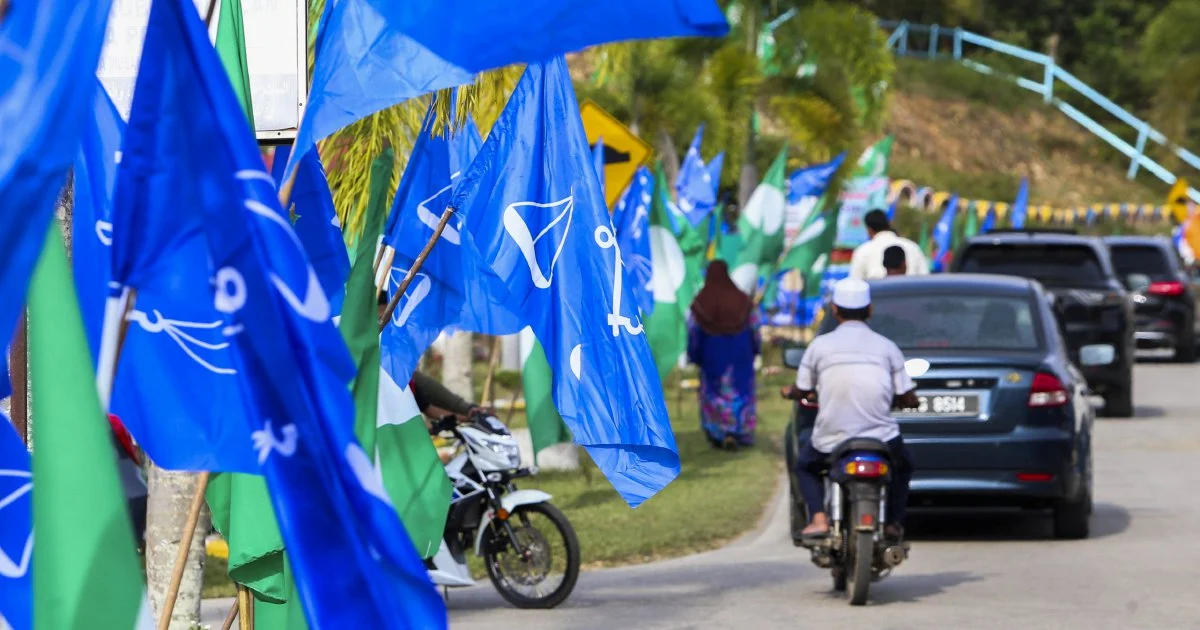
Pas, as an influential political force with a strong grassroots presence particularly in northern Malaysia, has been strategically positioning itself ahead of the anticipated electoral contest. The party's projection reflects internal party discussions and political intelligence gathering that senior leadership has undertaken. The Islamic-oriented party has undergone significant political realignments in recent years, affecting its coalition strategies and electoral partnerships heading into what many analysts consider a consequential election cycle.
The electoral calendar projections from political parties serve as important indicators of broader governmental thinking, even though only the Prime Minister ultimately determines the dissolution date. When major parties begin articulating specific timeframes, it often signals that informal political consensus exists regarding the optimal window for conducting elections. Pas's public statement may therefore reflect wider understanding within Malaysia's political establishment about feasible timing considerations.
A general election in this timeframe would require government machinery to swing into action relatively soon, as electoral commissions require several weeks to prepare electoral rolls, conduct boundary reviews, and organize polling infrastructure across Malaysia's thousands of polling stations. Campaign periods themselves necessitate adequate time for political parties to mobilize supporters, conduct candidate selection processes, and articulate policy positions to voters in an increasingly complex media environment spanning traditional and digital channels.
For citizens and observers monitoring Malaysian politics, understanding the likely electoral timeline permits better anticipation of policy announcements, campaign strategies, and political developments. Governments traditionally introduce populist measures and policy announcements proximate to elections, and an October-November timeframe would create observable patterns in governance announcements over the coming months. Businesses and investors also adjust strategic planning based on electoral certainty, as government transitions can influence regulatory environments and fiscal priorities.
The Peninsula's two-year interval since the 15th general election in 2022 has witnessed substantial political consolidation and shifting coalition dynamics. Several political parties have undergone leadership transitions, while voter sentiment has evolved through various policy implementation cycles. An election in late 2024 would test whether voter preferences have solidified around existing coalitions or whether new political configurations might emerge from the ballot box.
International observers and neighbouring Southeast Asian governments maintain interest in Malaysian electoral outcomes given Malaysia's role in regional forums including ASEAN and its influence on maritime security arrangements in the Strait of Malacca. Political stability and policy continuity following elections can affect broader regional economic cooperation and security architectures. Thus, Pas's electoral timeline projection resonates beyond domestic Malaysian politics.
The specific October-November window identification also reflects pragmatic considerations around weather patterns, as Malaysia's northeast monsoon season would be approaching, potentially affecting voter turnout in certain states. Simultaneously, this period falls after the Islamic holy month of Ramadan and Hari Raya celebrations, considerations that Pas, with its Islamic orientation, would naturally factor into timing calculations.
While Datuk Mohd Amar Nik Abdullah's assessment represents one party's perspective rather than official government confirmation, such projections from senior political figures typically carry implicit credibility within Malaysia's political circles. The statement invites voters, political analysts, and international observers to anticipate significant political developments before year-end, underscoring that Malaysia's democratic machinery appears poised for activation in the coming months.