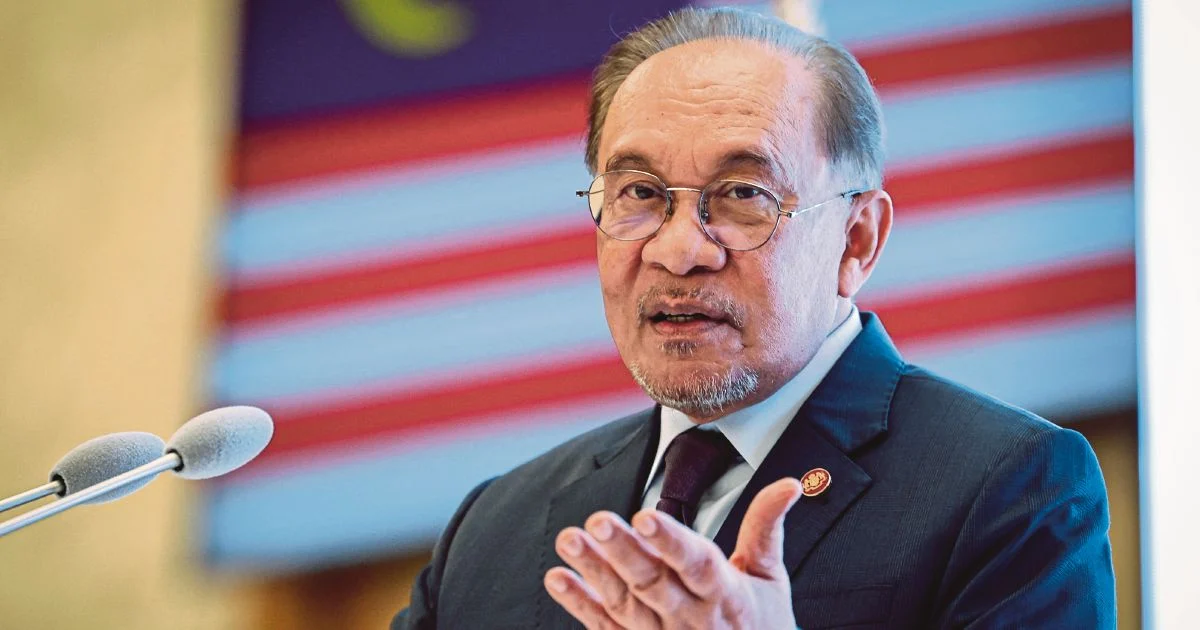
Prime Minister Datuk Seri Anwar Ibrahim has framed Petronas's successful acquisition of a stake in Turkmenistan's substantial gas reserves as a powerful endorsement of Malaysia's standing on the international stage. Speaking in Batu Kawan, Anwar underscored how the Turkmenistan government's decision to partner with the national oil and gas company reflects deeper trust in Malaysia's institutional strength, political cohesion, and capacity for sustained economic performance.
The strategic significance of this engagement extends well beyond a conventional commercial transaction. For a nation seeking to consolidate its position as a key player in global energy markets, such high-profile deals serve as visible markers of creditworthiness and reliability in the eyes of major resource-rich nations. Turkmenistan's willingness to entrust a portion of its gas operations to Petronas signals confidence that the Malaysian entity possesses both the technical expertise and financial robustness necessary to manage complex hydrocarbon projects across borders.
Geographically and geopolitically, the Caspian basin where these reserves are located represents one of the world's richest depositories of natural gas. Competition for stakes in this region remains intense, with major international oil companies and state-owned enterprises from numerous countries vying for access. The fact that Petronas succeeded in securing a meaningful foothold demonstrates that the company continues to punch above its weight despite being based in a mid-sized Southeast Asian economy.
For Malaysia's domestic economy, such international ventures remain crucial. The natural gas sector has historically been a cornerstone of the country's export revenues and a vital source of government income. As global energy transitions unfold and demand patterns shift, securing reliable, long-term interests in major gas fields abroad provides a hedge against future volatility and ensures that Malaysian interests remain embedded in key global energy infrastructure for decades to come.
Anwar's emphasis on national stability and unity carries particular resonance in Malaysia's recent political context. The past few years witnessed periods of considerable political turbulence, which occasionally raised questions internationally about governance coherence and policy continuity. By highlighting this deal as validation of Malaysia's credibility, the Prime Minister seeks to reinforce the narrative that the country has navigated its internal challenges and emerged as a dependable partner for significant cross-border projects requiring multi-year commitments and predictable regulatory environments.
The acquisition also underscores Petronas's strategic evolution beyond domestic operations. The national champion has increasingly positioned itself as a genuine global competitor, pursuing opportunities across multiple continents and operating in challenging environments. This diversification strategy reduces exposure to any single market or jurisdiction and demonstrates to international investors and trading partners that Malaysian enterprises can successfully manage complexity at the global scale.
Energy security considerations loom large in Anwar's framing of this development. As demand for natural gas continues to grow—particularly across Asia where industrialisation remains robust and liquefied natural gas import markets are expanding—access to large, reliable reserves represents a competitive advantage. By extending Malaysian reach into Turkmenistan's gas sector, the country positions itself to benefit from global energy flows and pricing dynamics for an extended period.
The deal also carries implications for Malaysia's diplomatic footprint in Central Asia. Beyond the immediate commercial benefits, partnerships in energy infrastructure typically foster broader relationships between nations, opening channels for cooperation across multiple sectors including technology transfer, training, and financial services. These deeper connections can yield benefits that extend well beyond the energy sector itself.
Regionally, this development matters for Southeast Asia's collective negotiating position in global energy markets. As a major exporter and a significant economy within ASEAN, Malaysia's success in securing stakes in premium international projects can enhance the region's overall profile and demonstrate that Southeast Asian companies possess the sophistication and capital to compete successfully in globally significant ventures.
The transaction also reflects Petronas's capacity to mobilise capital and technical resources at scales necessary for world-class projects. Managing a stake in one of the planet's largest gas fields requires not just investment capital but also specialised expertise in production, transportation, regulatory compliance, and international business operations. That Petronas has been selected as a suitable partner speaks to the confidence international observers place in the company's operational capabilities.
Looking forward, the Turkmenistan engagement positions Petronas to participate in potential future expansions or adjacent projects in the Caspian region. Major gas fields often experience extended development periods spanning decades, creating opportunities for early partners to extend their involvement and deepen their commercial stakes as circumstances evolve and technology advances open new possibilities.
For policymakers in Kuala Lumpur, the deal validates the wisdom of investing in Petronas's capacity and reputation over many years. The company's ability to land such prominent international projects generates sustainable revenue streams that benefit both the company's shareholders—predominantly the Malaysian government—and the broader economy through tax contributions and employment in skilled sectors.
Beyond economics, Anwar's public remarks linking this commercial success to Malaysia's political stability send an important signal to international investors that the country remains a safe and reliable destination for long-term commitments. In an era marked by geopolitical uncertainty and shifting global partnerships, such reassurance carries considerable weight.