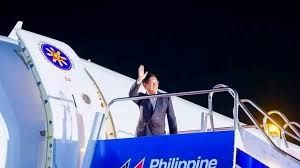
Philippine President Ferdinand R. Marcos Jr departed late on Tuesday, June 16, for Kazan, Russia, where he will spearhead his nation's participation in the Asean-Russia Commemorative Summit and engage in direct talks with Russian President Vladimir Putin on matters of strategic importance to the region. The presidential aircraft carrying Marcos and his delegation lifted off from Villamor Airbase in Pasay City just after 11:55 pm, embarking on what the First Lady described as a brief but consequential mission despite the gruelling travel logistics involved.
The summit itself represents a milestone moment in regional diplomacy, commemorating 35 years of formal relations between the ten-member Association of Southeast Asian Nations and the Russian Federation. For Manila specifically, the gathering carries additional weight as it coincides with five decades of bilateral ties established on June 2, 1976. In remarks before departure, Marcos underscored the historical significance of becoming the first Philippine president to visit Russia, positioning the journey as both a retrospective review of decades of cooperation and a platform for charting expanded engagement across multiple sectors.
As current chair of Asean, the Philippines has framed the summit within its broader leadership agenda, anchored on the theme "Navigating Our Future, Together." Marcos pledged that Manila would ensure the gathering produces substantive outcomes that elevate Asean's strategic partnership with Moscow while reinforcing regional commitment to peace, stability, and collective prosperity. This emphasis on concrete deliverables reflects growing pressure on regional organisations to demonstrate tangible value to member states and their citizens, particularly as geopolitical tensions continue to reshape the global economic landscape.
The bilateral agenda between Marcos and Putin will concentrate on energy and food security, two interconnected concerns that have escalated in urgency across Southeast Asia. Global energy price volatility and supply chain disruptions stemming from ongoing geopolitical conflicts have created persistent anxieties about inflation and economic stability throughout the region. For the Philippines and other developing economies, securing stable energy sources and affordable food supplies remains fundamental to maintaining social cohesion and supporting millions of citizens whose household budgets remain stretched. Energy cooperation with Russia, one of the world's largest hydrocarbon exporters, thus carries immediate relevance for Manila's policy makers.
The broader summit agenda encompasses an ambitious range of thematic areas, stretching from traditional security concerns through commerce and investment frameworks to emerging domains including digital transformation and technology transfer. This comprehensive scope reflects an attempt to modernise and deepen the Asean-Russia relationship beyond its historical foundation in security and political coordination. Educational exchanges, cultural tourism initiatives, and grassroots people-to-people connectivity represent softer but increasingly important dimensions of sustained diplomatic engagement that help build resilient partnerships less vulnerable to shifts in government leadership or sudden geopolitical ruptures.
The timing of this summit arrives amid a complex global environment where many nations are reassessing their international alignments and partnership strategies. Southeast Asian states in particular have sought to maintain pragmatic relationships with multiple major powers while advancing regional solidarity through Asean mechanisms. The Philippines' hosting of this anniversary summit underscores its diplomatic role within the bloc and its capacity to facilitate dialogue between a major Asian grouping and an extra-regional power with significant influence over global energy markets and international security architecture.
First Lady Liza Araneta-Marcos highlighted in her social media commentary the extraordinary compression of the presidential schedule, noting that despite more than 26 combined hours of flight time, the President would spend approximately 38 hours on Russian soil. She emphasised that such time constraints reflect not bureaucratic necessity but rather the pressing nature of discussions centring on issues that directly shape Filipino household welfare. From fuel prices at the pump to food affordability on dining tables, the policy decisions discussed in Kazan will reverberate through ordinary Filipino communities, connecting high-level diplomatic exchanges to everyday economic realities.
The summit itself will convene on June 17 and 18, with participating Asean leaders and Putin expected to ratify key documents that will chart the trajectory of regional bloc-Russian cooperation across the coming years. These formal documents will likely establish priorities, institutional mechanisms for ongoing dialogue, and potentially new frameworks for collaboration in areas where mutual benefit can be clearly demonstrated. The adoption of such instruments provides the diplomatic structure necessary to transform summit rhetoric into sustained, implementable policy cooperation.
Marcos reiterated the Philippines' unwavering commitment to Asean centrality as the organising principle of its foreign policy, emphasising the bloc's role in anchoring a rules-based regional architecture grounded in international law. This positioning carries subtle implications within broader strategic narratives about regional order and the relative influence of major powers. By championing an inclusive, open architecture centred on Asean agency rather than great power competition, Manila signals its intention to preserve Southeast Asian strategic autonomy while simultaneously engaging constructively with Russia, a power that some Western capitals view with considerable suspicion.
The trip exemplifies the delicate balancing act that middle-power Southeast Asian nations continuously perform, seeking to benefit from partnerships with major powers without sacrificing independence or appearing to align exclusively with any single geopolitical bloc. The Philippines' simultaneous maintenance of close security ties with the United States, active participation in Asean mechanisms, and willingness to engage Russia demonstrates this multifaceted approach to regional positioning. Energy cooperation with Moscow, food security partnerships, and technology exchange agreements need not contradict existing relationships but rather constitute elements of a diversified diplomatic portfolio designed to maximise national advantage within constrained global circumstances.