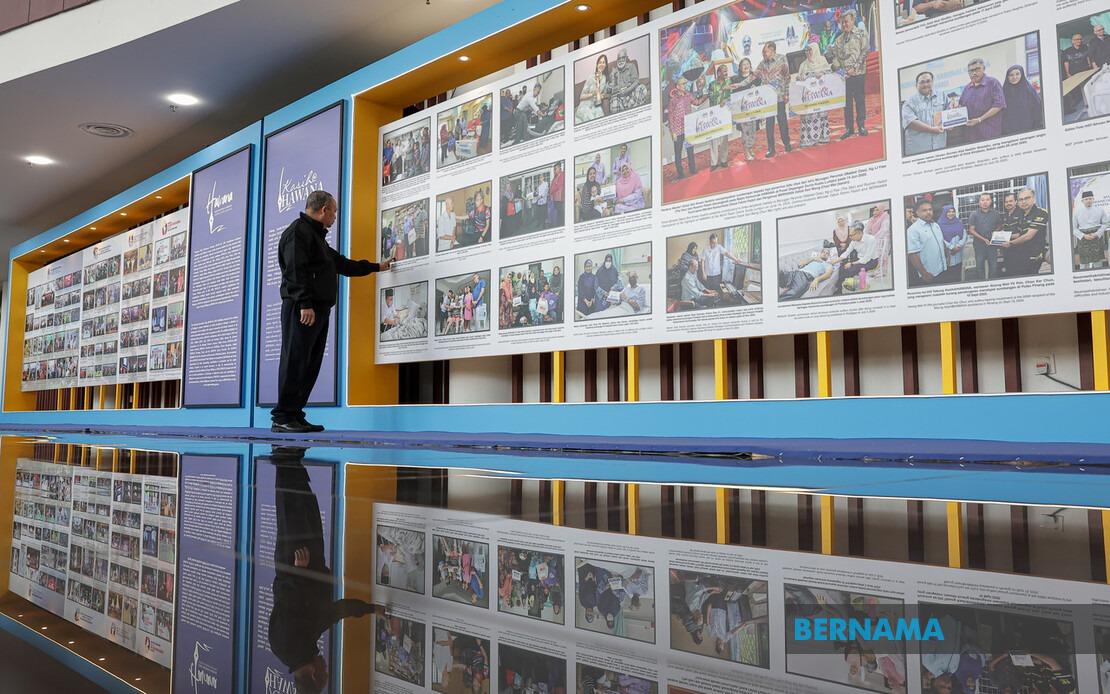
The Malaysian media industry is taking stock of its future and standing at this year's National Journalists' Day, with a three-day programme in Penang drawing practitioners and industry bodies together to confront shared challenges. Anchored by the theme "Media Integrity, Foundation of Credibility", HAWANA 2026 represents the nation's premier gathering for recognising the contributions and professionalism of journalists and media workers, an occasion that has evolved to encompass substantive discussions about the sector's direction in an era of rapid technological change.
While Prime Minister Datuk Seri Anwar Ibrahim prepares to officiate tomorrow's main celebration at PICCA @ Butterworth Arena, where approximately 1,000 media practitioners from Malaysia and overseas are expected to gather, preparatory seminars and workshops have already begun setting the intellectual tone for the event. The Malaysian Federation of Media Clubs (GKMM) convened its Malaysia Media Retreat 2.0 in Butterworth, bringing together representatives from 15 media clubs nationwide to examine both the federation's development and the broader state of journalism in the country. This convergence reflects a sector-wide recognition that today's journalists face interconnected pressures from technological disruption, evolving consumer behaviours, and questions about institutional credibility that demand collective reflection and response.
The GKMM retreat served a dual purpose, according to federation president Mohamad Fauzi Ishak, functioning both as a mechanism for strengthening relationships among member clubs and as an opportunity to assess progress since the federation's formal establishment in October 2022. The gathering, which was officiated by Communications Minister Datuk Fahmi Fadzil and attended by Bernama Chief Executive Officer Datin Paduka Nur-ul Afida Kamaludin and Editor-in-Chief Arul Rajoo Durar Raj, occurs ahead of the GKMM's third annual general meeting, scheduled to proceed without a contested election. The timing allows the federation to take stock of its institutional development at a moment when the media landscape itself is undergoing fundamental transformation.
The substantive challenges facing journalism globally have crystallised into a sharp focus through the Malaysian Press Institute's decision to programme a town hall session titled "2035: Will Journalists Still Exist?" This provocative framing reflects real anxieties within the profession about whether artificial intelligence, accelerating digitalisation, and the fragmentation of news consumption habits will fundamentally alter or even eliminate traditional journalistic roles. Held at Han Chiang University College of Communication, the session convened MPI president Datuk Yong Soo Heong alongside senior editors from major news organisations including Farrah Naz Abd Karim from the New Straits Times Press group and Azhari Muhidin from Media Prima's News and Current Affairs division. Such senior-level participation underscores that these are not marginal concerns but central preoccupations of editors and proprietors navigating rapidly shifting market conditions.
For Malaysian readers and media consumers across Southeast Asia, the stakes in these conversations extend beyond professional anxieties. The credibility of news sources has become increasingly contested in a region where misinformation, political pressure, and platform algorithms interact to shape public understanding. The HAWANA 2026 theme emphasises that media integrity functions as the foundation of credibility, acknowledging implicitly that this foundation has been eroded by various forces. When leading journalists and editors gather to discuss whether the profession itself will exist in a decade, they are grappling with questions that affect not just media workers but the broader health of democratic information ecosystems.
The timing of these discussions assumes additional weight given Malaysia's recent political history and the complex relationship between government, media, and public trust. The Communications Ministry's organisation of HAWANA 2026, with Bernama serving as the implementing agency, positions the celebration as a state-endorsed recognition of journalism's importance even as the sector faces its most profound challenges in decades. The gathering represents both an affirmation of journalism's value and an implicit acknowledgment that the profession requires renewed commitment to professionalism and ethical standards to maintain public confidence.
Beyond the main speeches and formal proceedings, the three-day RIUH @ HAWANA Carnival commencing tonight at PICCA Convention Centre signals an effort to make the celebration accessible beyond industry insiders. Carnival formats typically combine entertainment with educational elements, suggesting an intention to engage broader public audiences in thinking about media's role and responsibilities. This reach beyond the professional bubble matters considerably in a marketplace where media literacy and audience trust remain inconsistent across different demographic and geographic communities within Malaysia.
The concentration of programmes around a single physical location in Butterworth also reflects deliberate choices about how this conversation should unfold. By bringing together media club representatives from across the country, inviting international participants, and creating opportunities for networking alongside structured seminars, the organisers have constructed an environment encouraging cross-sectoral dialogue. This is particularly significant for Malaysia's media ecosystem, where competitive relationships between outlets can sometimes obscure shared professional interests and common challenges requiring collective responses.
The Malaysian Media Council's planned introductory and engagement session tomorrow, alongside networking activities focused on the northern region's media practitioners, indicates an effort to move beyond ceremonial acknowledgment toward substantive relationship-building and knowledge-sharing. In an industry where resources are increasingly stretched, where digital transformation demands investment, and where audience fragmentation continues to accelerate, the forums provided by HAWANA 2026 represent rare opportunities for practitioners to step back from daily production demands and consider systemic questions about their profession's future.
For regional observers, Malaysia's approach to this celebration reveals how Southeast Asian media sectors are beginning to collectively confront the technological and cultural disruptions reshaping journalism. The questions posed at HAWANA 2026—about whether journalists will still exist, about the profession's capacity to adapt to artificial intelligence, about the relationship between media integrity and credibility—resonate across Thailand, Indonesia, the Philippines, and Singapore, where media industries grapple with analogous pressures. The conversations unfolding in Penang thus carry implications extending well beyond Malaysia's borders.
The underlying message from this year's programming suggests that Malaysia's media establishment recognises that maintaining public trust requires more than technical proficiency or institutional longevity; it demands active engagement with questions about values, purpose, and adaptation. As artificial intelligence capabilities expand, as news consumption continues fragmenting across platforms, and as global disinformation campaigns become more sophisticated, the profession's ability to articulate and defend its core principles becomes ever more critical. HAWANA 2026, through its emphasis on integrity as the foundation of credibility, stakes a claim that professionalism and ethical practice remain journalism's irreducible core even as its technological manifestations transform.