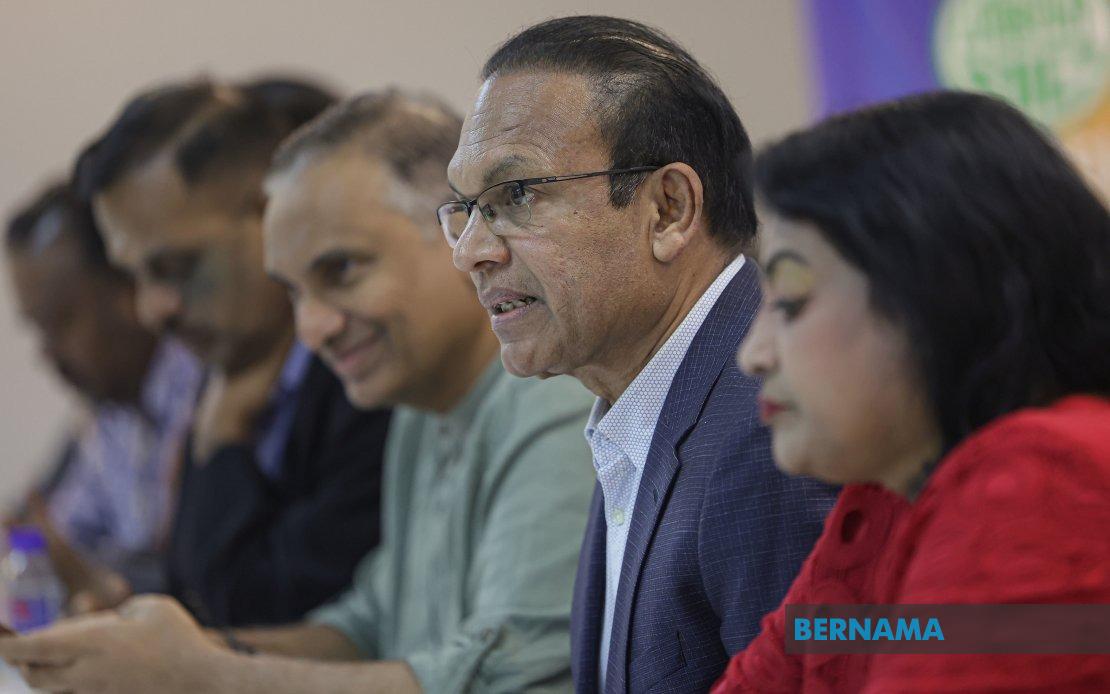
The Malaysian Indian Congress has been allocated four seats to contest in the forthcoming Johor state election, according to party vice-president Datuk T. Murugiah. The allocation was formally confirmed by MIC president Tan Sri SA. Vigneswaran following recent strategic discussions with other Barisan Nasional coalition partners regarding the upcoming state polls in both Johor and Negeri Sembilan. This modest allocation reflects MIC's traditional role as a minority representative within the broader BN framework, though the party aims to maximise its electoral footprint beyond its own contested seats.
Murugiah revealed that party headquarters has directed substantial resources towards campaign preparation, acknowledging that while the Johor slate has been finalised, negotiations over seat distribution for Negeri Sembilan remain ongoing. The compressed timeline leading to voting on July 11 has necessitated an accelerated mobilisation schedule, with party officials implementing immediate grassroots strengthening measures. The sequential state elections in both states present logistical challenges for BN component parties juggling resources and candidate deployments across multiple fronts.
In a significant organisational move, MIC is conducting an intensive two-day speaker training programme this weekend in Johor Bahru targeting approximately 150 party activists and communicators. These trained personnel will subsequently be deployed across all 56 state constituencies contested by the BN coalition, extending MIC's campaign reach well beyond the four seats the party directly contests. The training curriculum emphasises both public speaking techniques and consistent message delivery, recognising that effective outreach to the Indian community—MIC's traditional support base—requires disciplined, coordinated communication throughout the campaign period.
The specific constituencies MIC is expected to field candidates in represent a strategic recalibration following the 2022 state election results. Party insiders indicate that Kemelah, Kahang, and Bukit Batu will form three of the four contested seats, with the fourth seat emerging from a seat-swap arrangement with coalition partner UMNO. Under this arrangement, MIC will relinquish Tenggaroh in exchange for securing Perling, a tactical adjustment designed to optimise overall BN performance and utilise each component party's electoral strengths in particular constituencies. This horse-trading reflects the complex internal dynamics within the BN alliance, where seat allocation involves careful calculation of voter demographics, incumbent performance, and strategic positioning.
MIC's electoral performance in the previous Johor state election demonstrated mixed results that inform current strategic planning. In March 2022, the party successfully captured three of four contested seats—namely Kemelah, Kahang, and Tenggaroh—whilst failing to retain Bukit Batu. This 75 percent success rate, whilst respectable, left room for improvement, particularly regarding the Bukit Batu loss which party strategists clearly view as recoverable territory warranting renewed investment. The return to contestation in Bukit Batu suggests confidence that revised campaign approaches and potentially stronger candidate selection can reverse the previous outcome.
Significantly, approximately half of MIC's candidates for the Johor election are anticipated to be newcomers to electoral politics, representing substantial generational turnover within the party's candidate pool. This refreshment strategy carries both advantages and risks: new faces may energise voter engagement and project an image of renewal, yet unproven candidates lack established constituency networks and may require additional mentoring to navigate campaign complexities effectively. The emphasis on speaker training and activist preparation partially addresses these concerns by attempting to compensate for candidate inexperience through enhanced party machinery coordination.
For Negeri Sembilan, MIC appears poised to contest a more limited two seats, though final confirmations remain pending. This differential allocation across the two states reflects varying strategic priorities and coalition dynamics. Whilst Johor represents a more significant electoral prize given its larger state assembly size and political weight within peninsular Malaysia, the Negeri Sembilan allocation—though smaller—provides additional opportunities for MIC representation and influence at the state government level. Negotiations between BN component parties over seat distribution in Negeri Sembilan continue, suggesting that final allocations may adjust before the July 18 nomination deadline.
The Election Commission's scheduling creates distinct timelines for each state: Johor nominations occur on June 27 with polling on July 11, whilst Negeri Sembilan nominations follow on July 18 with voting on August 1. This staggered sequence means MIC campaigns simultaneously across two distinct electoral contests with different nomination dates, requiring carefully choreographed resource allocation and messaging adaptation. The extended campaign period between the two elections allows parties to evaluate Johor results and apply lessons learned to subsequent Negeri Sembilan campaigning, potentially providing strategic advantages to incumbent coalitions.
Beyond electoral calculations, MIC is leveraging its 80th anniversary celebrations as a platform for broader community engagement. The party is organising sports competitions across 152 locations nationwide this weekend, deliberately extending participation invitations to citizens of all ethnic backgrounds. This inclusive programming—incorporating football, badminton, bowling, carrom, and hiking—demonstrates an organisational philosophy that transcends electoral instrumentalism, positioning MIC as a community-oriented institution rather than purely a vote-gathering apparatus. Such activities build organisational vitality and strengthen local connections that underpin electoral mobilisation.
The upcoming Johor and Negeri Sembilan elections represent significant tests for BN's coalition cohesion and MIC's continued relevance within the alliance structure. As Malaysia's principal vehicle for Indian community political representation at the national and state levels, MIC's performance carries implications beyond the immediate electoral arithmetic. Weaker showings could accelerate Indian voter migration to opposition coalitions, whilst strong results reinforce the party's negotiating position within BN for future seat allocations and ministerial appointments. The four-seat allocation for Johor, modest by statewide standards, underscores MIC's dependence on coalition goodwill for electoral opportunities, a dynamic that shapes both campaign strategy and post-election political positioning within any resulting state governments.