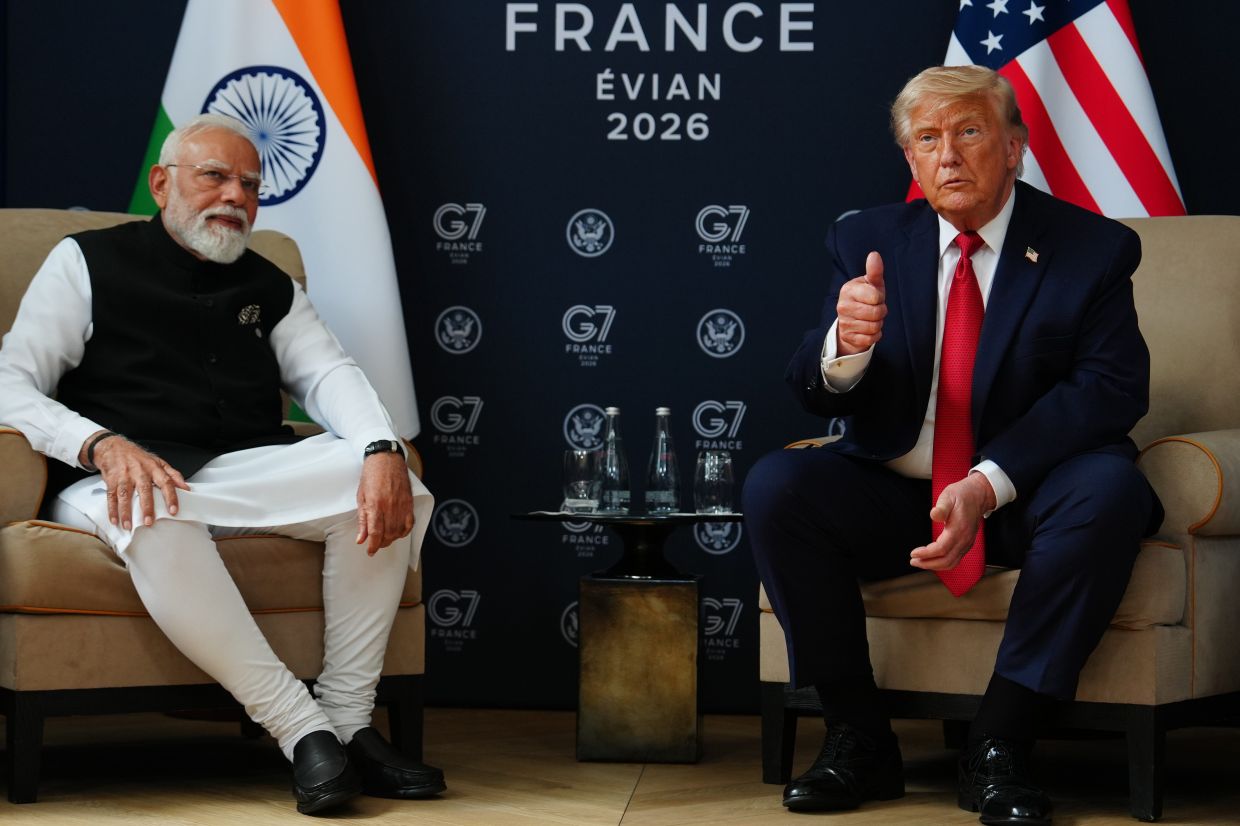
Indian Prime Minister Narendra Modi has reported "significant progress" in protracted negotiations with the United States aimed at finalising a comprehensive bilateral trade agreement, marking a notable development in talks that have stretched across multiple administrations. The announcement followed his meeting with President Donald Trump at the G7 summit in Evian, France, on Wednesday—their first direct engagement since February 2025 when they last met in Washington. India's foreign ministry statement emphasised that both leaders viewed the headway made in negotiating an interim trade arrangement with "particular satisfaction," signalling renewed momentum after months of stalled discussions.
When questioned about the proximity of a final accord, Trump indicated the two nations were "very close" to sealing the deal, suggesting that resolution of outstanding disputes could arrive sooner than previously anticipated. The US president's characteristically colourful assessment of Modi as "a very tough negotiator, one of the toughest" underscored the complexity and hard-fought nature of these discussions, reflecting the challenging negotiations that have defined the trade relationship between the world's largest and fifth-largest economies. Trump's effusive personal remarks about the Indian leader appeared designed to demonstrate the strength of bilateral ties despite the contentious nature of trade discussions.
Directing their officials to pursue a "commercially meaningful agreement at the earliest" opportunity, Modi and Trump have essentially set an accelerated timeline for concluding at least the first phase of the trade accord. This directive carries particular weight given the historical pattern of negotiations dragging across quarters or years. The involvement of US Trade Representative Jamieson Greer, who is scheduled to visit India within the coming week, signals that Washington is deploying senior negotiating talent to advance the discussions, indicating genuine commitment to progress rather than mere diplomatic posturing.
The two countries have established an ambitious target of expanding bilateral trade to USD500 billion by 2030, nearly doubling current levels and representing a fundamental restructuring of commercial ties. However, achieving this objective requires navigating deeply entrenched positions on market access, agricultural tariffs, and intellectual property protections that have proven resistant to compromise during previous negotiating rounds. The initial framework agreement reached in February provided a foundation, yet subsequent developments created fresh complications that threatened to derail progress entirely.
The Supreme Court's invalidation of Trump's sweeping tariff regime prompted the administration to shift tactics, launching targeted investigations into alleged unfair trade practices by multiple nations, including India, whilst simultaneously imposing a blanket 10 percent duty on all imports. For India, these investigations carry substantial consequences given the country's significant export base to the United States, particularly in pharmaceuticals, textiles, and information technology services. The tariff measures directly threatened to undermine the negotiating gains achieved earlier and created additional leverage points that both sides needed to resolve.
India's Commerce Minister Piyush Goyal provided a more granular assessment in early June, stating that negotiators had completed approximately 99 percent of the initial tranche of the proposed agreement. This extraordinary level of progress suggests that only technical finalisation and political sign-off remain outstanding, implying that the fundamental commercial framework is essentially settled. The remaining one percent of negotiations likely involves final adjustments to sensitive sectors and implementation mechanisms rather than wholesale disagreement on major provisions.
Beyond trade mechanics, Modi leveraged the bilateral meeting to press Trump on maritime security concerns affecting Indian nationals operating merchant vessels in hostile waters. Three Indian seafarers were killed in a US military strike targeting a commercial ship off Oman on June 10, an incident that raised alarm within India's maritime community and elevated demands for clarified protocols protecting civilian shipping from accidental attack. Modi's intervention reflects the practical humanitarian dimensions of Middle East instability that extend beyond traditional trade and geopolitical considerations, affecting ordinary workers and their families across South Asia.
India's vulnerability to Middle East turbulence extends far beyond maritime casualties. The closure of the Strait of Hormuz by Iran has severely constrained energy supplies critical to powering the nation's massive industrial and consumer sectors, whilst simultaneously disrupting fertiliser imports essential for the agricultural sector that employs hundreds of millions. For a country wrestling with significant poverty and developmental challenges, supply chain disruptions imposed by regional conflicts translate directly into inflation, reduced growth, and heightened social stress.
Modi's warning that disruptions to fuel, fertiliser, and food supplies resulting from Middle East instability would continue affecting the Global South for an extended period reflects India's positioning as a champion for developing nations. The statement carries dual significance: it advances India's diplomatic objective of repositioning global crisis management away from Western-centric responses toward greater recognition of vulnerable economies' legitimate interests, whilst simultaneously pressuring developed nations like the United States to manage their regional involvement with greater sensitivity to spillover effects. For Malaysian policymakers and businesses, Modi's articulation of Global South concerns mirrors anxieties about how great power competition and regional conflicts increasingly constrain development opportunities for middle-income countries attempting to navigate competing interests.
The convergence of trade progress and geopolitical security concerns demonstrates how modern bilateral relationships operate across multiple interconnected domains. The US-India trade breakthrough cannot be isolated from broader strategic considerations encompassing China's growing influence, Indo-Pacific security architecture, and Middle East stability. For Southeast Asia, including Malaysia, the strengthening of US-India commercial ties carries implications for regional supply chains, investment flows, and the broader balance of power shaping the region's economic future.