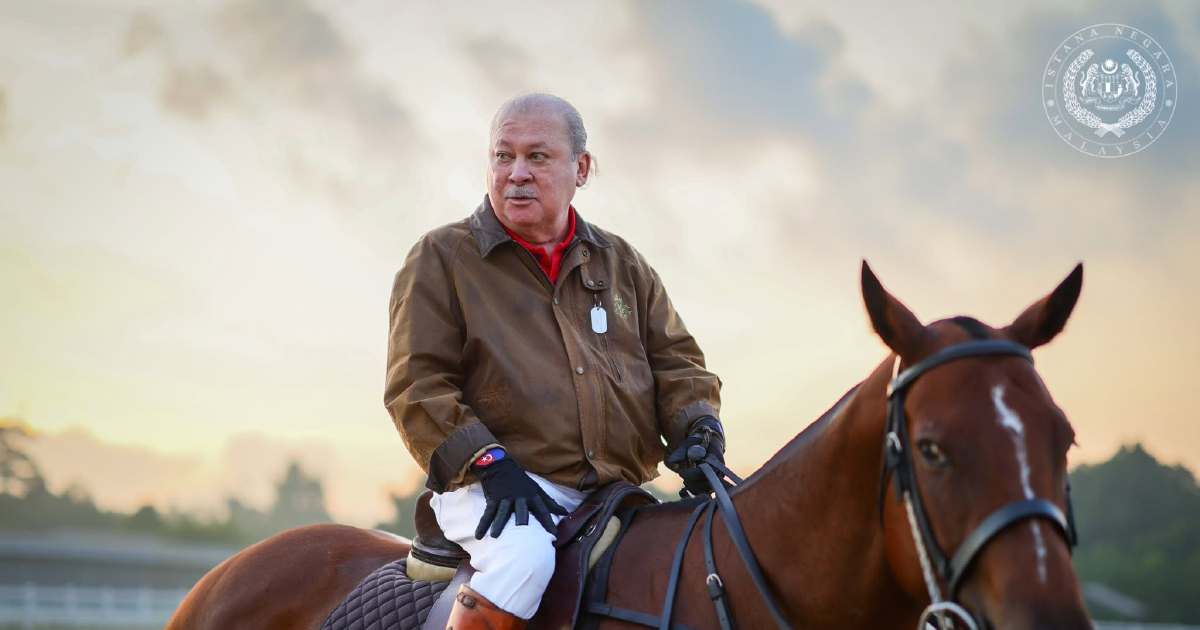
His Majesty Sultan Ibrahim, King of Malaysia, demonstrated his dedication to personal fitness by engaging in his customary morning equestrian activities at the Royal Johor Polo Club located within the grounds of Istana Pasir Pelangi in Johor Baru. The monarch pursued the activity with measured composure, riding at a steady, unhurried pace that reflected both competence and leisure in horsemanship.
The continuation of this routine underscores a deliberate approach to maintaining physical health at the highest level of the Malaysian state. Regular horseback riding offers substantial cardiovascular benefits and strengthens core muscles essential for sustained energy and vitality—qualities particularly valued in demanding public office. For a reigning monarch, such visible commitment to exercise sends a broader cultural signal about the importance of wellness and disciplined self-care.
The choice of venue carries particular significance within Johor's institutional landscape. The Royal Johor Polo Club, situated within the palatial grounds of Istana Pasir Pelangi, represents not merely a recreational facility but a space historically associated with royal traditions spanning generations. Polo itself has long been connected to royal courts across Asia and beyond, embodying elegance, athletic prowess, and command of skilled horsemanship. The club serves as both a practical training ground and a symbolic extension of Johor's royal heritage.
For Malaysian readers monitoring developments in royal affairs, such regular engagement in physical activities carries implications for the nation's leadership. A monarch in robust health and maintaining active daily habits projects stability and readiness to fulfil constitutional duties. The visible demonstration of this commitment—occurring in the early morning hours when such routines typically demand discipline—reinforces public confidence in the continuity and vigour of the institution.
The relaxed manner in which His Majesty conducted his riding reflects an approach to royal duties that integrates personal wellbeing with public responsibility. Unlike more formal state functions that command extensive ceremonial protocols, morning exercise routines remain comparatively private, making public acknowledgement of their continuation noteworthy. Such activities also provide opportunities for the monarch to engage with trusted advisors and maintain informal channels of communication—a practical dimension of governance sometimes overlooked in formal state business.
Within the broader context of Southeast Asian monarchies, visible attention to physical health represents a modern adaptation of traditional conceptions of royal dignity. Contemporary expectations around leadership increasingly incorporate demonstrable commitment to personal discipline and health management, particularly as longevity and sustained capability become central to assessing governmental stability.
For Johor specifically, this activity reaffirms the continued significance of the royal institution within the state's governance framework. The Johor sultanate maintains particular historical and constitutional importance, with its reigning monarch serving as the highest authority in matters of religious and civil administration. Regular public acknowledgement of the sultan's active presence within state territory reinforces the bonds between ruler and realm.
The equestrian tradition also connects to Johor's heritage of military horsemanship and sporting excellence. Historical royal establishments throughout the Malay world maintained elaborate stables and valued highly skilled riders. The perpetuation of such traditions in contemporary form preserves cultural continuity whilst adapting to modern wellness paradigms that increasingly dominate discussions of public health and leadership capacity.
Observations of such routines acquire particular resonance given Malaysian society's ongoing conversations about health, ageing, and the capacity of public institutions to function effectively. A visibly active monarch participating in demanding physical activity provides an exemplary model for citizens across age demographics, implicitly communicating that sustained engagement in exercise remains feasible and desirable regardless of station or responsibility level.
The morning timing of the activity deserves consideration as well. Early-hour exercise reflects disciplined time management and commitment to wellness before the demands of state business accumulate throughout the day. Such patterns establish daily structure and demonstrate the kind of methodical approach to personal management that observers often correlate with effective institutional leadership.
As Malaysia navigates questions surrounding institutional stability, governance frameworks, and the evolving role of traditional institutions in democratic systems, visible demonstrations of active engagement by the monarch in ordinary yet health-conscious activities contribute meaningfully to public discourse. They suggest continuity, vitality, and dedication to duty—essential components of confidence in the Malaysian political establishment.
Looking forward, the maintenance of such routines signals the monarch's intention to remain actively involved in his constitutional role. For stakeholders throughout Malaysia and Southeast Asia monitoring developments in national leadership, these routine activities carry significance extending well beyond the purely personal, reinforcing the stability that monarchical institutions are constitutionally designed to provide.