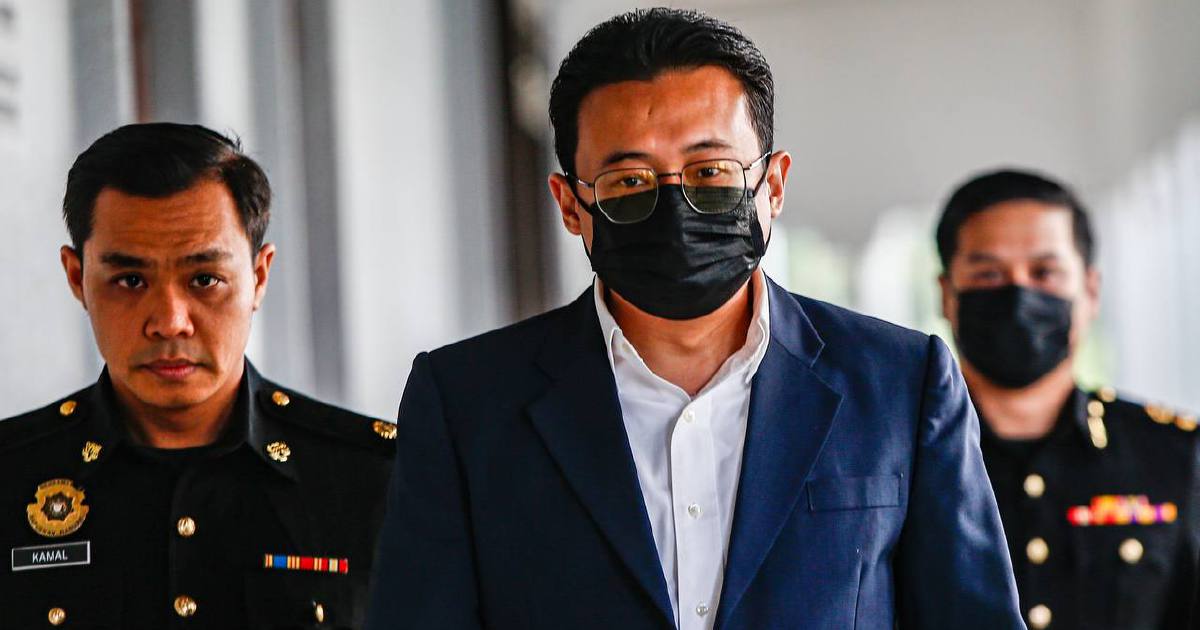
The chief executive officer of Malaysia Stadium Corporation (MSC) appeared at the Sessions Court in Kuala Lumpur today to contest seven charges of soliciting and accepting bribes worth more than RM1 million. The defendant entered not guilty pleas across all counts, which relate to his alleged use of his official position to secure improper financial benefits in connection with a major contract tender.
The charges centre on allegations that the MSC chief executive sought and received illicit payments as incentive to award a lucrative tender contract to a specific company. The tender in question was for the upgrading and refurbishment of the National Squash Centre, a sports facility under the corporation's oversight. The sums involved exceed RM1 million in total value, indicating the scale of the alleged corruption scheme.
Cases involving senior executives of state-owned enterprises frequently draw public scrutiny in Malaysia, where governance and financial accountability have become increasingly prominent election and reform issues. The MSC, as the governing body responsible for major national sports infrastructure including stadiums and specialised sporting venues, occupies a significant role in the country's sports development ecosystem. Allegations of misconduct at this organisational level raise questions about procurement practices and oversight mechanisms within government-linked entities.
The National Squash Centre, the subject of the disputed tender, represents one of Malaysia's dedicated elite sporting facilities. Squash holds particular relevance in the Malaysian sporting landscape, with the country boasting a strong tradition in the sport and producing internationally competitive players. Investment in facility upgrades directly impacts athlete training environments and the nation's competitive standing in international squash competitions.
The structure of the charges—specifically focused on solicitation and acceptance of bribes as inducement for tender award—reflects common patterns in corporate corruption investigations. Such cases typically involve allegations that decision-makers have leveraged their authority to steer public contracts toward preferred vendors in exchange for personal enrichment. This undermines fair competition principles and diverts resources that should benefit public institutions.
The not guilty pleas suggest the defendant disputes the factual basis of the allegations or contests the interpretation of his actions and communications. Legal proceedings at the Sessions Court level will require the prosecution to present evidence demonstrating both the solicitation or acceptance of bribes and the causal link between such payments and the tender award decision. The burden remains on the prosecution to establish guilt beyond reasonable doubt.
This case arrives amid broader discussions in Malaysia regarding corporate governance standards and anti-corruption enforcement. Government-linked companies manage substantial public resources and exercise significant discretionary power in procurement and contract decisions. When allegation surface at senior management levels, they inevitably prompt debate about internal controls, audit procedures, and whether existing safeguards effectively prevent conflicts of interest and corrupt practices.
The tender process for facility upgrades typically involves competitive bidding where multiple companies submit proposals meeting specified criteria. If proper procurement protocols were followed, selection should depend solely on technical competence, value for money, and other transparent evaluation factors. Allegations that bribery influenced the outcome would represent a fundamental breach of such principles, potentially invalidating the entire procurement exercise and necessitating re-tendering or contract cancellation.
For Malaysia's sporting sector, such allegations carry practical implications beyond legal proceedings. Public confidence in sports infrastructure investment depends partly on transparent, accountable management of facilities and funds. When corruption allegations emerge, they may influence international partners' willingness to collaborate on sporting initiatives and affect athlete morale and commitment to national programmes.
The court process will likely extend over several months as evidence is presented and witnesses are examined. The outcome carries significance not only for the individual defendant but also for institutional governance standards. Convictions in high-profile corruption cases typically result in substantial penalties including imprisonment and financial restitution, while acquittals reinforce the importance of maintaining rigorous evidentiary standards in white-collar crime prosecutions.
Further developments in the case will be closely monitored by corporate governance advocates, sports administrators, and media observers tracking corruption trends across Malaysia's public and quasi-public sectors. The proceedings represent an ongoing test of the nation's institutional capacity to hold senior leaders accountable for alleged misconduct affecting public resources.