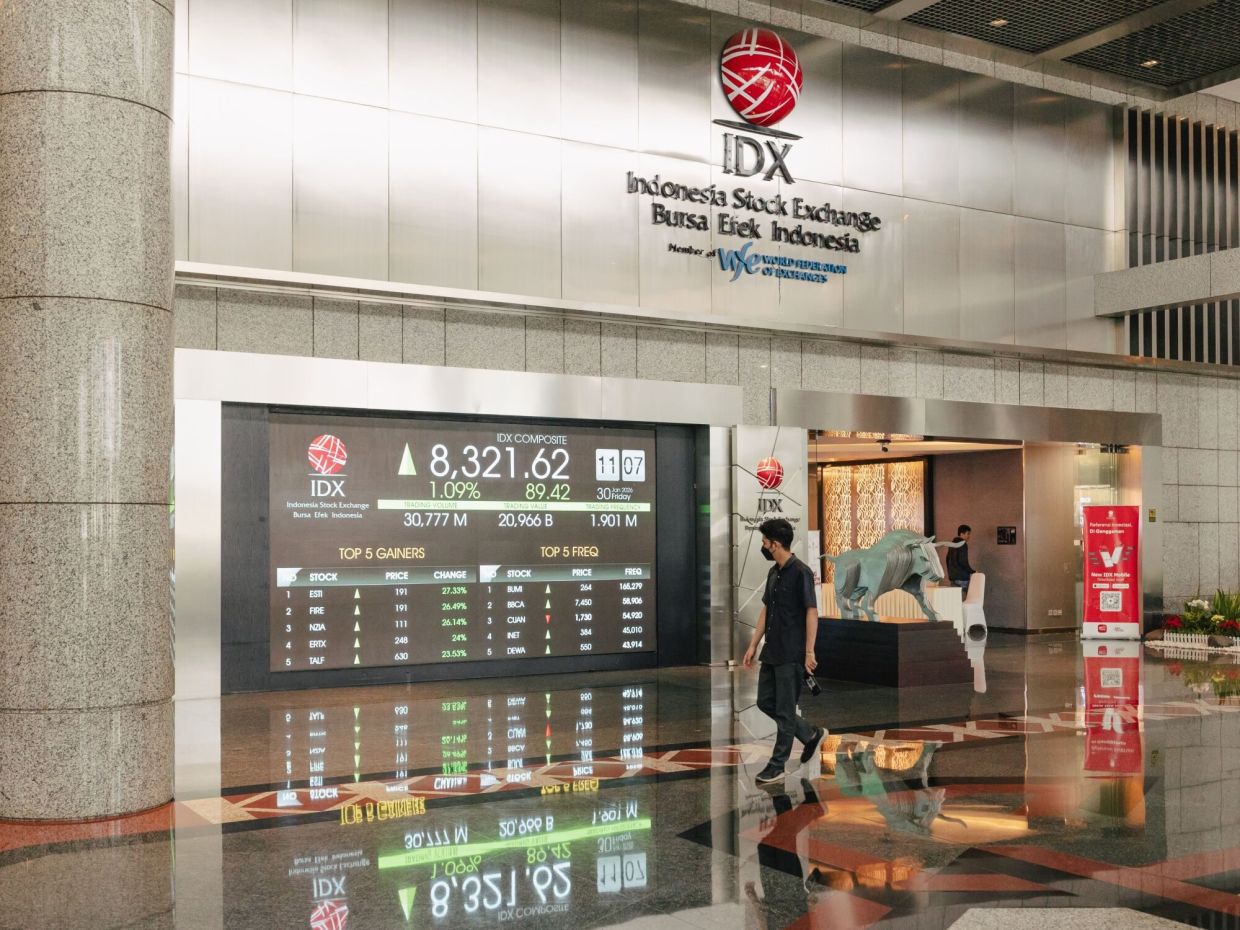
Indonesia's battle to retain its emerging market status faced another setback Thursday when MSCI, the world's most influential index provider, released a damaging accessibility review that cast fresh doubt on the transparency of the nation's capital markets. The assessment specifically downgraded Indonesia's information flow criterion to negative, targeting the opacity surrounding corporate ownership structures and trading activity that, analysts argue, distorts price formation and leaves international investors unable to accurately calculate the true tradeable shares available in listed companies. Coming at a moment when Jakarta is desperate to stabilise investor confidence, the move represents yet another body blow to an economy already reeling from capital flight and currency pressures.
The timing of the review intensifies the stakes considerably. Next week, MSCI will make its final determination on whether to demote Indonesia from emerging market to frontier status—a reclassification that would force index-tracking funds managing hundreds of billions of dollars to liquidate holdings en masse. Conservative estimates suggest such a downgrade could unleash forced selling worth as much as $13 billion, a catastrophic scenario for a market already deep in red. The threat has hung over Jakarta's investors since January, when MSCI first flagged accessibility problems and warned of the downgrade possibility, sending shockwaves through a battered market that has since plunged further.
At the core of MSCI's concern lies a fundamentally structural problem: the difficulty in determining who actually controls Indonesia's listed companies and whether trading activity reflects genuine market mechanics or coordinated manoeuvres by connected parties. The index provider specifically identified poor visibility into shareholding patterns and evidence of coordinated trading behaviour as barriers to proper market functioning. These are not peripheral issues in index methodology—they strike at the heart of whether a market can be considered open and accessible to international capital, or whether ownership concentration and opaque trading networks create unacceptable risks for foreign funds. The result is that global investment institutions cannot confidently assess free float, the percentage of shares genuinely available for public trading, making it harder to justify large allocations to Indonesian equities.
Yet not all observers view the MSCI assessment as uniformly catastrophic. Mohit Mirpuri, a fund manager at SGMC Capital in Singapore, argued that the review deserves more nuanced interpretation than headlines suggest. While acknowledging that one accessibility metric deteriorated, he pointed out that Indonesia continues to score well relative to comparable markets including South Korea, China and India across multiple important measures of market access. His analysis suggests that the deterioration was narrowly focused rather than systemic, and he cautioned against reading excessive pessimism into a single negative shift. His base case expectation remains that Indonesia will retain emerging market status when MSCI renders its verdict, though even optimistic analysts acknowledge the considerable uncertainty surrounding next week's decision.
The Indonesian authorities have not remained passive in the face of these critiques. Following MSCI's January warning, policymakers rolled out a suite of reform initiatives designed to address transparency deficiencies and strengthen market discipline. The most significant measure nearly doubled the minimum free float requirement for listed companies to 15 percent, forcing major shareholders to reduce stakes or accept dilution. The sense of crisis was so palpable that the chief executives of both the Indonesia Stock Exchange and the Financial Services Authority resigned on the same afternoon in January, signalling the political weight of the situation. In April, MSCI extended its review period to allow time for these reforms to take effect, demonstrating a willingness to reassess should conditions improve. However, in May the index provider removed six companies, predominantly those with ownership links to prominent business tycoons, from its indexes—an action that triggered another sharp equity market decline and underscored that symbolic reforms had not fully addressed the underlying accessibility problems.
The consequences of any MSCI downgrade would cascade across Indonesia's financial system with brutal efficiency. As one of the planet's largest index providers, MSCI benchmarks billions of dollars in passive investments through tracking funds that mechanically buy and sell securities to match index compositions. A frontier market classification would require these passive vehicles to immediately liquidate their Indonesian holdings, creating a wall of forced selling with no offsetting demand. Active managers benchmarked to MSCI indices would face pressure to cut exposures to align with new allocations. The result would be a vicious cycle: mechanical selling would depress prices, widening the credibility gap between Indonesia's actual fundamentals and capital market dynamics, potentially triggering additional outflows by discretionary investors fleeing weakening sentiment. Few emerging markets have recovered smoothly from MSCI downgrades, and Indonesia's fragile state makes it particularly vulnerable.
The market weakness reflects deeper anxieties that extend well beyond index-level technicalities. Under President Prabowo Subianto, Indonesia has pursued populist economic policies that have spooked investors concerned about fiscal discipline, while rumours about the government's commitment to orthodox monetary management have precipitated a sharp rupiah depreciation to historic lows. These currency pressures have forced Bank Indonesia's hand into multiple interest rate increases in recent weeks, signalling desperation to prop up the currency and signal commitment to stability. MSCI's observation that Indonesia lacks an efficient offshore currency market while facing constraints in the onshore market reflects the structural limitations that constrain capital flows during periods of investor anxiety. When the rupiah weakens, foreign investors suffer losses even if stock prices remain stable, creating an additional disincentive to hold Indonesian assets.
International credit agencies have reinforced these doubts about Indonesia's trajectory. Both Moody's and Fitch downgraded their outlook on Indonesia's sovereign debt to negative in recent months, explicitly citing diminished policymaking credibility as the foundation for their reassessments. These decisions highlight an uncomfortable reality: Indonesia's $1.4 trillion economy, once celebrated as a resilient emerging market favourite, has lost the confidence of global institutional investors across multiple asset classes simultaneously. The combination of equity market suspicion, currency pressure, and sovereign credit doubt suggests a loss of conviction about Indonesia's economic governance that transcends any single policy debate. For a nation heavily dependent on foreign capital to finance development, this simultaneous withdrawal of confidence across asset markets represents a genuine problem.
The human toll is already visible in market data. Jakarta's benchmark index has collapsed nearly 29 percent this year, obliterating the returns of domestic savers and pension funds heavily invested in local equities. Foreign investors have voted with their feet, liquidating approximately $3.65 billion in Indonesian stocks so far in 2026 alone—a staggering withdrawal of external capital that mirrors the slowdown in foreign direct investment across sectors dependent on imported capital and imported consumer confidence. The rupiah weakness makes dollar-denominated debts more expensive to service, squeezing companies with external borrowings, while simultaneously raising inflation concerns that threaten real purchasing power for ordinary Indonesians already struggling with rising living costs. These financial market developments are not abstract pricing phenomena but rather reflect genuine changes in the real economy's financing conditions.