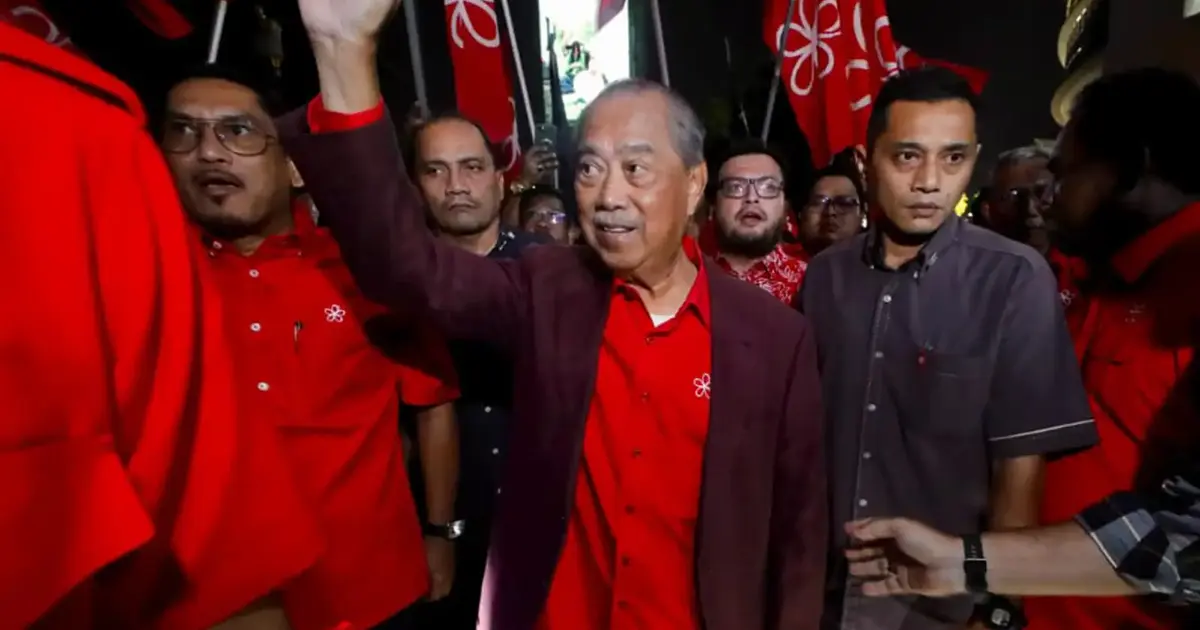
Muhyiddin Yassin consolidated his grip on Bersatu with a show of force when more than 200 party stalwarts turned out to demonstrate their backing ahead of a crucial party gathering. The turnout underscores the significant support the former prime minister maintains within the party structure, even as Bersatu charts its course through increasingly turbulent political waters. The rally functioned as both a rallying cry for party faithful and a signal of organisational strength heading into discussions that will shape the party's electoral strategy for months to come.
The forthcoming Bersatu meeting represents a critical juncture for the party as it prepares for state elections in two major political battlegrounds. Johor and Negeri Sembilan hold substantial importance within Malaysia's electoral landscape, with both states offering opportunities to expand Bersatu's political footprint. The timing of these contests will test the party's ability to mobilise voters and consolidate support across different demographic groups, particularly given the shifting sands of Malaysian coalition politics in recent years.
Electoral calculations in Johor carry particular weight given the state's size, economic importance, and historical significance as a traditional stronghold of major parties. Success or failure in this state could dramatically alter perceptions of Bersatu's viability as a major political force beyond the federal level. The party's performance will inevitably influence how other coalition partners view its contribution to collective electoral efforts and whether it remains a reliable ally in future national campaigns.
Negeri Sembilan, meanwhile, presents its own strategic considerations and challenges. The state requires careful ground organisation and understanding of local political dynamics that differ markedly from national-level politics. Bersatu's ability to translate central party support into concrete electoral gains at the state level will depend significantly on how effectively it can activate grassroots networks and address constituent concerns specific to the state's regions.
Tie-ups with PAS represent another substantial item on the party's agenda, as the relationship between these coalition partners influences electoral outcomes and policy direction. PAS commands significant organisational capacity and voter loyalty in particular constituencies, making the nature of their cooperation fundamental to Bersatu's electoral prospects. How the two parties coordinate candidate selection, campaign messaging, and resource allocation will substantially determine their combined effectiveness in contesting elections.
The coalition arrangement between Bersatu and PAS has evolved significantly over recent political cycles, shaped by pragmatic calculations and shifts in the broader political ecosystem. Their ability to work cohesively depends on managing competing interests, resolving disputes over seat allocation, and presenting a unified front to voters. Frictions or misunderstandings between the partners could undermine their collective bargaining power and fragment their electoral message across constituencies.
Muhyiddin's leadership has been instrumental in maintaining Bersatu's profile during periods of intense political competition and uncertainty. The display of organisational capacity represented by the rally demonstrates that he retains substantial internal support and can mobilise the party machinery when required. This backing provides him with a platform to influence the party's strategic direction during the meeting and assert his vision for Bersatu's future trajectory.
The broader Malaysian political context makes this Bersatu meeting particularly significant for regional observers. The party has positioned itself as a crucial swing force in Malaysian politics, able to tip the balance between competing coalitions depending on its alignment choices. State electoral performances feed into perceptions about its national relevance and attractiveness as a coalition partner, potentially influencing negotiations before any future general election.
Forces within Bersatu may harbour different views about the party's strategic priorities, coalition preferences, and electoral readiness. The upcoming meeting will require consensus-building around contentious issues and decisions that could determine the party's trajectory for years. How these internal dynamics resolve will signal to other political actors whether Bersatu possesses the internal cohesion necessary to execute its strategic vision effectively.
Southeast Asian political observers frequently note Malaysia's complex multiparty system and fluid coalition dynamics as distinctive features of the region's democracy. Bersatu's positioning within this landscape reflects broader patterns of political realignment occurring across Southeast Asia, where traditional party structures compete with newer political movements and personality-driven formations. Understanding Bersatu's organisational capacity and internal dynamics offers insight into how Malaysian politics may evolve in coming years.
The stakes extend beyond electoral mathematics into questions about governance, policy direction, and the durability of political arrangements. Which coalition configuration emerges from upcoming state contests will influence resource distribution, policy priorities, and political influence at state level. For Bersatu, demonstrating electoral viability becomes increasingly important as it seeks to maintain relevance within Malaysia's competitive political marketplace and secure advantageous positions for its elected representatives.