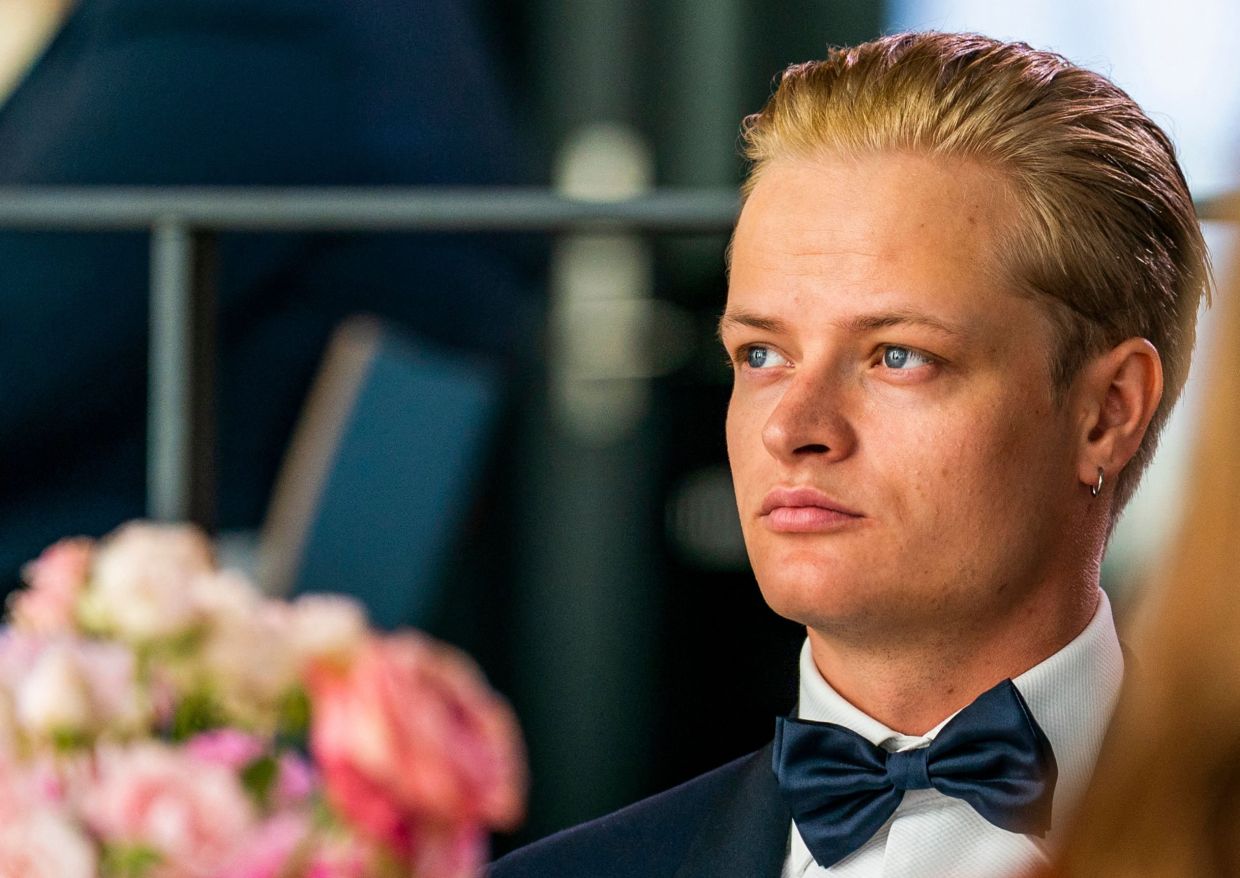
Marius Borg Høiby, the 29-year-old eldest son of Norway's Crown Princess Mette-Marit, received a four-year prison sentence on Monday after a Norwegian court found him guilty of rape and related offences. The verdict culminates a six-week trial that gripped international observers, primarily due to Høiby's proximity to the Norwegian throne rather than the gravity of the charges alone.
The Oslo District Court convicted Høiby of two rape charges while acquitting him of two others from the four allegations he faced. Beyond the sexual assault convictions, he was also found guilty of assault and abuse within close relationships—offences he had partially acknowledged during proceedings. The court ordered him to provide financial compensation to the victims, though the specific amounts remained undisclosed in the initial verdict announcement.
The criminal allegations spanned six years of alleged misconduct. Prosecutors charged Høiby with sexually assaulting four separate women who were either asleep or incapacitated and therefore unable to consent between 2018 and 2024. The broader indictment encompassed 40 criminal charges in total, incorporating lesser offences such as assault, drug-related violations, and breaches of a court-imposed restraining order. While Høiby steadfastly denied the rape allegations throughout the proceedings, he conceded to several of the lesser charges, a partial admission that nonetheless failed to shield him from conviction on the most serious counts.
The legal arguments presented to the court revealed a substantial gulf between prosecution and defence positions. State prosecutors had sought a lengthy sentence of seven years and seven months, reflecting the severity with which they viewed the offences. Conversely, defence counsel maintained that the rape allegations lacked sufficient evidentiary foundation and argued for acquittal on those counts, contending any custodial term should not exceed 18 months for the offences Høiby had admitted. The court's decision to split the difference—convicting on two rape charges and sentencing to four years—represents a middle position that neither side fully obtained.
Significantly, Høiby did not attend Monday's verdict reading in person due to cited health concerns. Instead, he observed the court's judgment via videolink from his place of detention, a logistical arrangement that underscores the ongoing nature of his custody throughout the trial phase. This absence from the courtroom, though officially attributed to health reasons, also spared the Norwegian public and international media the visual spectacle of the crown princess's son hearing his conviction directly.
The six-week trial assembled substantial evidence to support the convictions, including testimony from multiple accusers and corroborating materials extracted from Høiby's personal electronic devices. Prosecutors presented messages, photographs, and videos recovered from his mobile telephone—digital evidence that proved instrumental in substantiating the charges. This technological dimension reflects contemporary criminal litigation practices wherein digital forensics often provide determinative proof in assault cases.
The case has attracted disproportionate international media attention precisely because of Høiby's family connections rather than the intrinsic newsworthiness of the offences themselves. Although Høiby holds no royal title and performs no official state functions, his position within the royal household carries symbolic weight. He is the son of Crown Princess Mette-Marit from a previous relationship predating her marriage to Crown Prince Haakon, who is the direct heir to the Norwegian throne. Høiby effectively grew up alongside the future king within the royal residence, creating a familial proximity that distinguishes his case from ordinary criminal proceedings.
Complications surrounding the case intensified recently following deterioration in the crown princess's health status. Mette-Marit suffers from pulmonary fibrosis, a progressive lung condition, and currently awaits transplantation—a procedure that presents substantial medical risk and uncertain outcomes. Her declining health prompted legal discussions about whether Høiby should receive temporary release from custody pending the verdict, arguments that Norwegian appeals courts consistently rejected. The judicial refusal to grant such relief demonstrates the courts' determination to maintain strict procedural independence from family considerations.
The timing of the verdict compounds existing reputational challenges facing the Norwegian royal family. The trial proceeded against a backdrop of renewed international scrutiny regarding the crown princess's historical connections with Jeffrey Epstein, the deceased American financier and convicted sex offender. Mette-Marit has publicly acknowledged maintaining contact with Epstein and has issued a formal apology, characterizing her judgment in that relationship as misguided. She faces no accusations of criminal wrongdoing, yet the association continues to generate negative headlines and public discussion, creating an unfavourable media environment in which her son's conviction has unfolded.
The sentence remains subject to appeal, preserving Høiby's legal options to challenge both the conviction and the duration of the custodial term. Norwegian appellate procedures allow convicted individuals to pursue full reviews of trial judgments, potentially resulting in acquittal, conviction on fewer counts, or sentence reduction. Whether Høiby will exercise this appellate right remains uncertain, as legal strategy may be informed by broader considerations regarding his family's public standing and the psychological impact of protracted legal proceedings.
For Malaysian and Southeast Asian observers, the case illuminates the complex intersection of royal privilege and criminal accountability in contemporary Nordic societies. Unlike some jurisdictions where family connections might facilitate lenient treatment, Norwegian courts demonstrated rigorous adherence to evidentiary standards and sentencing guidelines regardless of the defendant's family status. This judicial independence, while globally recognised as a hallmark of Nordic legal systems, contrasts sharply with public perceptions in some regional contexts where family influence might materially affect outcomes. The case exemplifies how modern democracies, even those with hereditary monarchies, maintain institutional mechanisms to ensure equal treatment before the law—a principle that extends regardless of family prominence or social standing.


