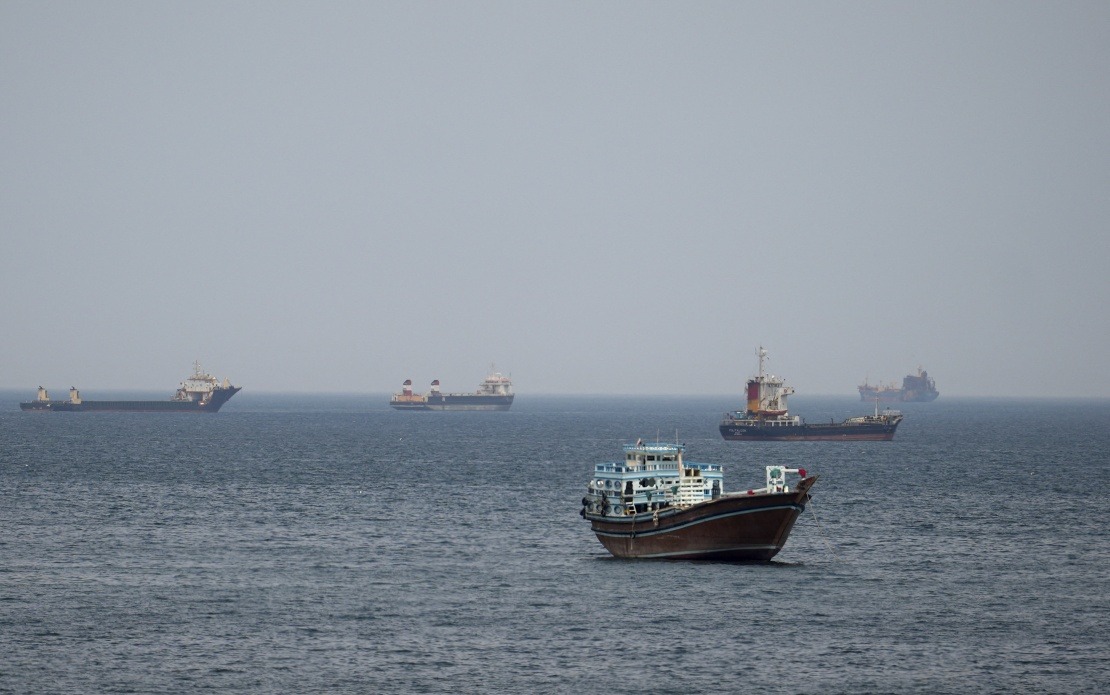
The interim accord between the United States and Iran moved into force on Thursday, marking a dramatic reversal in a conflict that had destabilised global energy markets for nearly four months. With the agreement now active, oil tankers have resumed their passage through the Strait of Hormuz, the critical waterway that typically carries roughly one-fifth of the world's petroleum supply. The symbolic reopening of this vital chokepoint represents the most tangible achievement of the diplomatic settlement, and energy markets have responded accordingly, with crude prices reaching their lowest level since the fighting commenced on February 28.
For Malaysian readers and the broader Southeast Asian region, the restoration of normal traffic through the Strait of Hormuz carries profound economic implications. As a major trading hub and an energy-dependent economy, Malaysia has faced inflationary pressures stemming from elevated global oil prices during the conflict. The likelihood that exports through the strait will gradually normalise over the coming months provides welcome relief to regional supply chains and manufacturing competitiveness. Petrol prices at Malaysian pumps, which have been influenced by international crude movements, should experience downward pressure as market stability returns.
However, the framework supporting this temporary ceasefire remains fragile, constructed around a 60-day negotiating window focused primarily on Iran's nuclear programme. The accord allocates a US$300 billion reconstruction fund for Iran alongside additional financial incentives, representing a substantial commitment from the United States. Yet beneath this headline achievement lie unresolved structural tensions. US Vice President JD Vance, who will lead the American delegation during the forthcoming talks, has signalled that Washington intends to press for limitations on Iran's long-range missile capabilities—a demand Tehran has already indicated it views as unacceptable.
Iran's Supreme Leader Ayatollah Moitaba Khamenei struck a defiant tone in response to the agreement, characterising Trump's signature as a capitulation born of desperation rather than genuine diplomatic progress. His statement that Iran will not accept excessive American demands in the nuclear negotiations suggests that the next 60 days will involve considerable brinkmanship and risk of breakdown. This positioning reflects Tehran's assessment that it has emerged from the conflict in a strengthened negotiating position, having absorbed a superpower military campaign, maintained control over the strait, and secured valuable sanctions relief without surrendering fundamental strategic assets.
The question of authority over the Strait of Hormuz exemplifies Iran's enhanced leverage. Under the interim terms, Tehran has retained the right to issue transit permits and direct traffic flow during the 60-day period, a provision that underscores Iranian sovereignty whilst suspending fees during this interim phase. This arrangement differs markedly from the unconditional surrender that President Trump had initially demanded when hostilities commenced. The contrast between Trump's opening maximalist position—which aimed to destroy Iran's nuclear weapons capability, eliminate its capacity to threaten neighbours, curtail regional militant support, and enable internal regime change—and the decidedly more modest terms ultimately accepted suggests that American objectives have substantially narrowed.
The most troubling dimension of this settlement, however, involves the unfinished conflict in Lebanon, where Israeli forces continue large-scale operations despite the ceasefire framework. More than a million Lebanese civilians have been displaced by the fighting, representing one of the region's most severe humanitarian crises in recent years. On Thursday, Israeli forces launched fresh airstrikes into Lebanese territory, directly contradicting the ceasefire agreement's explicit call for the permanent termination of warfare there. Israel, which remained outside the negotiation process entirely, has explicitly rejected any withdrawal from Lebanese territory and has released maps depicting an expanded occupation zone—actions that fundamentally contradict the accord's provisions guaranteeing Lebanese territorial integrity and sovereignty.
This divergence between American diplomatic commitments and Israeli military behaviour has created unprecedented friction between the two countries, prompting rare public criticism from Trump himself. The President has suggested, with notable acerbity, that Israeli leadership would be ill-advised to alienate its only remaining powerful international ally through continued offensive operations. Such statements reflect Trump's acute awareness that domestic American opposition to the conflict's continuation could constrain his political ability to support Israeli actions, particularly given voter fatigue with Middle Eastern entanglements. Yet Israeli actions demonstrate either a fundamental disagreement with American ceasefire terms or a calculation that military leverage can yet extract additional concessions from Lebanon and its regional supporters.
For Southeast Asian observers, the unresolved Lebanon question carries implications extending beyond immediate Middle Eastern concerns. A durable regional ceasefire requires alignment between the primary parties—in this case, Washington and Iran—but also cooperation from secondary actors, particularly Israel. The demonstrated inability or unwillingness of Israel to comply with ceasefire terms raises uncomfortable questions about the enforceability of international agreements when major powers prioritise particular allies over broader settlement frameworks. This pattern potentially influences calculations regarding other regional disputes and the reliability of great power commitments.
Critics have noted that Iran appears to have strengthened its strategic position considerably through this interim agreement. Having withstood months of sustained American military pressure, successfully safeguarded most of its nuclear programme, retained operational control over critical maritime chokepoints, and secured access to reconstruction financing whilst maintaining the capacity to support regional allies, Iran has in effect demonstrated resilience that contradicts earlier Western assumptions about regime fragility. This reassessment of Iranian capabilities and durability will likely influence regional calculations across the Middle East and potentially affect how neighbouring states calibrate their own strategic hedging.
The 60-day negotiating window represents a critical juncture in determining whether this interim ceasefire evolves into a durable, comprehensive settlement or fragments under accumulated tensions. The outcome depends substantially on whether American negotiators can achieve meaningful restrictions on Iranian missiles and nuclear advancement whilst Tehran simultaneously maintains its core strategic interests. Meanwhile, the Lebanon question looms as an immediate test case of whether American diplomatic commitments can constrain ally behaviour—a test that early evidence suggests the administration may be losing.
For energy markets and global supply chain stability, the interim ceasefire provides genuine relief, particularly for import-dependent economies throughout Southeast Asia that have suffered from elevated crude prices. Yet the fragility of the underlying settlement, exemplified by continued Israeli operations and hardening negotiating positions from Tehran, suggests that market participants should remain cautious about assuming permanent normalisation. Should negotiations break down over the nuclear programme or Israeli actions expand further, the Strait of Hormuz could again become contested terrain, with immediate implications for the global petroleum market and Asian economies dependent on stable energy supplies.