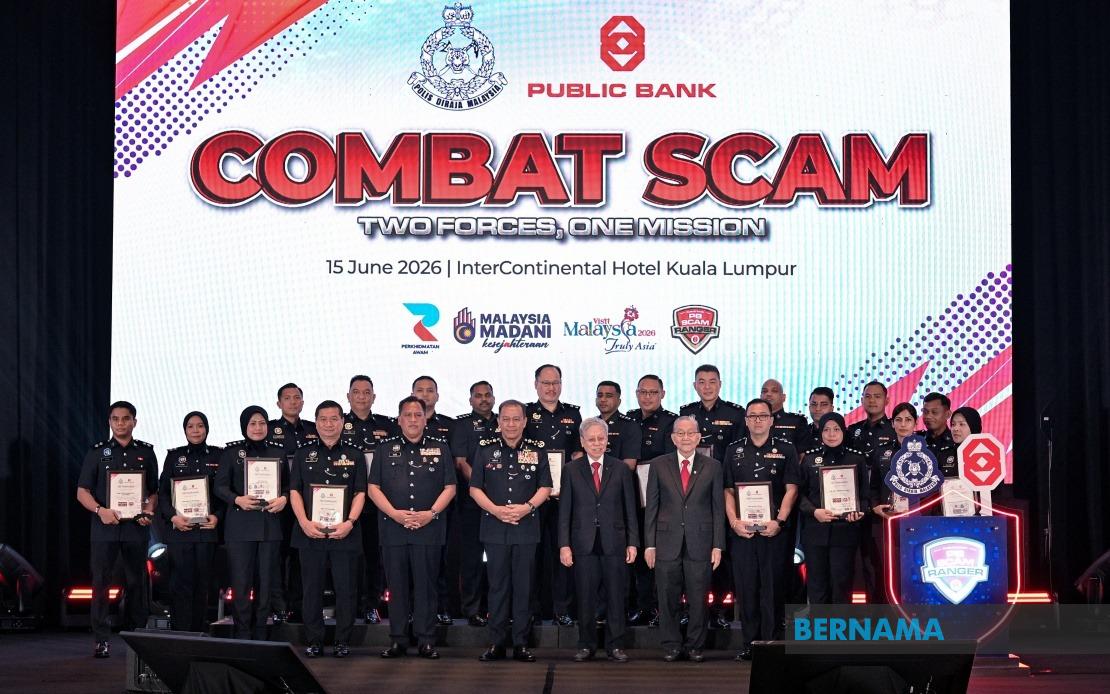
Malaysia's battle against cybercrime took a grimmer turn in 2025, with online scam losses ballooning to RM2.97 billion—a staggering RM1.40 billion spike from the RM1.57 billion recorded in 2024. Inspector-General of Police Tan Sri Mohd Khalid Ismail disclosed these alarming figures at the launch of the 'Combat Scam: Two Teams, One Goal' campaign in Kuala Lumpur on June 15, underscoring just how rapidly fraud syndicates are adapting to exploit an increasingly connected Malaysian society.
The sheer volume of incidents adds a sobering human dimension to these financial statistics. Police recorded 66,204 online fraud cases throughout 2025—an 87 per cent increase compared with the 35,368 cases documented in 2024. This explosive growth suggests that awareness campaigns and enforcement efforts to date have struggled to keep pace with the ingenuity and scale of criminal operations. Behind each reported case lies a victim whose financial security, career prospects, and psychological wellbeing have been compromised by coordinated deception.
Within the broader scam ecosystem, investment fraud emerged as the most destructive threat. Non-existent investment scams alone accounted for RM1.47 billion of the total losses—nearly half of all fraud-related monetary damage. These schemes typically lure Malaysians with promises of high returns on cryptocurrency, forex trading, or other speculative ventures, exploiting both financial desperation and aspiration. The prevalence of such scams suggests that criminals have successfully identified and weaponized key vulnerabilities in how ordinary Malaysians make financial decisions.
Phone-based scams remained the primary vector for fraud. The force recorded 28,388 cases involving telephone deception in 2025, establishing voice communication as the most effective tool in scammers' arsenal. Despite widespread warnings about phone scams, the medium's persistence reflects its inherent advantages: it creates a false sense of personal connection, allows real-time manipulation, and provides scammers with immediate feedback to refine their pitches. The continued dominance of phone scams indicates that many Malaysians, particularly those less digitally native, remain vulnerable despite public advisories.
Mohd Khalid emphasized that these figures transcend mere statistics, representing thousands of Malaysians whose livelihoods and futures have been derailed. The personal devastation extends beyond financial loss—victims often experience psychological trauma, damaged relationships, and diminished trust in institutions. For elderly citizens and those with limited digital literacy, falling victim to scams can mean the loss of retirement savings or life insurance proceeds. The ripple effects touch families, small businesses, and entire communities dependent on defrauded individuals.
The sophistication of modern fraud operations reflects how criminal syndicates have internalized technological advancement. Scammers now deploy artificial intelligence-generated deepfakes, spoofed websites, encrypted communication channels, and compromised social media accounts to establish credibility and maintain operational security. They continuously refine their psychological tactics, studying victim psychology and tailoring pitches based on demographic profiles, cultural references, and financial situations. This evolution poses a formidable challenge to law enforcement agencies operating with traditional investigative tools and protocols.
Mohd Khalid identified prevention, education, and digital security awareness as urgent priorities requiring continuous strengthening. This represents a tacit acknowledgment that enforcement alone cannot solve the scam epidemic—the sheer volume and sophistication of operations overwhelm reactive policing. Instead, authorities recognize that building public resilience against fraud requires sustained investment in community education, digital literacy programs, and behavioral change initiatives. The challenge lies in reaching vulnerable populations effectively and translating awareness into changed behavior.
In response to this evolving threat landscape, authorities have endorsed the PB Scam Rangers Programme, a collaborative initiative between the Commercial Crime Investigation Department and Public Bank Berhad. This partnership represents a pragmatic recognition that combating cybercrime requires coordination between law enforcement and the financial sector, which maintains the closest real-time visibility into suspicious transactions. By pooling expertise and resources, the collaboration aims to strengthen financial literacy and cybersecurity awareness among the public, translating institutional knowledge into actionable guidance for ordinary Malaysians.
The campaign seeks to build what Mohd Khalid described as a more aware, knowledgeable, and resilient society capable of withstanding scam manipulation tactics. This requires moving beyond passive knowledge—understanding that scams exist—to active behavioral change: recognizing manipulation in real-time, questioning unsolicited offers, and reporting suspicious contacts. The emphasis on public education reflects evidence from other jurisdictions that informed communities experience significantly lower victimization rates. However, success depends on sustained engagement and culturally relevant messaging that resonates across Malaysia's diverse population.
For Malaysian consumers and businesses, the 2025 figures serve as a clarion call to heightened vigilance. The statistics indicate that scammers are becoming more effective at converting contacts into victims, suggesting their techniques have grown more persuasive or that protective skepticism is eroding. Those managing significant finances or retirement savings should implement multi-factor authentication, maintain separate accounts for sensitive transactions, and establish verification protocols with trusted contacts before responding to urgent requests. Organizations handling customer data must strengthen cybersecurity defenses to prevent the credential theft that enables impersonation scams.
The collaboration between public institutions and the banking sector signals that combating this crisis demands integrated responses transcending traditional institutional boundaries. Banks can freeze suspicious accounts and share threat intelligence; telecommunications providers can identify call spoofing patterns; technology companies can deploy better fraud detection; and communities can cultivate protective awareness. The RM2.97 billion in losses represents not just money, but the accumulated trust deficit between Malaysians and their digital economy—trust that must be systematically rebuilt through coordinated, sustained action across all sectors.