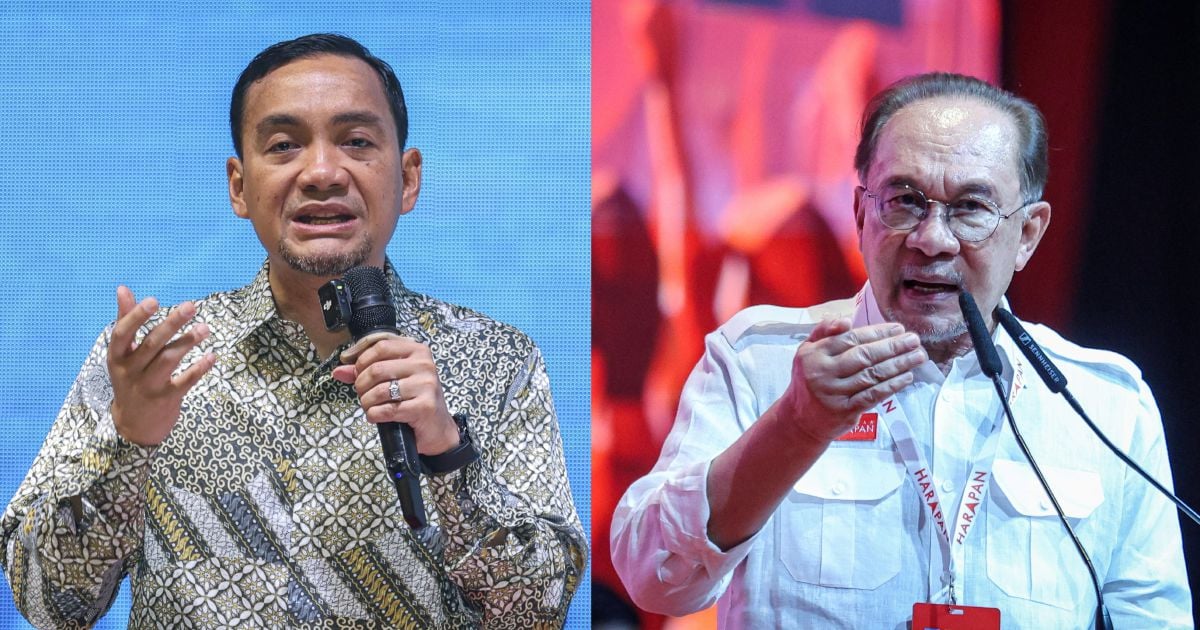
Johor's caretaker menteri besar Datuk Onn Hafiz Ghazi has mounted a vigorous defence of his administration against accusations that it refuses to collaborate with the federal government in Putrajaya, marking an escalation in the political tensions between Malaysia's second-largest state and the centre of power.
The dispute between the Johor leadership and the federal administration reflects deeper fault lines within Malaysian politics, where state and federal governments of different political persuasions often struggle to align on policy matters. Johor, governed by the Barisan Nasional faction, has maintained a distinct political identity from the current federal administration, leading to periodic frictions over resource allocation, infrastructure projects, and administrative priorities.
Onn Hafiz's defence appears to have been triggered by assertions that his government shows reluctance in accepting federal initiatives or demonstrating insufficient willingness to support programmes emanating from the capital. The caretaker menteri besar's spirited response suggests he views such characterisations as unfair misrepresentations of his administration's actual engagement with federal bodies and federal-level decision-making processes.
The timing of this exchange is significant, coinciding with what appears to be a critical juncture in Johor's political cycle. As caretaker menteri besar, Onn Hafiz operates within a transitional period where his government's legitimacy and effectiveness face particular scrutiny. The need to demonstrate responsiveness to both Johorean concerns and federal requirements becomes especially acute during such phases, as any appearance of obstruction could undermine his political standing.
For Malaysian observers, the Johor situation illuminates broader governance challenges facing the federation. States with different ruling coalitions than the federal government must navigate complex relationships involving resource dependencies, constitutional powers, and competing political narratives. Johor, as Malaysia's most economically significant state outside the federal territories, occupies an especially sensitive position in this national equilibrium.
The accusation of unwillingness to cooperate carries particular weight in Malaysian political discourse, where federal-state coordination is essential for implementing national development strategies, security measures, and public services. Any suggestion that a major state resists such cooperation potentially affects investor confidence, affects service delivery outcomes, and weakens the federation's administrative coherence.
Onn Hafiz's rebuttal likely emphasises concrete examples of his administration's collaborative efforts—whether through infrastructure projects, joint task forces, or policy alignment on matters of national concern. Effective menteri besar typically accumulate such instances as evidence of their willingness to transcend factional divides and prioritise constituent welfare over partisan considerations.
The broader context involves Malaysia's experience with competitive federalism, where state governments have increasingly asserted their constitutional prerogatives and developed independent policy agendas. This has created both productive innovation—where states serve as laboratories for policy experimentation—and occasional gridlock when political opposition prevents alignment. Johor's specific case demonstrates how such dynamics play out when a significant state resists what it perceives as unwarranted federal encroachment.
From a Southeast Asian perspective, Malaysia's federal system offers lessons in managing centre-periphery tensions within diverse political systems. Unlike some regional neighbours with more centralised governance structures, Malaysia's constitutional framework grants states considerable autonomy, occasionally creating scenarios where coordination becomes challenging rather than automatic.
The relationship between Johor and Putrajaya will likely remain a focal point for Malaysian politics given the state's economic importance, its large population, and its historic political significance. How Onn Hafiz navigates these tensions during his caretaker tenure may influence successor relationships and set precedents for federal-state collaboration in subsequent administrations.
Moving forward, the resolution of such disputes typically depends on identifying mutually beneficial outcomes where state autonomy and federal objectives can align. Whether the current disagreement represents a fundamental governance challenge or a temporary political spat will become clearer as specific cooperation opportunities or obstacles emerge in coming months.